


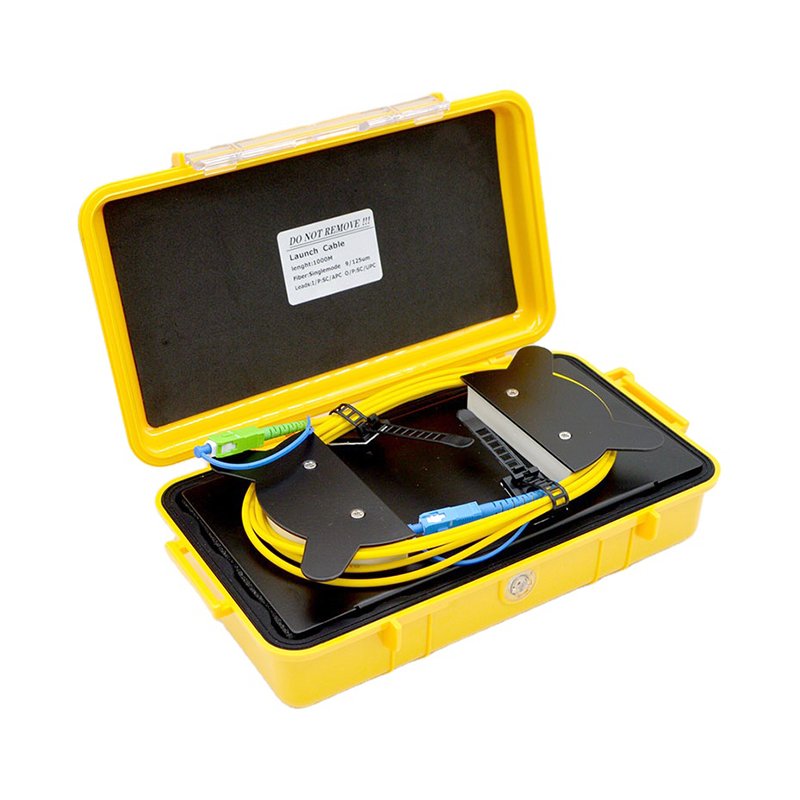
OTDR Launch Cable Box for Precision Fiber Testing
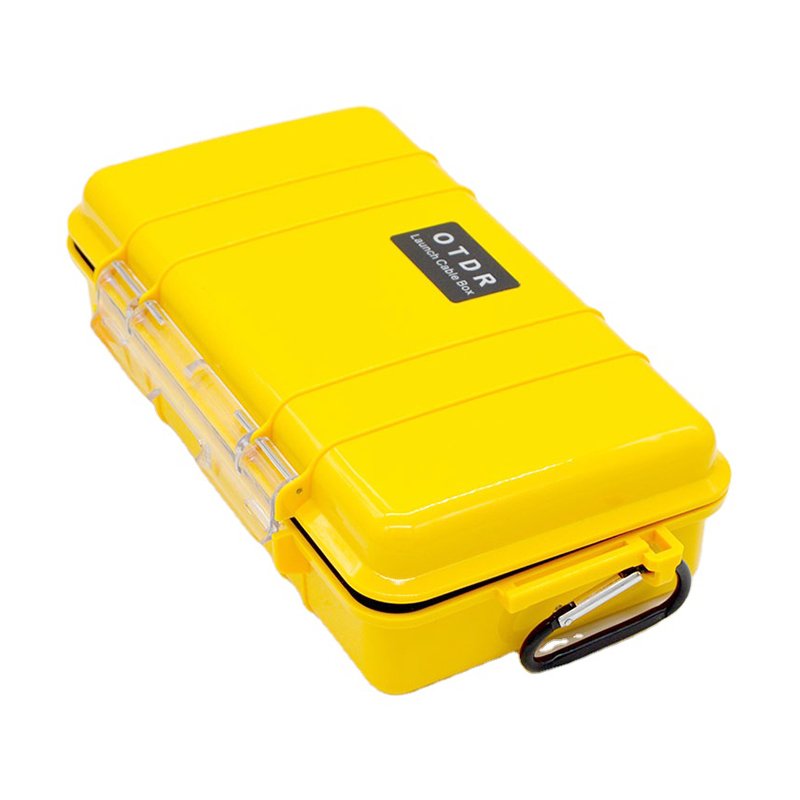
The OTDR Launch Cable Box, also known as an OTDR launch fiber or pulse suppressor, is a device used to help minimize the effects of the OTDR’s launch pulse on measurement uncertainty when testing fiber optic cables. It is an essential tool for ensuring accurate and reliable OTDR measurements.
- Eliminates OTDR launch pulse dead zones for accurate near-end connector measurement.
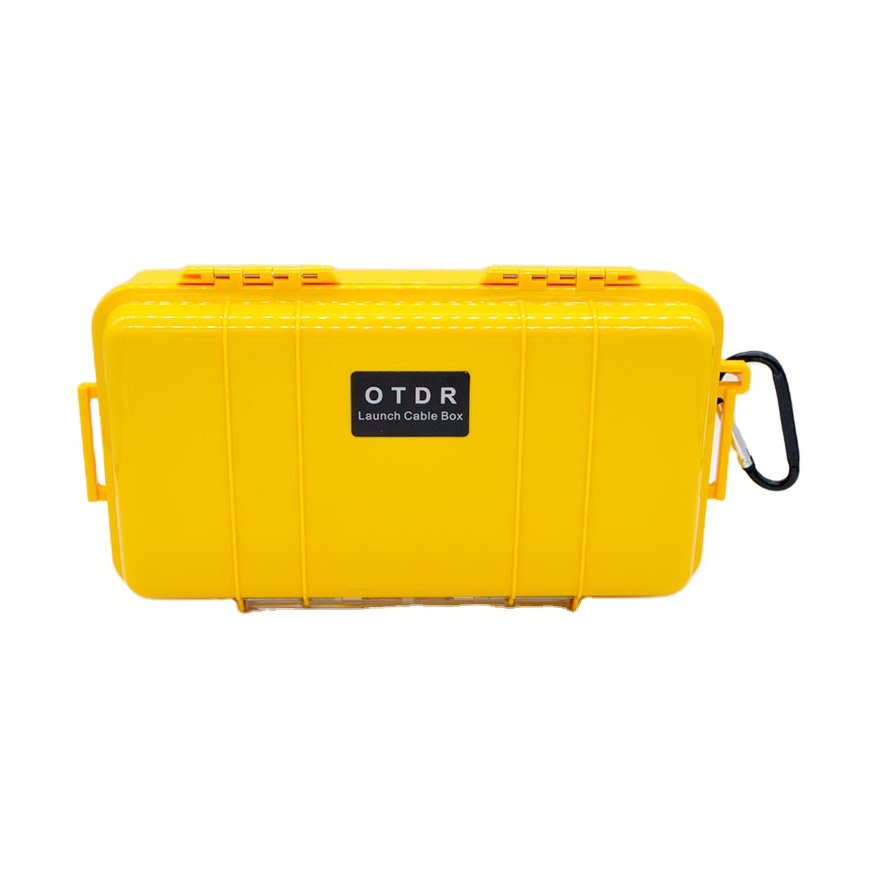
- Ruggedized high-impact polypropylene case ensures waterproof and dust-proof field protection.
- Available in versatile fiber lengths from 500m to 2km to match various pulse widths.
- Premium factory-terminated connectors reduce back-reflection and ensure signal integrity.
- Compact and lightweight design allows for easy portability across different installation sites.
Description
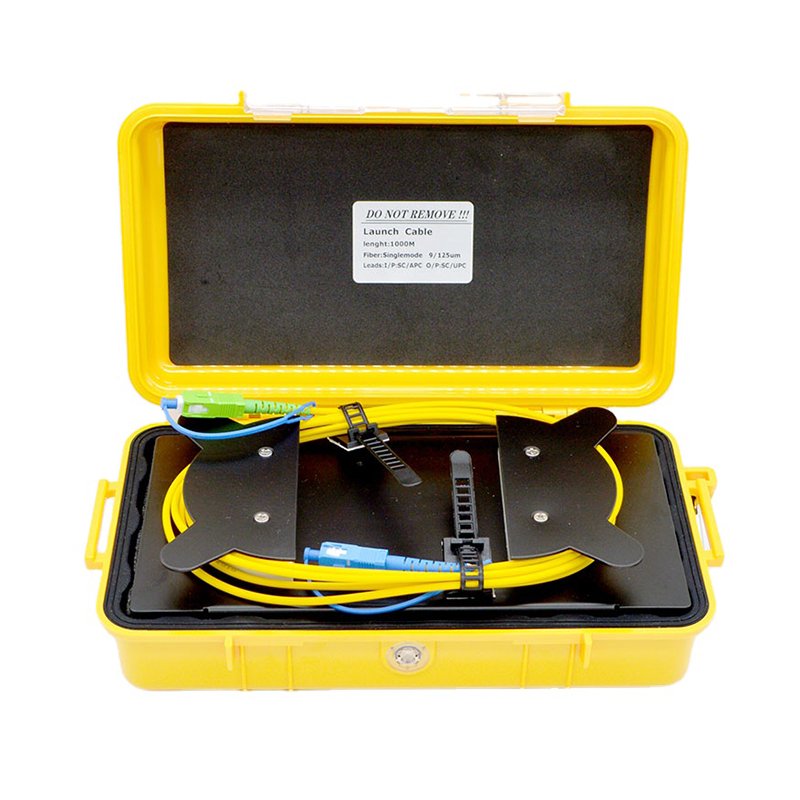
OTDR Launch Cable Box units are essential tools for telecommunications professionals aiming to eliminate the dead zone during optical fiber measurements. By providing a calibrated length of optical fiber, these devices allow the Optical Time Domain Reflectometer (OTDR) to settle after the initial reflection. EPCOM engineers these boxes to ensure high precision when evaluating the insertion loss and reflectance of the first connector in a fiber link. This auxiliary equipment is indispensable for obtaining accurate end-to-end data in high-speed network environments.
Advanced OTDR Launch Cable Box Applications
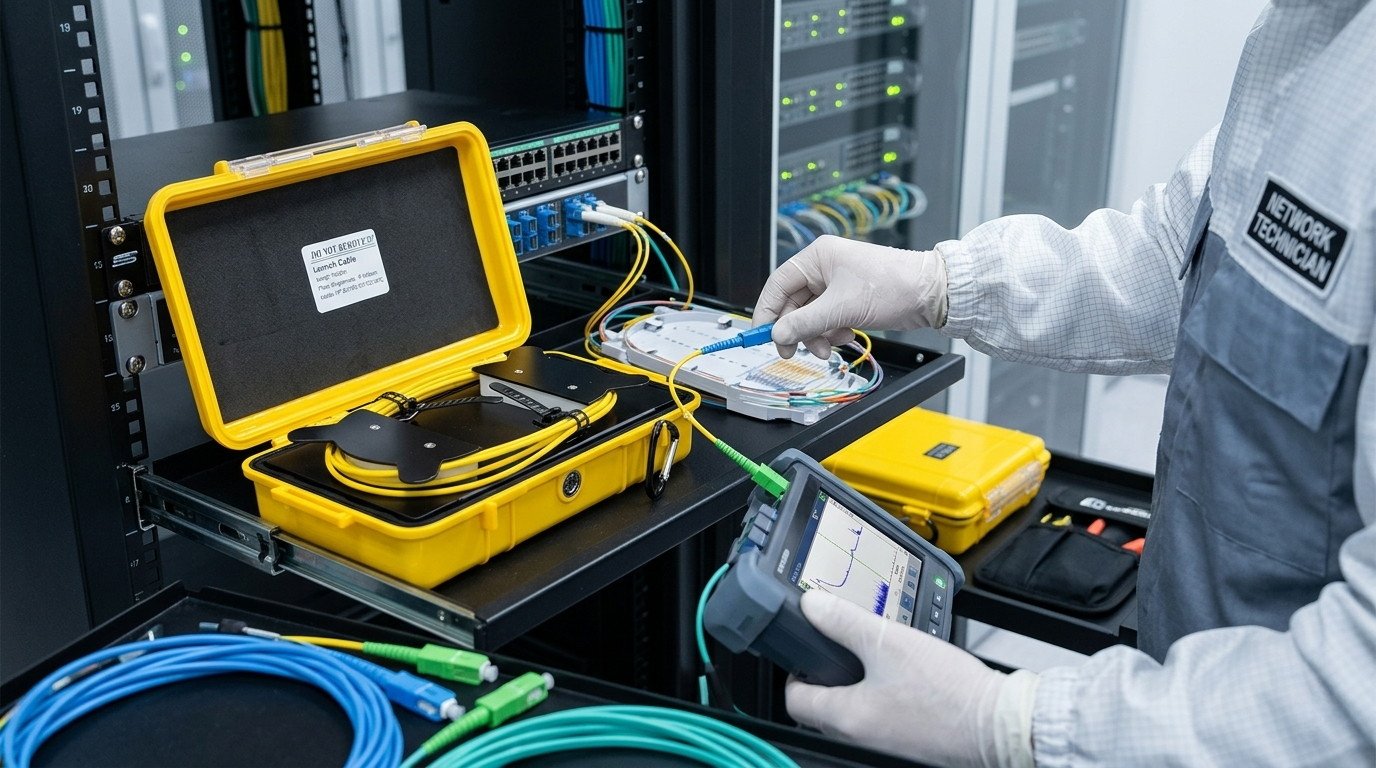
In modern infrastructure projects, technicians rely on the OTDR Launch Cable Box to simulate long-haul conditions or verify short-range premises cabling. The device effectively compensates for the initial pulse width of the test equipment, which often masks close-proximity events. Consequently, users can clearly identify the health of the near-end connection. EPCOM provides various fiber lengths, ranging from 500 meters to 2 kilometers, to suit different testing standards and pulse widths.
To maintain the integrity of your testing setup, it is crucial to use clean components. We highly recommend pairing this device with fiber optic cleaning wipes to remove microscopic debris from the connector end-faces. Furthermore, for situations where manual fault checking is required, a portable VFL in high quality serves as a perfect companion tool to visually pinpoint breaks that the OTDR might identify.
Technical Performance of the OTDR Launch Cable Box
Durability is a core feature of the EPCOM design philosophy. Every OTDR Launch Cable Box is housed in a rugged, waterproof, and dust-proof case that withstands harsh field conditions. The internal fiber is carefully wound to prevent micro-bending, ensuring that the total attenuation remains within strict industry tolerances. Moreover, the integration of high-grade connectors minimizes back-reflection, which is critical for single-mode optical fiber characterization.
| Parameter Description | Specification Value |
|---|---|
| Fiber Type | G.652D Single Mode / Multimode (OM2/OM3) |
| Available Lengths | 500m, 1km, 2km (Customizable) |
| Insertion Loss | ≤ 0.35dB/km @ 1310nm; ≤ 0.22dB/km @ 1550nm |
| Connector Types | SC, LC, ST, FC (UPC or APC) |
| Operating Temperature | -40°C to +55°C |
| Material | SR Polypropylene High-Impact Case |
| Lead Cable Length | 2 Meters (Both ends) |
Why Choose the EPCOM OTDR Launch Cable Box?
EPCOM understands the challenges of field testing. Therefore, our OTDR Launch Cable Box features a compact and lightweight design, making it easy to transport between job sites. The absence of a splice in the middle of the fiber reel guarantees that the signature shown on the OTDR trace is smooth and free of ghost echoes. This reliability is vital for certifying ITU-T G.652 compliant links.
When interfacing with patch panels, ensuring a secure fit is mandatory. Utilizing a high-quality SC single mode adapter allows for seamless transitions between the launch box leads and the distribution frame. By maintaining tight alignment, these adapters prevent excessive signal loss during the testing phase.
Operational Guidelines and Maintenance
To operate the unit, simply connect the input lead of the OTDR Launch Cable Box to the testing instrument. The output lead then connects to the fiber link under test. This configuration creates a “launch fiber” effect that captures the performance of the first connector. After testing, users should replace the dust caps immediately to prevent contamination. Regular inspection of the internal fiber’s performance ensures that the device continues to meet the rigorous demands of fiber-optic communication standards.
Finally, remember that the accuracy of your OTDR Launch Cable Box is only as good as the cleanliness of your equipment. Systematic cleaning and using verified adapters will extend the life of your test leads significantly. Trust EPCOM for all your fiber optic testing needs, where precision meets durability.


