N2XY Cable: Safe And Efficient Power Transmission
N2XY Cable is rapidly becoming the gold standard for modern low voltage power distribution networks around the globe. In an era where electrical efficiency and safety are paramount, selecting the right cabling infrastructure is not just a technical decision but a strategic one. As industries expand and commercial buildings demand higher power loads, the limitations of older cable technologies are becoming apparent. This comprehensive guide explores the sophisticated engineering behind the N2XY cable, explaining why it outperforms traditional alternatives in thermal stability, current carrying capacity, and longevity.
At EPCOM, we understand that reliable power transmission is the backbone of your operations. Whether you are engineering a new industrial complex, upgrading a municipal power grid, or designing the electrical layout for a commercial skyscraper, the quality of your conductors determines the reliability of your system. This article will delve deep into the specifications, applications, and installation nuances of this superior cable type, ensuring you have the knowledge to make informed decisions for your next project.
Understanding the Specification of N2XY Cable
To appreciate the value of this product, one must first decode its designation. The term “N2XY” is derived from the German VDE standard (Verband der Elektrotechnik), which acts as a global benchmark for cable naming conventions. This alphanumeric code is not random; it describes the precise material composition and construction of the cable.
- N: Indicates a standard cable type according to VDE standards (Copper conductor).
- 2X: Represents the insulation material, which is Cross-Linked Polyethylene (XLPE).
- Y: Represents the outer sheath material, which is Polyvinyl Chloride (PVC).
Unlike standard PVC insulated cables (like NYY), the N2XY Cable utilizes XLPE for its core insulation. This single difference fundamentally changes the cable’s performance characteristics. XLPE is a thermosetting material, meaning its molecular structure is cross-linked to form a rigid, 3D network. This allows the insulation to withstand significantly higher temperatures without melting or deforming, a critical factor for heavy-duty power transmission.
The Thermal Advantage of N2XY Cable
Temperature rating is the defining feature that separates high-performance cables from standard ones. Traditional PVC insulation typically has a maximum operating temperature of 70°C. If the current flow causes the conductor to heat up beyond this point, the PVC can soften, leading to potential short circuits or insulation failure.
In contrast, the XLPE insulation found in N2XY Cable is rated for a continuous operating temperature of 90°C. While a 20-degree difference might seem minor on paper, in electrical engineering, it is massive. It allows the cable to carry a higher current load for the same cross-sectional area compared to PVC cables. Furthermore, in short-circuit conditions, XLPE can withstand temperatures up to 250°C for short durations, whereas PVC is limited to roughly 160°C. This thermal resilience provides a significant safety margin for your electrical infrastructure.
Key Construction Features of N2XY Cable
The construction of the cable is a testament to modern materials science. Every layer serves a distinct purpose, contributing to the overall durability and efficiency of the line.
1. The Conductor:
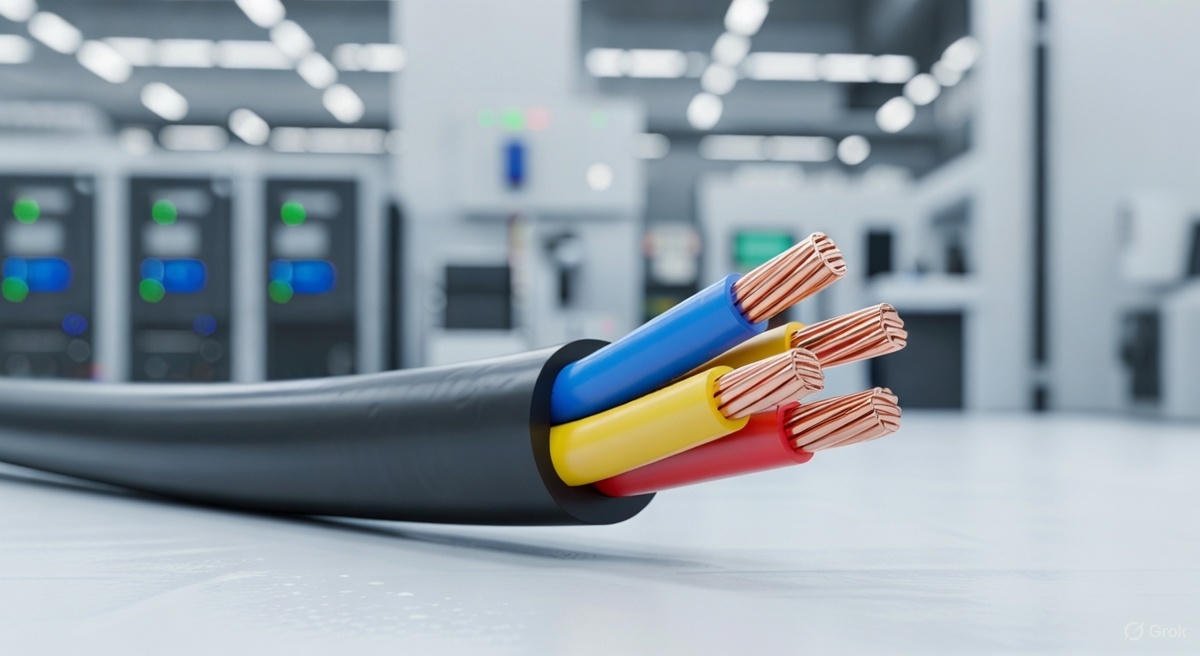
At the heart of the cable lies the conductor, typically made from high-purity annealed copper. Copper is chosen for its superior electrical conductivity and ductility. Depending on the size (cross-section), the conductor can be a solid wire (Class 1) or a stranded conductor (Class 2) to facilitate flexibility during installation. EPCOM ensures that all copper used meets strict IEC 60228 standards for resistance and purity.
2. The Insulation (2X):
As mentioned, the Cross-Linked Polyethylene layer wraps the copper. This layer is extruded directly over the conductor ensuring a void-free interface. This prevents partial discharges that could degrade the cable over time. The XLPE is also resistant to chemicals and moisture, adding an internal layer of protection.
3. The Filler and Bedding:
For multi-core cables, the space between the insulated cores must be filled to create a circular shape. A non-hygroscopic filler is used, ensuring that moisture is not wicked into the cable. A bedding layer may be applied over this assembly to provide a smooth surface for the final sheath.
4. The Outer Sheath (Y):
The final layer is a robust PVC sheath. This layer provides mechanical protection against abrasion, sunlight, and minor impacts. It is usually black to offer UV resistance, making the cable suitable for outdoor use. While PVC is not halogen-free, it is formulated to be flame retardant according to IEC 60332-1 standards, preventing the rapid spread of fire.
Technical Comparison: N2XY vs. NYY
To visualize the superiority of the XLPE variants, examine the comparison below. This table highlights why engineers increasingly specify N2XY Cable for demanding projects.
| Feature | N2XY Cable (XLPE/PVC) | NYY Cable (PVC/PVC) |
|---|---|---|
| Insulation Material | Cross-Linked Polyethylene (XLPE) | Polyvinyl Chloride (PVC) |
| Max Operating Temp | 90°C | 70°C |
| Short Circuit Temp | 250°C (5 sec) | 160°C (5 sec) |
| Current Capacity | Higher (approx. 15-20% more) | Standard |
| Dielectric Loss | Very Low | Higher |
| Moisture Resistance | Excellent (XLPE is typically 100x better) | Good |
| Life Expectancy | 30+ Years | 20-25 Years |
Applications of N2XY Cable in Industry
Versatility is a hallmark of this cable type. Its robust design allows it to be deployed in a wide variety of environments, from controlled indoor settings to harsh outdoor climates. However, because it is unarmoured, care must be taken regarding mechanical protection.
Industrial Power Distribution with N2XY Cable
Factories and manufacturing plants are the primary users of this technology. The high current rating allows plant managers to run powerful machinery without using excessively thick cables. This saves on both material costs and space in cable trays. Whether feeding large motors, conveyor systems, or assembly robots, the stability of the voltage supply is guaranteed by the low impedance of the copper conductors.
Commercial Infrastructure
In shopping malls, airports, and office towers, safety and reliability are non-negotiable. The flame-retardant nature of the PVC sheath makes it a suitable choice for rising mains and sub-main distribution. It connects the main switchboard to distribution boards on various floors effectively.
Power Stations and Utilities
For utility companies, these cables serve as auxiliary power links within substations. They connect transformers to switchgear and control panels. Their ability to handle thermal overload is crucial in utility applications where load spikes can occur unexpectedly.
Installation Guidelines for N2XY Cable
Proper installation is critical to preserving the integrity of the cable. Even the highest quality cable can fail if installed incorrectly. Here, we outline the best practices and essential tools required for a successful deployment.
Cable Route Planning
Before a single meter of cable is laid, the route must be planned. Since N2XY Cable is unarmoured, it lacks the steel wire protection of N2XRY cables. Therefore, if it is to be buried underground, it must be laid inside a robust conduit or duct to protect it from crushing loads or accidental spade strikes. If installed on surface trays, it should be secured properly to prevent sagging.
Bending Radius and Pulling Tension
One common mistake during installation is exceeding the minimum bending radius. Bending the cable too sharply can crush the insulation against the copper strands, leading to premature failure. generally, the bending radius should be at least 12 to 15 times the overall diameter of the cable.
Similarly, pulling tension must be monitored. When pulling long runs through ducts, the friction can be immense. Using proper cable lubricants and mechanized winches is recommended.
Cutting and Preparation
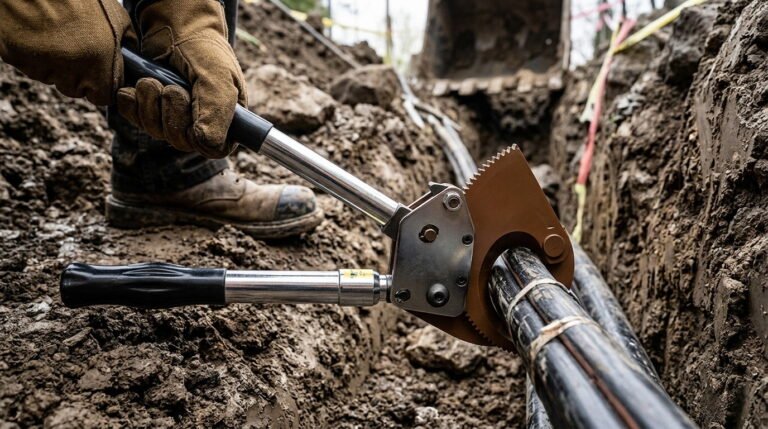
Handling large cross-section power cables requires specialized tooling. Trying to cut a 240mm² cable with a hacksaw is not only slow but results in jagged edges that make termination difficult. For professional results, we recommend using a dedicated Electrical Hydraulic Cutter. These battery-operated tools provide a clean, shear cut in seconds, ensuring the copper strands remain circular and ready for lugging. A clean cut is the first step toward a low-resistance connection.
Connecting and Terminating N2XY Cable
The points of connection are often the weakest links in an electrical network. Using the correct accessories ensures that the high performance of the cable is maintained throughout the circuit.
Protecting Connections
When joining two lengths of cable, or when branching off to a device, the joint must be sealed against moisture and dust. This is particularly important for outdoor installations. An Electrical Junction Box from EPCOM offers IP68 protection, ensuring that your critical connections remain dry and secure, even in adverse weather conditions. The junction box acts as a shield, preventing corrosion on the terminals which could lead to overheating.
Efficient Branching
In many distribution networks, you may need to tap into a main line without cutting it completely. This is common in street lighting or overhead distribution. For this, the TTD Insulation Piercing Connector is an invaluable innovation. It allows for a secure electrical connection by piercing the insulation of the main N2XY Cable and the branch line simultaneously. The torque-controlled shear head ensures the perfect contact pressure is applied without damaging the conductor strands, all while maintaining the waterproof integrity of the connection.
*Approximate values for comparison purposes based on standard installation conditions.
Standards and Compliance for N2XY Cable
In the electrical industry, adherence to standards is not optional; it is mandatory for safety and insurance purposes. EPCOM’s cables are manufactured under strict quality control processes to meet international benchmarks.
- IEC 60502-1: This is the governing standard for power cables with extruded insulation for rated voltages from 1 kV up to 30 kV. It dictates the testing methods and material requirements.
- DIN VDE 0276-603: The German standard from which the N2XY designation originates.
- IEC 60332-1: Tests on electric and optical fibre cables under fire conditions. This certifies that the cable is flame retardant for a single vertical insulated wire or cable.
- ISO 9001: Our manufacturing facilities are ISO certified, ensuring consistent quality management.
Why Choose EPCOM for Your N2XY Cable Needs?
The market is flooded with cable suppliers, but EPCOM stands apart through a commitment to rigorous testing and material purity. We do not use recycled copper in our power cables; we use only premium grade cathode copper to ensure maximum conductivity and ductility. Recycled copper often contains impurities that increase resistance, leading to energy loss and higher heat generation—defeating the purpose of using an XLPE cable.
Furthermore, our extrusion technology ensures concentricity. A cable with uneven insulation thickness is prone to electrical stress points, which can lead to blowouts. EPCOM uses laser-guided extrusion lines to ensure that the XLPE layer is perfectly uniform around the copper conductor.
Maintenance and Longevity
One of the hidden benefits of installing high-quality N2XY Cable is the reduction in maintenance costs. Because the insulation is thermally stable, it does not degrade or become brittle as quickly as standard PVC when subjected to thermal cycling (heating up during the day and cooling at night).
However, routine inspections are still recommended. Check for:
1. Jacket Integrity: Ensure the black PVC sheath has not been nicked or cut during other site works.
2. Termination Tightness: Copper can flow slightly under pressure over time (creep). Periodically checking the tightness of connections at the junction box or breaker is good practice.
3. Environmental Changes: Ensure that the environment around the cable hasn’t changed, such as new heat sources being installed nearby which could affect the ambient temperature de-rating factors.
The Future of N2XY Cable in Green Energy
As the world shifts toward renewable energy, the demand for efficient Low Voltage (LV) cables is skyrocketing. Solar farms and wind energy storage systems require cables that can handle high currents with minimal loss. The N2XY Cable is perfectly suited for the DC output side of inverters or the AC collection grids within these facilities. Its durability ensures that the green energy captured is transmitted efficiently to the grid.
Furthermore, as electric vehicle (EV) charging stations become ubiquitous, the grid infrastructure supporting them needs upgrading. Fast chargers draw immense current. Using XLPE insulated cables allows for thinner, more manageable cables to be run to these charging points without sacrificing safety, making the installation of EV infrastructure easier and more cost-effective.
Frequently Asked Questions About N2XY Cable
Q: Can N2XY Cable be used directly in the ground?
A: While the PVC sheath offers some protection, N2XY is unarmoured. For direct burial, it is generally recommended to use NYY or armoured cables (N2XRY), or to install the N2XY cable inside a protective conduit or ducting to prevent mechanical damage.
Q: What is the difference between N2XY and N2XH?
A: The main difference lies in the sheath. N2XY uses PVC (Polyvinyl Chloride), which is flame retardant but produces smoke and halogens when burned. N2XH uses an LSZH (Low Smoke Zero Halogen) sheath, making it suitable for public spaces where smoke emission is a safety concern.
Q: Is N2XY cable UV resistant?
A: Yes, the black PVC outer sheath of EPCOM’s N2XY cables is UV resistant, making it suitable for outdoor installation where it is exposed to direct sunlight.
Q: What is the maximum voltage rating?
A: Standard N2XY cables are rated for Low Voltage applications, typically 0.6/1kV (600V to 1000V). For medium voltage applications, different cable constructions are required.
Q: How do I choose the right size?
A: Sizing depends on the load current, voltage drop, installation method, and ambient temperature. It is best to consult with an electrical engineer and refer to standard current rating tables for XLPE cables.
Final Thoughts
In the complex world of electrical distribution, simplicity, safety, and efficiency are the goals. The N2XY Cable delivers on all fronts. By combining the high conductivity of copper with the thermal resilience of XLPE, it offers a solution that is both future-proof and cost-effective. Whether you are powering a factory, a hospital, or a residential block, choosing EPCOM means choosing reliability. Ensure your infrastructure is built to last by specifying the best materials from the ground up.