FC Fast Connector Efficiency in Fiber Networks
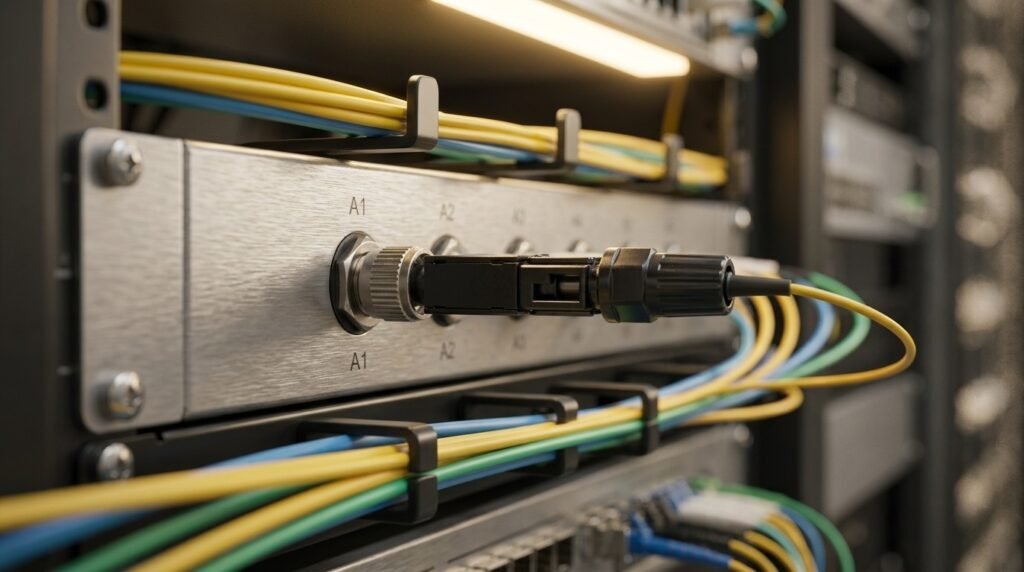
FC Fast Connector technology stands as the cornerstone of modern optical fiber termination. As telecommunication networks evolve, the demand for reliable connectivity grows rapidly. EPCOM provides industry-leading solutions to meet these rigorous standards. Consequently, technicians prefer field-mountable components for efficiency. Transitioning from traditional splicing to mechanical connectors reduces labor time significantly. Therefore, understanding the mechanics of these devices is essential for any network engineer. This article explores the intricate details of fiber termination excellence.
Furthermore, the integration of high-quality components ensures long-term network stability. High-speed data transmission relies heavily on low insertion loss. Because of this, the precision of an FC Fast Connector cannot be overstated. We see a significant shift toward Fiber to the Home (FTTH) architectures worldwide. Such projects require thousands of individual connections. Naturally, the speed of installation becomes a primary factor in project profitability. EPCOM remains committed to delivering tools that simplify this complex process for field technicians.
Why Choose Mechanical Termination for FTTH
Selecting the right FC Fast Connector involves evaluating both performance and ease of use. In many scenarios, fusion splicing is too costly or impractical. For example, repair work in confined spaces favors mechanical termination. Moreover, the pre-polished ferrule inside the connector guarantees a perfect interface. Since the alignment happens internally, the risk of human error decreases. Additionally, these connectors are compatible with standard IEEE networking standards. This compatibility ensures that your infrastructure remains future-proof and scalable.
Meanwhile, cost-effectiveness remains a major advantage for service providers. By eliminating the need for expensive fusion machines, companies save thousands of dollars. Instead, a simple tool kit is sufficient for high-quality results. However, the quality of the fiber cable itself is equally important. We recommend using the GJYXCH Drop Cable to achieve the best synergy. This specific cable provides the structural integrity needed for outdoor-to-indoor transitions. Thus, the combination of EPCOM connectors and cables creates a robust link.
Technical Benefits of the FC Fast Connector
The technical architecture of the FC Fast Connector focuses on minimizing return loss. Return loss can disrupt signal integrity in long-distance transmissions. Luckily, the mechanical grip mechanism inside the housing secures the fiber firmly. This prevents any micro-movements that might cause signal fluctuations. Furthermore, environmental stability is a key feature of the EPCOM design. Our connectors perform reliably in temperatures ranging from -40°C to +75°C. Consequently, they are ideal for diverse geographical regions, from tropical to arctic climates.
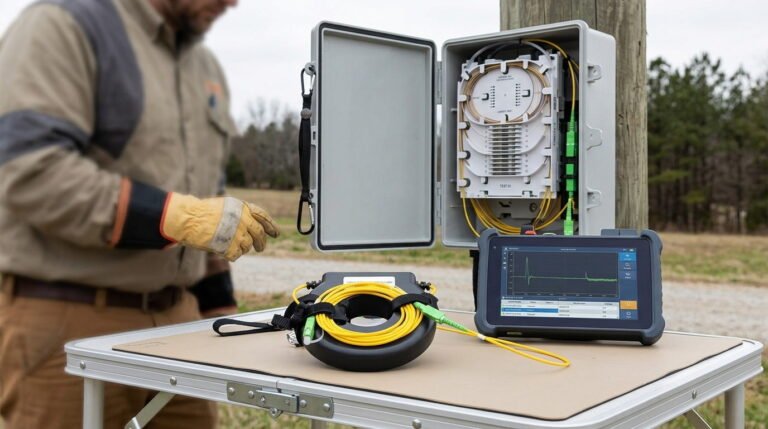
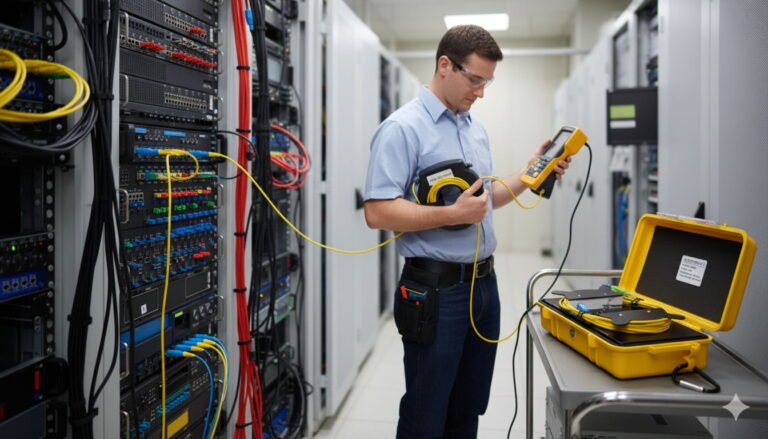
Figure 1: Comparative analysis of termination efficiency using EPCOM solutions.
Essential Tools for Optical Fiber Installation
Achieving a professional finish requires more than just a high-quality FC Fast Connector. Technicians must use precision instruments to prepare the fiber correctly. For instance, the outer jacket and buffer must be removed without damaging the core. This is where the 3 Ports Optical Fiber Stripper becomes indispensable. It allows for the clean removal of various coating layers. If the stripping is uneven, the fiber might not seat properly in the connector. As a result, the signal quality will suffer. EPCOM ensures that all our tools are calibrated for extreme accuracy.
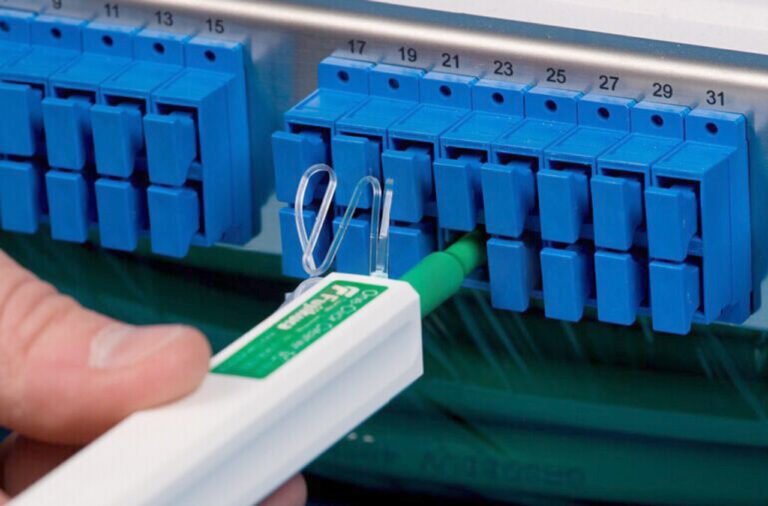
After stripping, cleaning the fiber is the next critical step. Dust particles can cause permanent damage to the connector ferrule. Therefore, using high-purity isopropyl alcohol is recommended by the Telecommunications Industry Association. Once cleaned, the fiber is cleaved and inserted into the FC Fast Connector body. The internal locking mechanism then secures the fiber in place. This process is repeated for every terminal point in the network. Because the steps are repetitive, having ergonomic tools reduces technician fatigue during long shifts.
Maximizing Durability of the FC Fast Connector
Durability is a hallmark of the FC Fast Connector supplied by EPCOM. We utilize high-grade engineering plastics and zirconia ferrules. These materials withstand thousands of mating cycles without significant degradation. Nevertheless, proper storage and handling are still vital. For example, keeping the dust cap on when not in use prevents contamination. Furthermore, the connector should be protected from excessive tension. In residential installations, the Fiber Optic Wall Socket provides this necessary protection. It manages the bend radius of the fiber while offering a clean interface for the user.
Detailed Specifications of EPCOM Solutions
| Parameter | Standard Specification | EPCOM Premium Level |
|---|---|---|
| Insertion Loss (Typical) | ≤ 0.5 dB | ≤ 0.3 dB |
| Return Loss | ≥ 40 dB (PC) | ≥ 50 dB (UPC) |
| Operating Temp | -25°C to +70°C | -40°C to +85°C |
| Tensile Strength | > 30 N | > 50 N |
In light of the table above, the FC Fast Connector from EPCOM clearly outperforms generic alternatives. Specifically, the lower insertion loss translates to longer reach for your network. This is particularly important for high-bandwidth applications like 4K streaming or cloud computing. Additionally, the improved return loss ensures that optical transceivers are not damaged by reflected light. Thus, investing in premium connectors reduces the Total Cost of Ownership (TCO) for the network operator. Service calls for “intermittent signal” are often traced back to poor-quality connectors.
The Future of FC Fast Connector Technology
Looking ahead, the FC Fast Connector will continue to adapt to higher densities. As data centers shrink their footprint, every millimeter of space counts. However, the basic principle of the mechanical splice remains the same. It offers a balance between performance, speed, and cost that other methods cannot match. EPCOM is currently researching even faster assembly methods. We aim to reach a sub-60-second termination time for all our connectors. Such innovations will drive the next wave of global connectivity. By choosing EPCOM, you align your business with the cutting edge of fiber optics.
Installation Best Practices for FC Fast Connector
To ensure the longevity of your FC Fast Connector, follow a strict installation protocol. First, always verify the cleave angle using a high-quality fiber cleaver. A bad angle will result in high insertion loss regardless of the connector quality. Second, do not touch the stripped fiber with bare fingers. Oils from the skin can attract dust and degrade the connection. Furthermore, ensure the cable is properly anchored to the connector housing. This prevents the fiber from being pulled out during routine maintenance. EPCOM provides detailed training materials for all our clients to master these skills.
Finally, always test your connections with an Optical Power Meter (OPM) or a Visual Fault Locator (VFL). A VFL is particularly useful for identifying a poorly seated FC Fast Connector immediately. If the light leaks at the connector body, the internal alignment is incorrect. In such cases, the connector can often be reset and re-terminated. This reusability is another advantage of the EPCOM design. It minimizes waste and allows technicians to correct mistakes on-site. Therefore, the overall project efficiency improves drastically when using our systems.
In conclusion, the FC Fast Connector is an indispensable tool for modern fiber infrastructure. From the central office to the subscriber’s home, it provides the bridge for digital communication. EPCOM offers the full ecosystem, from the GJYXCH Drop Cable to the final Fiber Optic Wall Socket. By integrating these high-performance components, network reliability reaches new heights. We invite you to explore our full range of solutions on our official website. Together, we can build a faster, more connected world.
Comparison: FC Fast Connector vs. SC/LC Types
While various types of connectors exist, the FC Fast Connector remains popular in industrial and high-vibration environments. The screw-on mechanism provides a more secure attachment than the push-pull LC or SC variants. Consequently, in utility or power plant environments, EPCOM recommends FC connectors for their mechanical stability. However, the installation process remains identically fast. Transitioning between connector types is easy for technicians trained on our platform. Therefore, versatility is another key benefit of adopting the EPCOM standard across your projects.
Environmental Resistance of the FC Fast Connector
Outdoor environments pose significant challenges to optical components. Moisture, UV radiation, and temperature swings can cause materials to expand or contract. Fortunately, the FC Fast Connector from EPCOM is built with UV-stabilized polymers. This prevents the housing from becoming brittle over time. Additionally, the internal index-matching gel is formulated to remain stable for over 20 years. Because of this, our customers enjoy maintenance-free operation for decades. It is this commitment to quality that defines EPCOM as a leader in the industry.
Through careful planning and the right tools, like the 3 Ports Optical Fiber Stripper, every FC Fast Connector termination can be a success. We encourage all network planners to consider the long-term impact of component selection. High-quality connectors are the foundation of a high-speed future. Thank you for choosing EPCOM for your fiber optic needs. We look forward to supporting your next major infrastructure project with our world-class technology.