Fiber Optic Kevlar Cutter: EPCOM High-Precision Tool
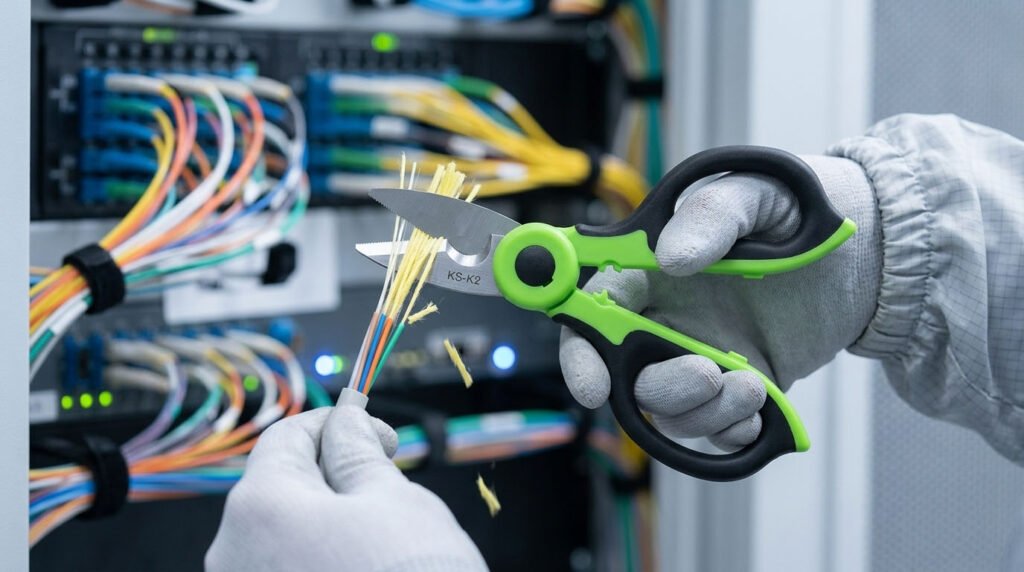
Fiber Optic Kevlar Cutter tools are essential components for any modern telecommunications technician working in the field today. Consequently, EPCOM provides high-precision instruments designed to handle the toughest materials found in fiber cabling. Kevlar is known for its incredible strength-to-weight ratio. Therefore, standard scissors often fail to provide a clean cut when dealing with these protective fibers. By using a specialized Fiber Optic Kevlar Cutter, professionals can ensure that their cable preparation remains efficient and damage-free. In this comprehensive analysis, we will explore why selecting the right cutting tool is paramount for maintaining network integrity. Furthermore, we will examine how these tools integrate with other essential fiber optic equipment to deliver a complete installation solution.
Precision is the hallmark of quality in the fiber optics industry. Moreover, the evolution of optical networks has led to more complex cable designs. Most outdoor and indoor cables now include aramid yarns, commonly known as Kevlar, to provide tensile strength. However, this material is notoriously difficult to trim without specialized serrated blades. EPCOM understands these challenges intimately. Thus, our tool designs focus on ergonomic comfort and long-lasting sharpness. When you invest in a professional-grade Fiber Optic Kevlar Cutter, you are essentially investing in the longevity of your fiber connections. In the following sections, we will delve into the technical specifications that make these cutters unique compared to standard hardware store alternatives.
Advanced Engineering in Aramid Cutting Tools
Historically, cutting aramid fibers was a tedious process that often resulted in frayed edges. Nevertheless, advancements in metallurgy have allowed companies like EPCOM to develop high-carbon steel blades that maintain their edge over thousands of cuts. It is important to realize that the serration on a Fiber Optic Kevlar Cutter is designed specifically to “catch” the slippery aramid fibers. Without this micro-serration, the fibers would simply slide out of the jaws during the cutting motion. Consequently, this specialized geometry reduces hand fatigue for technicians who must perform hundreds of terminations daily. According to the Telecommunications Industry Association (TIA), proper tool selection is a fundamental requirement for meeting international cabling standards.
Besides the blade material, the handle design plays a crucial role. For instance, EPCOM ergonomic handles are often coated with non-slip materials. This ensures safety even in damp or oily environments. Furthermore, a high-quality Fiber Optic Kevlar Cutter will typically feature an adjustable pivot point. This allows the user to fine-tune the tension of the blades according to their preference. As a result, the tool remains versatile for different densities of Kevlar yarns. Transitioning from heavy-duty outdoor cables to delicate indoor patch cords becomes a seamless experience with the right equipment.
Why Material Hardness Matters for a Fiber Optic Kevlar Cutter
Kevlar is five times stronger than steel on an equal weight basis. Because of this, the steel used in a Fiber Optic Kevlar Cutter must be exceptionally hard. Typically, EPCOM utilizes molybdenum and vanadium alloys to enhance the durability of the cutting edges. If the blade is too soft, it will dull almost instantly when exposed to aramid fibers. Conversely, if it is too brittle, the serrations might chip. Striking the perfect balance is what sets professional tools apart. In addition, many experts at IEEE suggest that using the wrong tool can introduce microscopic vibrations that damage the glass core during the stripping process.
Integrating the Fiber Optic Kevlar Cutter into the Workflow
Successful fiber termination requires a sequence of precise actions. First, the outer jacket must be removed. This is where the 3 Ports Optical Fiber Stripper comes into play. After stripping the outer layers, the aramid yarn is exposed. At this stage, the technician employs the Fiber Optic Kevlar Cutter to clear the path for the inner buffer tube. Without a clean cut at this step, the yarn could get caught in the connector housing, leading to mechanical failure or increased signal loss. EPCOM ensures that all these tools work in harmony to streamline the technician’s experience.
Moreover, once the yarn is cleared, the actual glass fiber must be cleaned. We highly recommend using Fiber Optic Cleaning Wipes to remove any microscopic residues. Dirt is the enemy of light transmission. Therefore, maintaining a sterile environment during termination is not just a suggestion; it is a necessity. Companies like Corning emphasize that even a fingerprint can ruin a high-speed fiber link. Thus, the synergy between the Fiber Optic Kevlar Cutter and cleaning supplies is vital for network performance.
Maximizing Efficiency with Your Fiber Optic Kevlar Cutter
To get the most out of your Fiber Optic Kevlar Cutter, you must follow specific maintenance protocols. For example, never use your Kevlar shears to cut copper wire or steel strength members. Doing so will irreparably damage the micro-serrations. Instead, keep the blades clean and lightly oiled. In addition, always store the tool in a protective pouch. EPCOM provides specialized kits where each tool has its own dedicated slot. This prevents the blades from banging against other metallic objects in your toolbox. When treated with care, a Fiber Optic Kevlar Cutter can last for several years of heavy field use.
Comparative Analysis of Fiber Optic Kevlar Cutter Models
When comparing different models of the Fiber Optic Kevlar Cutter, one should look at the leverage ratio. A longer handle provides more mechanical advantage, making it easier to cut through thick bundles of aramid yarn. However, a compact Fiber Optic Kevlar Cutter is often preferred for tight spaces like fiber distribution hubs. EPCOM offers a range of sizes to suit various field conditions. Furthermore, some models feature a return spring, which automatically opens the handles after each cut. This feature significantly reduces the repetitive motion strain during large-scale deployments.
Another factor to consider is the blade length. A shorter blade allows for more control and precision. Meanwhile, a longer blade can handle more material in a single snip. In most cases, a 5-inch or 6-inch Fiber Optic Kevlar Cutter is the industry standard. It provides the best balance of portability and power. Additionally, the pivot screw should be flush with the tool body to prevent snagging on cables. EPCOM meticulously engineers these details to ensure that the Fiber Optic Kevlar Cutter does not become a hindrance during complex cable management tasks.
| Tool Feature | EPCOM Standard | Benefit to Technician |
|---|---|---|
| Blade Material | High-Carbon Vanadium Steel | Superior edge retention and sharpness |
| Serration Type | Micro-Serrated Edge | Prevents fiber slippage during cutting |
| Handle Design | Ergonomic Non-Slip Grip | Reduces hand fatigue and improves safety |
| Joint Mechanism | Adjustable Pivot Screw | Allows for custom tension adjustment |
The Importance of Cleanliness and Precision
After using the Fiber Optic Kevlar Cutter to prepare the cable, the next critical step is achieving a perfect cleave. For this, technicians rely on the Three in One Fiber Cleaver. A precise cleave is essential for low-loss splicing. In fact, even the best Fiber Optic Kevlar Cutter cannot compensate for a poor cleave later in the process. However, the cutter sets the stage by providing a clean, unfrayed work area. If the Kevlar is not trimmed back properly, it can interfere with the cleaver’s clamping mechanism. Therefore, EPCOM tools are designed to work together as a cohesive ecosystem.
Furthermore, the integration of high-quality tools leads to higher pass rates during OTDR testing. When every cut is clean and every strip is precise, the chances of microscopic cracks in the glass are minimized. EPCOM remains committed to providing the highest quality Fiber Optic Kevlar Cutter and associated tools to the global market. As telecommunication networks move toward 800G and beyond, the margin for error becomes thinner. Consequently, the tools used by technicians must be more reliable than ever. By choosing EPCOM, you are choosing a partner dedicated to technical excellence and field-tested reliability.
Advanced Applications for the Fiber Optic Kevlar Cutter
In addition to standard telecommunications, the Fiber Optic Kevlar Cutter is increasingly used in aerospace and military applications. In these sectors, cables are often subjected to extreme vibrations and temperatures. Therefore, the Kevlar reinforcement is even more critical. Cutting these specialized cables requires a Fiber Optic Kevlar Cutter that can handle unique aramid blends. EPCOM continues to innovate in this space, researching new blade coatings that can resist the abrasive nature of advanced synthetic fibers. This ongoing commitment to R&D ensures that our customers always have access to cutting-edge technology.
Finally, we must consider the environmental impact of tool manufacturing. EPCOM strives to implement sustainable practices in our production lines. This includes recycling steel scraps and using eco-friendly packaging for every Fiber Optic Kevlar Cutter sold. We believe that professional tools should not only perform well but also be produced responsibly. As a result, when you choose an EPCOM tool, you are supporting a brand that values both quality and sustainability. We invite you to explore our full range of fiber optic solutions and experience the EPCOM difference for yourself.
In conclusion, the Fiber Optic Kevlar Cutter is much more than a simple pair of scissors. It is a precision-engineered instrument that plays a vital role in the construction of the global information highway. From the ergonomic handles to the micro-serrated molybdenum steel blades, every aspect of the tool is optimized for performance. By pairing the Fiber Optic Kevlar Cutter with other high-quality EPCOM products like strippers, cleavers, and cleaning wipes, technicians can ensure their work meets the highest industry standards. Trust EPCOM for all your fiber optic tooling needs and build a more connected world with confidence.