Fiber Cable Identifier: Top Tools and Solutions
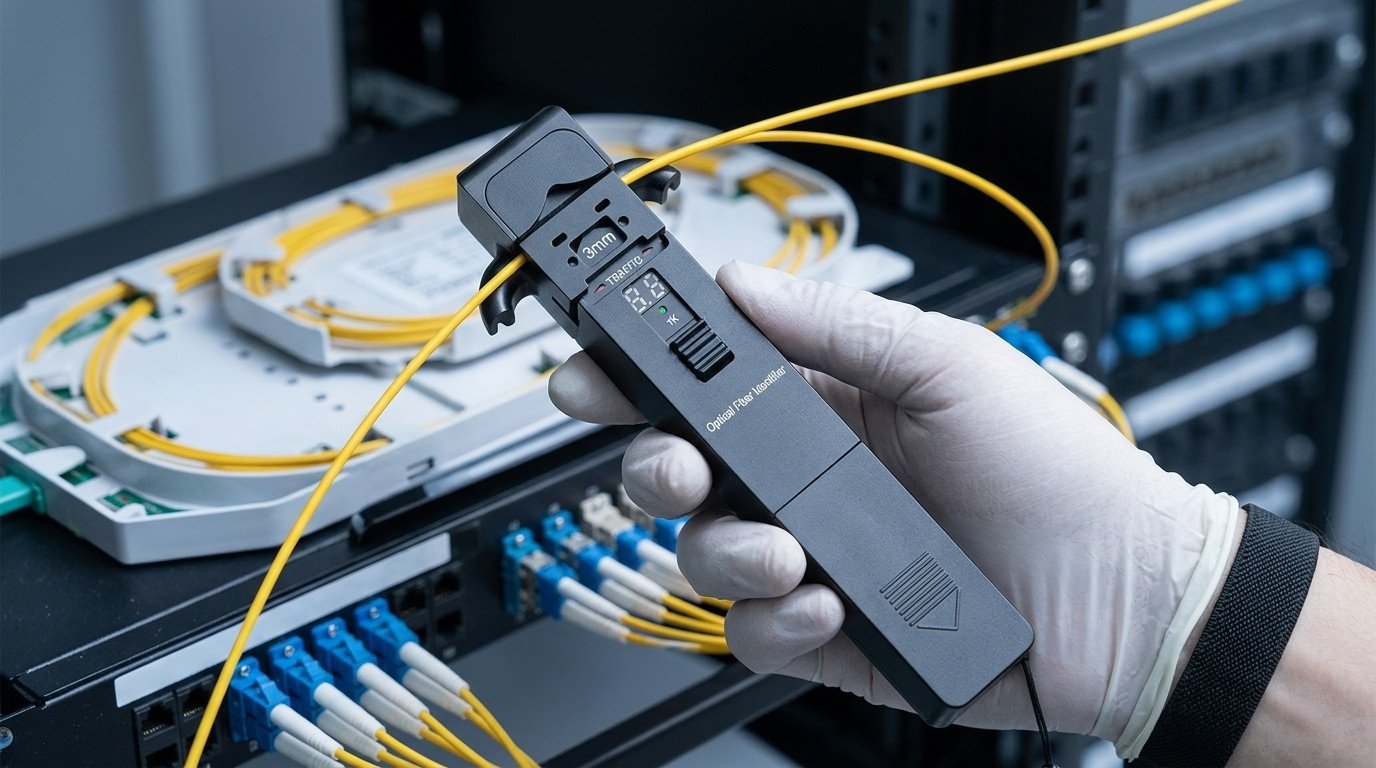
Fiber Cable Identifier technology remains the cornerstone of modern telecommunications infrastructure management. Consequently, EPCOM prioritizes the development of high-precision tools for network engineers. Identifying live fibers without disrupting traffic is a complex challenge. However, the use of a professional Fiber Cable Identifier simplifies this process significantly. Technicians often face dense cable environments where manual tracing is impossible. Therefore, automated identification tools become essential for maintaining system uptime. This article explores the technical nuances, essential accessories, and industry best practices for fiber identification.
Modern networks demand extreme reliability and minimal latency. As a result, the tools used for maintenance must meet rigorous standards. EPCOM provides solutions that integrate seamlessly into existing workflows. Besides basic identification, these tools often assist in diagnosing macro-bending losses. Furthermore, the integration of digital signal processing allows for higher sensitivity. Because fiber optic cables carry massive amounts of data, any error in identification can lead to catastrophic service outages. Thus, choosing the right equipment is a strategic decision for any telecom provider.
Figure 1: The rising correlation between network complexity and the necessity for automated identification tools.
Technical Principles of Live Fiber Detectionr
Understanding how these devices function requires a look at non-destructive macro-bending technology. Specifically, a Fiber Cable Identifier clamps onto a fiber and creates a safe, small-radius bend. This bend allows a minute amount of light to escape the core. Subsequently, sensors detect this leaked light to determine signal direction and frequency. EPCOM engineers ensure that this process does not introduce permanent attenuation. Moreover, many units can identify specific modulation frequencies like 270Hz, 1kHz, and 2kHz.
In many scenarios, the Fiber Cable Identifier in Mental Case offers superior durability for field use. Rugged housing protects the sensitive optical components from impact. Additionally, metal-cased units handle extreme temperatures better than plastic alternatives. Since technicians work in diverse climates, hardware resilience is vital. EPCOM focuses on ergonomic designs that allow for one-handed operation. Consequently, efficiency increases during long maintenance shifts.
Why Every Tech Needs a Fiber Cable Identifier
Misidentifying a fiber can result in cutting an active line. Naturally, this leads to expensive repairs and unhappy clients. By using a reliable identifier, you eliminate guesswork entirely. Furthermore, modern devices can detect the presence of traffic without disconnecting the link. This “non-intrusive” testing is a requirement for high-availability data centers. EPCOM tools provide clear LED or LCD indicators for traffic direction. Also, an audible buzzer often alerts the user when a signal is successfully captured.
When working with various cable types, adaptability is key. For example, a single device might need to handle 250um bare fiber, 900um buffered fiber, and 3mm jacketed cable. EPCOM designs interchangeable adapter heads to accommodate these different diameters. Therefore, a single investment covers a wide range of applications. In the context of fiber optic fundamentals, maintaining the physical integrity of the cladding is paramount during identification.
Supporting Tools for Professional Maintenance
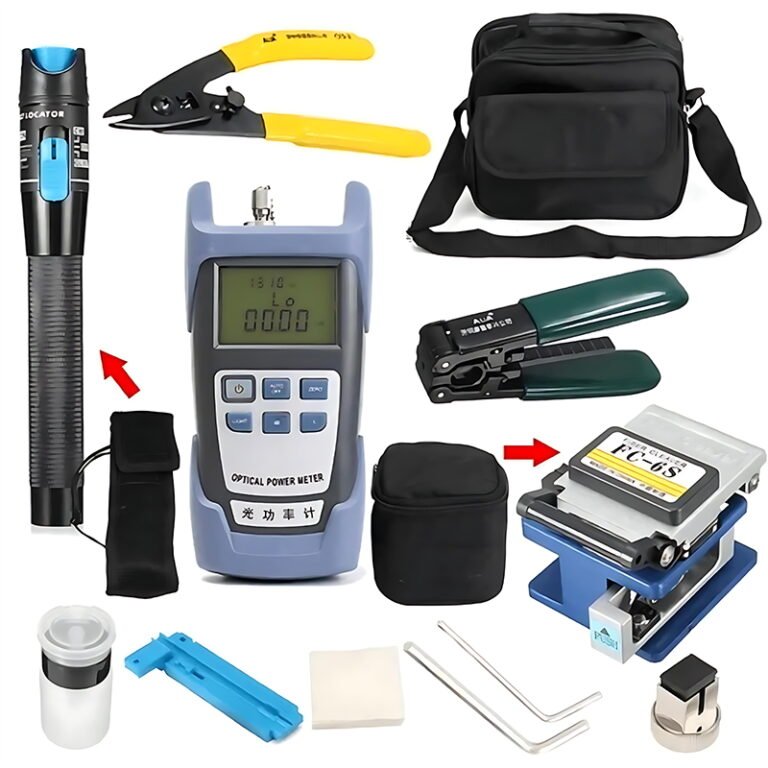
While the identifier is the star of the show, it cannot work in isolation. To achieve professional results, several supporting tools are necessary. First and foremost is the visual verification of fiber paths. For this, we recommend the Portable VFL in High Quality. This Visual Fault Locator emits a powerful red laser. It allows technicians to see light through the fiber jacket at break points. Combining a VFL with an identifier ensures a 100% accurate identification rate.
Another critical factor is cleanliness. Contamination is the leading cause of fiber failure worldwide. Therefore, always use Fiber Optic Cleaning Wipes before and after any testing procedure. Dust particles can scratch the identifier’s detection surface. Moreover, oils from skin can interfere with light leakage detection. EPCOM emphasizes that a clean environment leads to consistent readings. Using high-grade wipes ensures that no lint or residue remains on the cable surface.
Advanced Testing with Fiber Cable Identifier Units
Advanced troubleshooting often involves Optical Time Domain Reflectometers. However, OTDRs have “dead zones” at the beginning of the fiber link. To solve this, technicians use an OTDR Launch Cable Ring. This tool provides a known length of fiber to stabilize the pulse. When used alongside a Fiber Cable Identifier, you gain a complete view of the network’s health. EPCOM provides launch rings in various lengths to suit different testing environments.
| Feature | EPCOM Standard | Industry Average |
|---|---|---|
| Sensitivity | -40 dBm to +10 dBm | -30 dBm to +5 dBm |
| Wavelength Range | 800nm – 1700nm | 850nm – 1650nm |
| Battery Life | Up to 5000 tests | Approx. 2000 tests |
Optimizing Performance of your Fiber Cable Identifier
To maximize the lifespan of your equipment, regular calibration is necessary. EPCOM recommends annual checks to ensure sensor accuracy. Furthermore, environmental factors like humidity can affect sensitive electronics. Always store your Fiber Cable Identifier in a dry, padded case when not in use. This prevents moisture buildup and mechanical shock. If you notice inconsistent readings, check the adapter heads for debris first. Because the detection area is small, even a single hair can cause false negatives.
Many technicians ask about the limitations of identification through thick jackets. While most units handle 3mm jackets, specialized armored cables might pose a challenge. In these cases, look for access points where the fiber is more exposed. EPCOM research indicates that identifying signals through colored buffers is usually highly successful. According to ITU-T standards, signal modulation must remain consistent for identification tools to work accurately. Therefore, the source laser at the CO (Central Office) should be correctly configured.
Safety Protocols and Fiber Cable Identifier Use
Safety is non-negotiable when dealing with high-power lasers. Even though an identifier is a “receiver,” the cables it tests may carry dangerous light levels. Never look directly into an open fiber end. Instead, use an identifier to verify the presence of light. EPCOM incorporates shielding into its designs to prevent light leakage toward the user’s eyes. Additionally, always wear appropriate safety goggles during splicing and identification tasks. This prevents accidental exposure to invisible infrared radiation.
Proper training is the best way to prevent accidents. Technicians should understand the difference between active traffic and test tones. If a Fiber Cable Identifier detects a 2kHz tone, it usually means a technician is testing from the other end. Conversely, “Traffic” signals indicate live customer data. EPCOM provides detailed manuals to help teams distinguish these signals. By following these protocols, you ensure both personnel safety and network integrity.
The Future of Fiber Cable Identifier Tech
As we move toward 5G and beyond, fiber density will only increase. Consequently, identifiers must become even smaller and more sensitive. EPCOM is currently exploring AI-driven signal analysis for future models. This would allow a Fiber Cable Identifier to tell the difference between GPON, XG-PON, and P2P signals. Such intelligence would be a game-changer for complex multi-service networks. Furthermore, cloud connectivity might allow identification results to be uploaded instantly to a central database.
Sustainability is also a growing concern in the manufacturing process. EPCOM is committed to using recyclable materials for tool housings wherever possible. Moreover, low-power circuit designs extend battery life, reducing waste. The evolution of the Fiber Cable Identifier reflects the broader trends in the IEEE engineering community toward smarter, greener infrastructure. As network demands grow, EPCOM will continue to lead with innovation and reliability.
Finally, cost-effectiveness remains a priority for contractors. While high-end features are nice, the fundamental goal is reliable identification. EPCOM offers a range of models to fit different budgets without compromising on core accuracy. Whether you are a solo technician or a large telecom firm, having a trusted Fiber Cable Identifier in your toolkit is indispensable. In summary, the combination of quality hardware, clean practices, and the right accessories ensures long-term success in the fiber optic field.