High-Performance Cable Storage Rack Solutions
Cable Storage Rack systems are pivotal for the long-term success of overhead telecommunication networks. Consequently, modern infrastructure demands reliable slack management tools to protect delicate glass fibers from structural stress. In aerial fiber optic deployment, technicians frequently encounter the challenge of managing excess cable length. This surplus is absolutely essential for future maintenance and emergency splicing. Therefore, deploying a robust Cable Storage Rack becomes a primary design criterion for utility engineers. EPCOM specializes in delivering high-caliber hardware designed to withstand harsh outdoor environments. By implementing these structural systems, power utilities and telecom operators can guarantee system longevity, prevent fiber degradation, and simplify maintenance procedures.
Managing aerial fiber is not merely about holding cable. On the contrary, it requires a deep understanding of mechanical forces and optical performance. When wind, ice, and temperature fluctuations exert forces on the line, the Cable Storage Rack assembly must absorb these stresses. Without an organized storage method, loose cable loops would swing violently in high winds. As a result, the optical fibers could experience microbending or macrobending, both of which lead to severe signal attenuation. Modern telecommunications rely on stable transmission paths. Thus, choosing the correct Cable Storage Rack hardware directly impacts the quality of service for thousands of end-users.
Furthermore, standard installation practices dictate that slack loops must be placed at regular intervals. These intervals are typically found near splice closures, active distribution points, or at transitions from overhead to underground conduit. By using a designated Cable Storage Rack system, technicians can safely bundle the excess length without exceeding the minimum bend radius of the optical fiber. This article will provide an exhaustive examination of these storage devices, their mechanical principles, the required installation techniques, and the vital accessories that guarantee an enduring installation.
Why You Need a Cable Storage Rack
First and foremost, a professional Cable Storage Rack prevents mechanical fatigue in self-supporting aerial cables. Specifically, All-Dielectric Self-Supporting (ADSS) cables and Optical Ground Wire (OPGW) systems are vulnerable to continuous environmental pressures. When excessive slack is left hanging without structured support, the weight distribution becomes highly uneven. This imbalance creates localized tension points. Over time, high tension causes the outer jacket to stretch, which exposes the inner buffer tubes to moisture and physical damage. Therefore, organizing the excess cable onto a Cable Storage Rack in predefined diameters is vital to maintaining physical integrity.
Moreover, signal integrity is closely tied to the bend radius of the cable. Fiber optic cables contain core fibers that transmit light pulses. If these fibers are bent past their minimum allowable bend radius, light escapes from the core into the cladding. This loss of light is known as macrobending attenuation. By utilizing a properly sized Cable Storage Rack, you can ensure that the minimum bend radius is never compromised. Consequently, your network maintains an optimal optical power budget under all operating conditions. This is particularly crucial for high-speed dense wavelength division multiplexing (DWDM) networks, where even minor decibel losses can disrupt critical data channels.
Additionally, systematic organization facilitates rapid emergency restoration. In the event of a fiber break caused by falling branches or vehicle collisions, technicians must act quickly to restore services. Having a clean, accessible reservoir of slack cable at the nearest pole simplifies the splicing process. Technicians can easily lower the storage assembly, access the splice box, and execute the necessary repairs. Conversely, disorganized or poorly stored cable coils can lead to tangles, kinks, and prolonged outage times. Ultimately, investing in high-quality Cable Storage Rack hardware translates to lower operational costs and improved network reliability for EPCOM clients.
Key Features of Modern Aerial Hardware
To begin with, high-quality Cable Storage Rack systems must be engineered from durable, weather-resistant materials. The industry standard demands hot-dip galvanized steel or premium aluminum alloys. These metals offer exceptional resistance to environmental degradation. Since utility poles are exposed to constant ultraviolet radiation, rain, industrial pollution, and salt air, choosing the right material is critical. Hot-dip galvanization creates a thick, protective zinc coating that prevents rust. Consequently, EPCOM Cable Storage Rack products can achieve operational lifespans exceeding twenty-five years without requiring structural maintenance.
Another essential feature of modern aerial hardware is the integration of smooth, rounded edges. Sharp metal corners represent a significant hazard during installation and wind-induced movement. If a cable rubs against a sharp edge, the protective polyethylene jacket will eventually wear through. This friction-induced wear can lead to water ingress, which freezes in cold climates and crushes the delicate optical fibers. Modern Cable Storage Rack structures are designed with smooth channels and curved resting surfaces. Therefore, they cradle the cable securely without presenting any risk of mechanical abrasion.
Furthermore, modular mounting options are highly valued by field engineers. Every utility pole presents unique physical constraints. Some poles are constructed from wood, while others are made of concrete or steel. A versatile Cable Storage Rack bracket must accommodate various mounting techniques, including direct bolting, banding, or clamping. This versatility ensures that technicians can complete installations swiftly without needing custom, site-specific adapters. In addition, the hardware must feature secure tie-down points. These points allow installers to apply heavy-duty fasteners to keep the cable package stable against high-velocity winds.
Structural Integrity and Load Capacity
A primary consideration for any aerial installation is the maximum structural load capacity of the hardware. This includes the static weight of the cable itself and the dynamic loads introduced by ice accumulation and wind resistance. For example, during winter storms, ice can accumulate on the storage loop, increasing the total static weight by up to five times. Therefore, the supporting Cable Storage Rack brackets must possess high yield strength to prevent bending or catastrophic failure under load. Engineers must refer to the IEEE standards for structural overhead lines to ensure all calculations comply with local safety margins.
To achieve this high strength, EPCOM utilizes advanced welding techniques and high-tensile steel plates. The design of our Cable Storage Rack products incorporates gussets and reinforcing ribs. These features distribute the stress evenly across the mounting base. Furthermore, the structural design prevents torsional twisting. This is critical because wind blowing perpendicular to the storage loop can generate substantial rotational force. By resisting these torsional loads, the Cable Storage Rack ensures that the mounting bolts or bands remain tightly anchored to the utility pole over decades of service.
Anti-Corrosive Properties of Steel
Corrosion is the single greatest threat to pole line hardware longevity. When unprotected steel is exposed to atmospheric moisture and oxygen, it undergoes oxidation, forming iron oxide or rust. Rust is highly porous and lacks structural strength. Consequently, ungalvanized metal components will rapidly degrade and fail. To combat this, EPCOM designs each Cable Storage Rack with a rigorous hot-dip galvanizing process. This process complies with international standards, ensuring a minimum zinc coating thickness that guarantees long-term galvanic protection.
In addition to physical barrier protection, zinc provides sacrificial cathodic protection. If the zinc coating is scratched or damaged during installation, the surrounding zinc will corrode preferentially to protect the underlying steel. This self-healing characteristic is highly advantageous for rugged outdoor installations. Consequently, even in coastal environments with high salt mist concentrations, the structural integrity of our steel products remains uncompromised. This durability makes galvanized steel the preferred material for major telecommunication utility projects worldwide.
Standard Types of Cable Storage Rack Designs
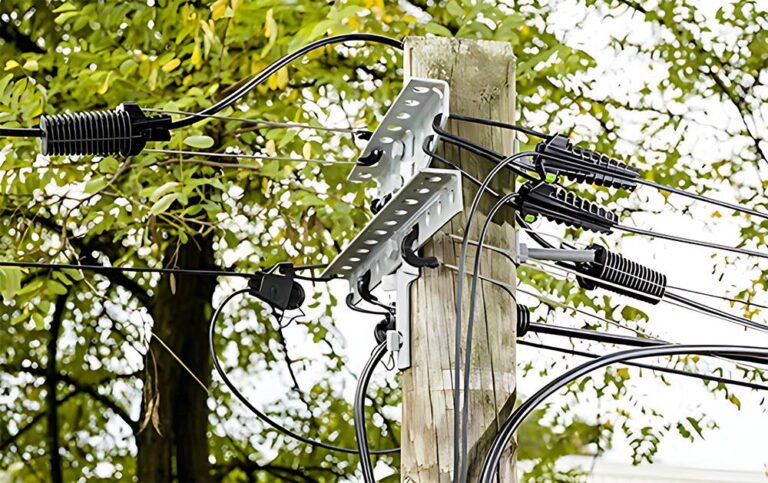
Different network architectures require specialized Cable Storage Rack configurations. The two primary categories are standard round racks and cross-type storage brackets. Round racks, also known as “snowshoes” due to their distinctive shape, are ideal for inline storage along the span. They consist of two curved channels that hold the cable in a continuous loop. These snowshoes are typically suspended directly from the steel messenger wire rather than being bolted to a pole. This suspension method minimizes the physical load on individual poles and allows for uniform sag management using the Cable Storage Rack across the aerial span.
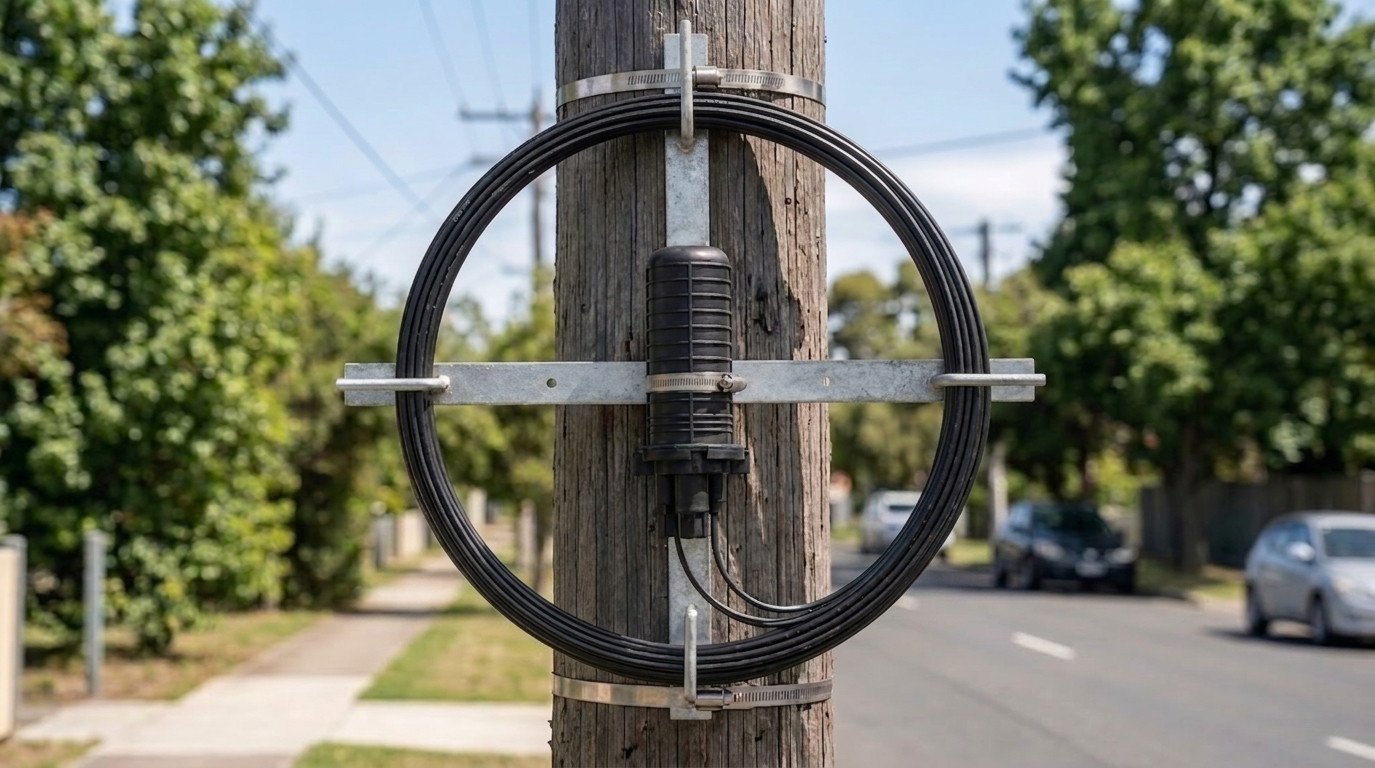
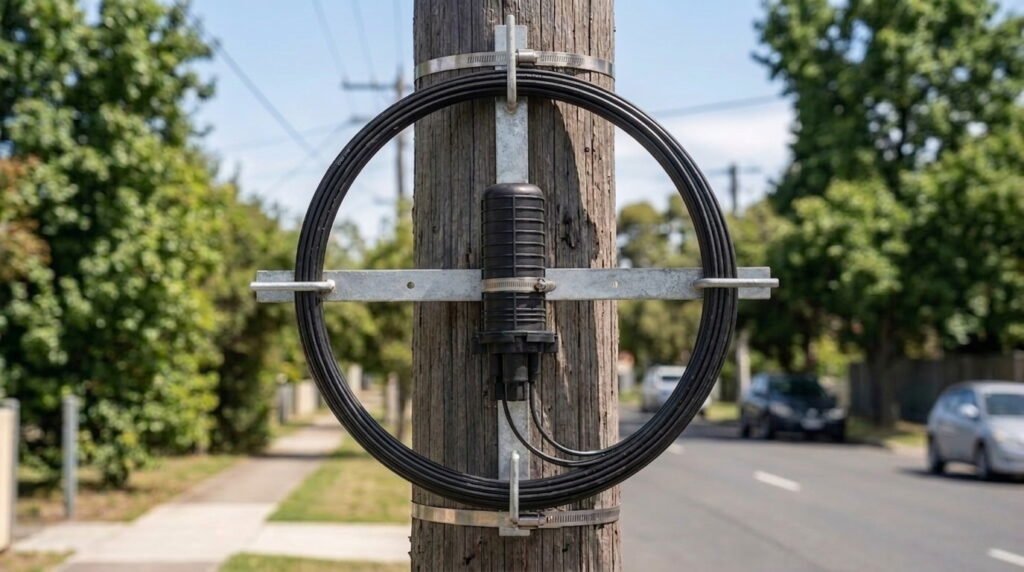
On the other hand, cross-type Cable Storage Rack options are designed specifically for pole or tower mounting. These structures consist of perpendicular steel arms with curved cable guides on each end. The cross-type design is highly efficient for managing large quantities of slack cable, such as those found at major splice points. By wrapping the cable around the four corners of the cross-frame, installers can store significant lengths of cable in a compact space. Moreover, this design allows for multi-layer wrapping, which is extremely useful when multiple fiber cables are deployed along the same utility corridor.
Additionally, specialized OPGW storage assemblies are engineered for high-voltage transmission towers. Because OPGW cables contain optical fibers embedded inside a metallic ground wire, they are exceptionally stiff. Therefore, the minimum bend radius is significantly larger than that of standard ADSS cables. These OPGW Cable Storage Rack designs must feature wider diameters and robust, heavy-duty mounting clamps. These clamps must isolate the optical cable from the electrical currents and high-frequency vibrations present on high-voltage lines, adhering strictly to ANSI guidelines.
Tower Mounted Cable Storage Rack Assemblies
Installing a specialized Cable Storage Rack on high-voltage transmission towers requires highly specialized hardware. Unlike standard wooden distribution poles, steel lattice towers do not allow for direct bolting. Therefore, tower-mounted Cable Storage Rack models utilize custom clamp assemblies. These clamps grip the steel angle iron securely without requiring any drilling. Drilling into tower members would weaken the structural integrity of the tower, which is strictly prohibited by safety regulations.
Furthermore, transmission towers are subject to extreme wind speeds and constant high-frequency vibrations. To address this, EPCOM designs OPGW Cable Storage Rack units with vibration dampers. These dampers absorb the micro-vibrations before they can reach the delicate optical fiber splice box. The storage loops are held securely in deep, contoured channels. They are then fastened using heavy-duty straps to prevent any relative movement between the cable and the metal frame. This robust construction ensures that the fiber link remains stable even during severe meteorological events.
Pole Mounted Storage Configurations
For standard distribution poles, installers typically prefer compact, pole-mounted Cable Storage Rack configurations. These brackets are designed to sit flush against the curved surface of wood, concrete, or steel poles. The mounting base usually features a curved backplate with multiple slot openings. These slots accommodate stainless steel bands or machine bolts, such as through-bolts or lag screws. Consequently, the mounting process is highly flexible and can be adapted to any pole material found in the field.
Additionally, pole-mounted configurations are engineered to maintain a safe distance between the fiber cable and other utility lines. On joint-use poles, telecommunication cables must maintain strict vertical clearances from high-voltage electrical lines. These clearances are defined by national safety codes. By utilizing a compact, low-profile Cable Storage Rack, operators can maximize their usable space on the pole. This compact design also minimizes the visual impact of the installation, which is an important consideration in residential areas.
Essential Accessories for Cable Storage Rack Setup
To achieve a professional, secure, and long-lasting installation, using the correct accessories is absolutely vital. A high-quality Cable Storage Rack cannot function in isolation. Instead, it relies on an ecosystem of heavy-duty fastening tools and materials to secure the cable package. EPCOM provides a complete range of companion products designed to integrate seamlessly with our main Cable Storage Rack brackets. By using matched components, installers can eliminate compatibility issues and ensure uniform performance across the entire aerial network.
First among these essential accessories is high-grade strapping material. Standard plastic zip ties are completely unsuitable for Cable Storage Rack utility applications. Over time, exposure to ultraviolet radiation and extreme temperatures causes plastic to become brittle and snap. When a single tie fails, the stored cable loop can sag, catch on passing vehicles, or swing in the wind, leading to structural failure. Therefore, industrial-grade steel strapping is the standard material for securing cables to Cable Storage Rack frames. This material offers unbeatable tensile strength and environmental resistance.
Furthermore, specialized tensioning tools are required to apply these steel bands with the correct force. If a band is applied too loosely, the cable loop will shift under wind load. This shifting causes physical wear on both the Cable Storage Rack and the cable jacket. Conversely, if a band is overtensioned, it can crush the cable, causing immediate fiber attenuation or physical deformation of the inner buffer tubes. Utilizing precision-engineered tools ensures that every fastener is installed to the exact manufacturer-specified tension, minimizing human error in the field.
Deploying the SS Cable Tie Tensioner
For securing individual cable runs to the Cable Storage Rack, the SS Cable Tie Tensioner is an indispensable tool. This professional-grade device allows installers to apply consistent, repeatable tension to stainless steel ties. The tool features an ergonomic handle and a precision tension control knob. Technicians can adjust the tension to match the specific cable diameter and jacket material, preventing over-tightening. Once the preset tension limit is reached, the tool automatically cuts the tie flush, leaving no sharp edges behind.
Moreover, the flush-cut feature is a critical safety consideration. When technicians work on crowded utility poles, exposed sharp metal ends present a significant laceration hazard. A clean, smooth cut protects technicians during future maintenance operations. The lightweight design of our tensioning tool also reduces operator fatigue. This is highly beneficial during large-scale deployments where thousands of ties must be installed daily. Ultimately, deploying this tool guarantees a uniform, safe, and code-compliant Cable Storage Rack installation across your entire network.
Benefits of Using Stainless Steel Cable Tie Fasteners
When securing cables in high-exposure environments, utilizing a Stainless Steel Cable Tie on your Cable Storage Rack offers massive advantages. Standard ties are highly vulnerable to environmental degradation. In contrast, stainless steel fasteners are completely impervious to UV radiation, extreme temperature fluctuations, and chemical exposure. This makes them ideal for industrial areas, coastal regions, and zones with high air pollution levels. Our ties feature a ball-lock mechanism that provides a secure, non-slip grip on the cable bundle.
Additionally, the low profile of these steel ties ensures they do not catch on branches or other aerial equipment. Their high tensile strength prevents failure under heavy ice or wind loads, keeping the stored loops compact and stable. By resisting corrosion and mechanical wear, these fasteners eliminate the need for frequent Cable Storage Rack maintenance visits. Consequently, network operators can enjoy peace of mind, knowing that their physical infrastructure will remain secure for decades, significantly reducing long-term operational expenditures.
Heavy-Duty Applications of Stainless Steel Strap Rolls
For major mounting tasks, such as anchoring the Cable Storage Rack itself to concrete or steel poles, utilizing a Stainless Steel Strap is the premier engineering solution. These heavy-duty steel bands are supplied on continuous rolls, allowing installers to cut custom lengths for any pole diameter. This flexibility is highly advantageous on older utility lines where pole sizes can vary significantly. Combined with heavy-duty buckles, these bands provide an incredibly strong, vibration-resistant mount that easily supports the weight of large fiber slack loops.
Furthermore, our strapping material is manufactured from high-grade alloys that offer superior resistance to galvanic corrosion. When different metals come into contact in the presence of moisture, galvanic corrosion can occur, rapidly degrading the weaker metal. By utilizing compatible stainless steel bands alongside our galvanized Cable Storage Rack, you can eliminate this risk. The exceptional yield strength of the strapping ensures that the storage assembly remains tightly bound to the pole, even during extreme weather events, guaranteeing network continuity under the most severe conditions.
Step-by-Step Installation of your Cable Storage Rack
Proper installation is paramount to achieving the full performance benefits of your Cable Storage Rack. Before beginning any field operations, technicians must conduct a thorough safety assessment. This assessment includes verifying clearances from high-voltage lines and ensuring all personal protective equipment (PPE) is in place. Once the site is deemed safe, the installation process can proceed. The following step-by-step guide outlines the standard operating procedure for mounting a cross-type storage bracket to a wooden utility pole.
To begin, determine the optimal mounting location on the pole. The Cable Storage Rack should be positioned below the main cable run, keeping it clear of other equipment. Mark the mounting hole locations on the pole face. For wooden poles, pre-drill pilot holes to prevent the wood from splitting when the lag bolts are inserted. Next, lift the bracket into position and align the mounting slots with the pre-drilled holes. Secure the bracket using heavy-duty hot-dip galvanized lag screws, ensuring they are tightened to the recommended torque value.
Once the Cable Storage Rack is securely anchored, the technician can begin laying out the slack cable loop. Carefully pull the excess cable from the main span, ensuring that no tight bends or kinks are introduced. Gently wrap the cable around the curved guides of the Cable Storage Rack, following the natural coil direction of the cable jacket. Secure the cable loops to the frame using stainless steel ties, applying the correct tension with the specialized tensioning tool. Finally, verify that the minimum bend radius has not been violated at any point along the loop, and that the fiber optic splice enclosure is securely mounted within its designated holder.
Choosing the Correct Mounting Height
Determining the correct mounting height for your storage assembly is crucial for both physical safety and compliance with local utility regulations. The installation height must always comply with national and local safety codes. These codes specify the minimum clearance heights for overhead lines crossing roads, pedestrian walkways, and railways. Mounting the Cable Storage Rack too low can present a significant safety hazard, potentially exposing the equipment to damage from high-clearance vehicles.
Furthermore, the height must allow for easy access during future maintenance and emergency restoration operations. Technicians should be able to reach the storage loop safely using standard bucket trucks or ladders. On joint-use poles, the Cable Storage Rack must be positioned within the designated communications space, maintaining a safe separation distance from electrical power distribution lines. By carefully planning the mounting height, operators can ensure a safe, durable installation that complies with all regulatory standards.
Securing Excess Fiber with Sag Control
Effective sag control is a critical element of aerial cable engineering. When cables are suspended between poles, they naturally sag under their own weight. This sag is essential to absorb mechanical tension. However, excess slack must be managed carefully to prevent the cable from drooping too low. Uncontrolled sag can lead to collisions with tree branches, buildings, or other utility equipment, resulting in physical damage to the fiber link.
By routing the excess cable through a structured Cable Storage Rack, you can achieve precise sag control. The Cable Storage Rack holds the surplus fiber in a compact, stable loop, preventing it from drooping into the lower clearance zones. During installation, the technician must calculate the correct sag tension based on environmental conditions, span length, and cable specifications. This precise tension management ensures that the aerial line remains stable and secure under all operating conditions, minimizing the risk of mechanical failure.
Technical Specifications and Performance Metrics
When selecting aerial hardware for major utility projects, a detailed analysis of technical specifications and performance metrics is absolutely essential. Engineers must compare various design parameters to ensure the selected Cable Storage Rack can withstand the specific environmental and physical demands of the installation site. Factors such as tensile strength, maximum load capacity, material composition, and corrosion resistance must all be evaluated against project requirements to guarantee long-term reliability.
To assist in this selection process, the following comprehensive table outlines the detailed technical specifications and performance standards for EPCOM aerial fiber hardware. This data is derived from rigorous laboratory testing and extensive field performance analysis, ensuring that our products meet or exceed international utility standards. All specifications are designed to comply with standard pole line engineering practices, providing a reliable reference for utility engineers and project managers.
| Product Parameter | Material / Specification | Performance Metric | Compliance Standards |
|---|---|---|---|
| Main Frame | Hot-Dip Galvanized Q235B Steel | Yield Strength: ≥ 235 MPa | ASTM A123 / ISO 1461 |
| Zinc Coating Weight | Hot-Dip Galvanized Coating | Minimum Coating: ≥ 610 g/m² | ASTM A153 / BS 729 |
| Max Load Capacity | Reinforced Structural Design | Safe Working Load: 5.0 kN | IEEE 524 Structural Guidelines |
| Stainless Steel Ties | Grade 316 Stainless Steel | Loop Tensile Strength: ≥ 1100 N | UL 62275 / IEC 62275 |
| Strapping Band | Grade 201/304 Stainless Steel | Max Breaking Strength: 12.5 kN | ASTM A240 / EN 10088 |
| Operating Temp | All-Weather Environmental Range | Range: -40°C to +85°C | IEC 60068 Environmental Testing |
As detailed in the table above, EPCOM components are engineered to withstand extreme physical and environmental challenges. By utilizing high-tensile steel, premium protective coatings, and industrial-grade stainless steel alloys, our products deliver exceptional safety margins and long-term durability. These high standards ensure that your Cable Storage Rack remains completely secure and operational under all climate conditions, protecting your valuable network assets and ensuring uninterrupted service for your subscribers.
Environmental Resilience of a Cable Storage Rack
Environmental factors present a constant threat to aerial infrastructure. Therefore, evaluating the environmental resilience of your selected Cable Storage Rack is a critical phase of network engineering. In addition to physical loads and corrosion, outdoor equipment must withstand extreme temperature fluctuations. In continental climates, temperatures can range from sub-zero winter lows to blistering summer highs. These temperature shifts cause metallic components to expand and contract. This constant thermal movement can lead to bolt loosening or structural stress. EPCOM designs its brackets with thermal relief slots to safely absorb these expansion cycles without sacrificing structural strength.
Furthermore, ultraviolet (UV) radiation is highly destructive to non-metallic components. Over prolonged exposure, solar UV rays break down the polymer chains in plastic ties, causing them to crack and crumble. This degradation is why EPCOM strictly recommends the use of stainless steel ties and strapping. Our steel fasteners are completely unaffected by UV light. This ensures that the Cable Storage Rack loop remains tightly secured for its entire design life. By eliminating plastic materials from our critical fastening setups, we prevent premature field failures and significantly lower maintenance costs.
To illustrate the performance of our materials under severe environmental conditions, the following data visualization chart compares the estimated Cable Storage Rack lifetime (in years) under continuous exposure to extreme outdoor environments, including marine salt air, high UV radiation, and severe industrial pollution. This chart highlights the massive durability advantages of utilizing premium hot-dip galvanized steel and marine-grade stainless steel over standard painted steel or plastic components, providing a clear visual representation of long-term asset value.
Material durability comparison in highly corrosive, high-exposure outdoor testing environments.
As clearly demonstrated by the data visualization above, the durability gap between different engineering materials is substantial. Standard painted steel and industrial plastic ties fail rapidly under continuous environmental stress, necessitating frequent replacement and risking critical fiber damage. Conversely, EPCOM’s hot-dip galvanized Cable Storage Rack frames and Grade 316 stainless steel fasteners offer unbeatable longevity, with estimated lifespans exceeding twenty-five and thirty years respectively. This extreme durability ensures that your infrastructure investment remains secure, protecting your optical links and maintaining network performance for decades to come.
Ultimately, achieving a highly reliable, high-performance aerial network requires a meticulous combination of quality hardware, precision engineering, and professional installation. By deploying EPCOM’s advanced Cable Storage Rack solutions, network operators can safeguard delicate optical fibers from mechanical and environmental hazards. Our comprehensive ecosystem of galvanized frames, heavy-duty stainless strapping, and high-precision tensioning tools guarantees a uniform, code-compliant, and durable aerial deployment. Explore our complete line of premium telecommunication and power hardware, and partner with EPCOM to build the next generation of robust, high-speed utility infrastructure.