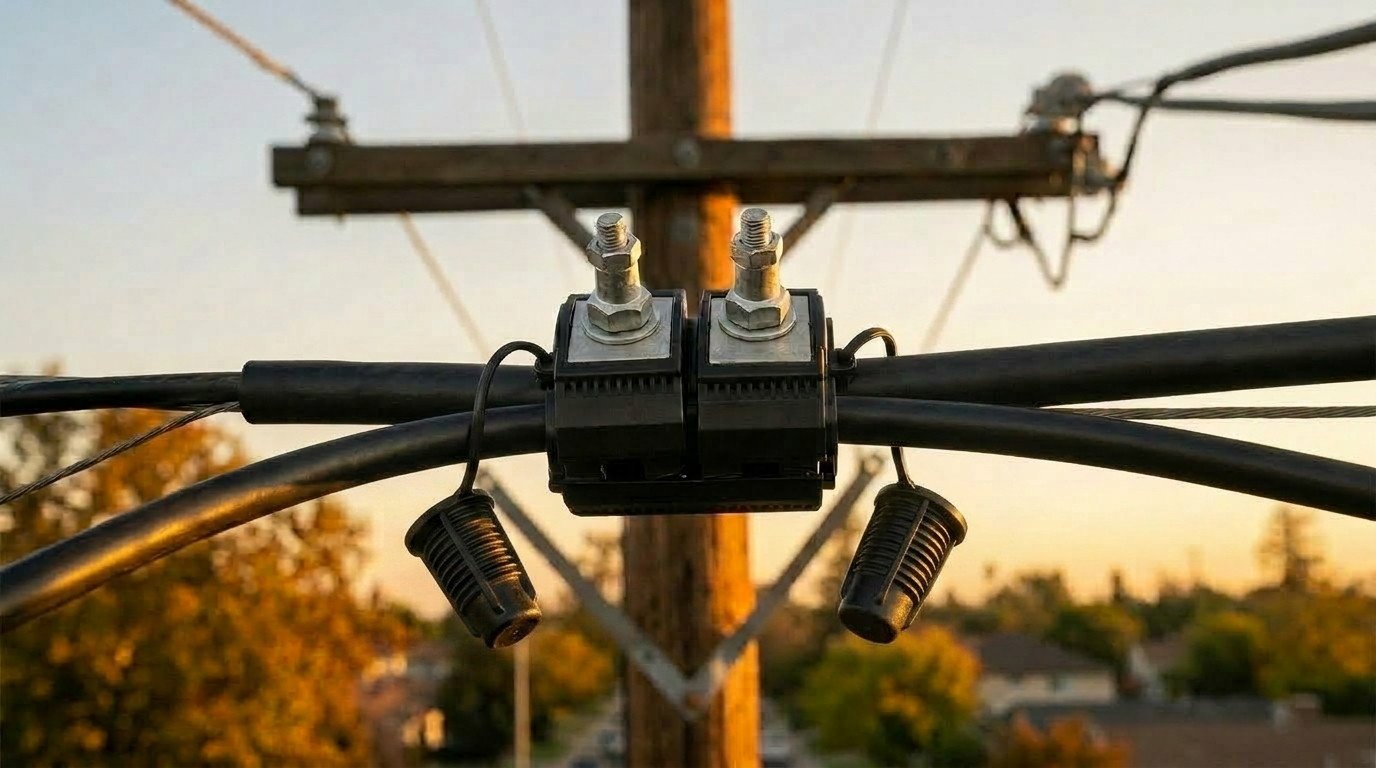
JBC Insulation Piercing Connector: Reliable Design
JBC Insulation Piercing Connector units have transformed overhead electrical distribution networks worldwide. Consequently, EPCOM designs these structural components with high engineering precision to provide safe connections. These systems establish electrical contact without stripping cable sheaths. Therefore, they significantly reduce installation time on live line networks. In this comprehensive technical analysis, we will explore their mechanisms, benefits, and applications. We will also address how they integrate with associated overhead power systems.
Understanding JBC Insulation Piercing Connector Mechanics
Every electrical connection must overcome the barrier of cable insulation to transmit power. Traditionally, line technicians had to strip away thick protective coverings before joining wires. However, this old method exposed conductors to moisture and air, which triggered oxidation. The JBC Insulation Piercing Connector solves this historical issue completely. It uses specially engineered tinned copper or aluminum teeth to pierce the insulation jacket.
The design features high-strength glass fiber reinforced polymer plastics on the exterior body. This casing provides exceptional mechanical durability and high insulation properties. As a result, the outer body remains completely insulated even when installed on fully energized lines. During installation, the technician turns a torque shear nut using a standard hex wrench. This specialized nut controls the exact amount of pressure applied to the conductor jacket.
When the pressure reaches a designated limit, the nut shears off cleanly. This mechanical shear-off process guarantees that the contact teeth penetrate deep enough to establish an optimal electrical connection. Yet, it prevents the teeth from crushing or damaging the underlying wire strands. This mechanism ensures an uniform contact pressure over decades of outdoor service in harsh climates.
Key Applications of JBC Insulation Piercing Connector Units
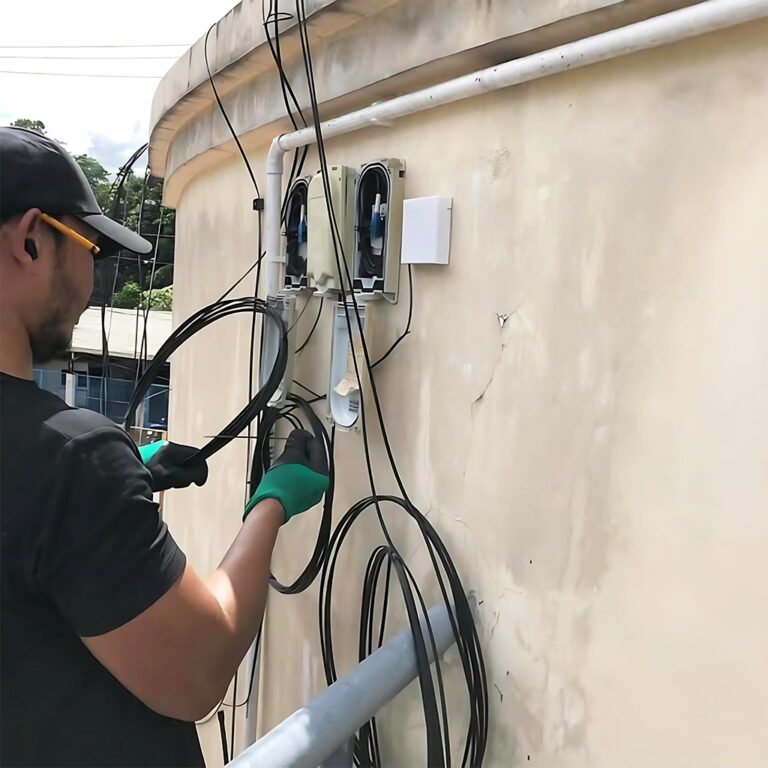
Electric utilities use these connectors extensively in low-voltage and medium-voltage overhead distribution networks. Specifically, they are highly useful for establishing service line connections to residential homes. Technicians can tap into main overhead lines easily without cutting the main conductor. Furthermore, they are excellent for street lighting connections and building line taps. Since the main wire remains intact, the mechanical tension of the network is fully preserved.
Moreover, these connectors are highly effective for connecting main overhead lines to branch circuits. They accommodate a wide range of conductor cross-sections, allowing versatile configuration designs. Whether you are working with main distribution lines or thin customer drop wires, these connectors ensure a reliable junction. Additionally, they prevent any electrical tracking or localized short circuits under heavy rain or ice loads.
To ensure a reliable and comprehensive setup, these systems are paired with robust overhead conductors. Specifically, they are designed to tap into high-durability ABC Cable configurations. These cables provide insulated conductors grouped closely together, which reduces localized electromagnetic interference. By using our piercing connectors, the integrity of the insulated cable jacket remains intact. Thus, water ingress cannot reach the inner metallic conductors.
Technical Specifications and Performance Metrics
Engineers at EPCOM carefully test every unit against rigorous international standards. These tests include thermal cycle evaluations, tensile strength checks, and water immersion dielectric trials. For instance, the connectors are immersed in water for several hours while under high voltage. This process verifies that the insulation barrier remains completely impenetrable to moisture.
The connector teeth are manufactured from highly conductive aluminum alloy or solid brass. To prevent corrosion when joining dissimilar metals, these teeth are plated with high-grade tin. This allows technicians to connect aluminum conductors to copper branch wires safely. This anti-galvanic action is critical because moisture otherwise initiates severe corrosion between copper and aluminum. In addition, the internal cavity is pre-filled with high-grade synthetic grease. This grease acts as an extra sealant to exclude oxygen from the contact zone.
| Parameter Description | Main Conductor Section (mm²) | Tap Conductor Section (mm²) | Test Voltage in Water | Recommended Torque (Nm) |
|---|---|---|---|---|
| Standard Tap Type A | 16 – 95 | 1.5 – 10 | 6 kV (1 minute) | 9.0 – 11.0 |
| Medium Tap Type B | 50 – 150 | 6 – 35 | 6 kV (1 minute) | 15.0 – 18.0 |
| Heavy Duty Type C | 95 – 240 | 50 – 150 | 6 kV (1 minute) | 22.0 – 26.0 |
| High Capacity Type D | 120 – 300 | 95 – 240 | 10 kV (1 minute) | 30.0 – 35.0 |
For high-capacity structural installations, these systems are frequently used alongside ACSR Conductors which carry power over long spans. Because steel cores reinforce ACSR wires, they handle extreme mechanical tension. When stepping down or branching off these major distribution lines, utilizing a specialized tap connection ensures that power is safely diverted to local transformers without risking line integrity. Our connection systems maintain an airtight seal at these critical transition interfaces.
Why Choose EPCOM for JBC Insulation Piercing Connector Supplies?
EPCOM has established a stellar reputation for delivering superior utility hardware across the globe. We use state-of-the-art polymer injection molding facilities to ensure dimensional consistency. This strict manufacturing oversight guarantees that every single plastic shell possesses identical density and UV resistance. Therefore, our hardware can withstand continuous desert sunlight and freezing arctic conditions alike.
Moreover, our mechanical engineers continuously optimize the design of the contact teeth. They execute complex finite element analysis to ensure maximum electrical contact. These simulations help us shape the piercing geometry to perfectly slit insulation without severing conductor strands. Consequently, the mechanical load capacity of the connected wire is never compromised. This focus on detail makes EPCOM a trusted partner for global power grid operators.
To safely terminate and split these branched lines, utilities also implement heavy-duty containment units. Specifically, using an Electrical Junction Box from our catalog provides a weather-resistant enclosure for these sensitive splicing connections. This structure keeps all connected lines organized, dry, and protected from localized ground faults. Thus, the combination of our piercing units and protective enclosures delivers an uncompromised distribution architecture.
Installation Best Practices for JBC Insulation Piercing Connector Projects
Although these units are designed for straightforward usage, technicians must strictly adhere to proper safety guidelines. First, you must select the correct connector model matching the exact size of your main and tap cables. Using a connector that is too small can lead to incomplete penetration of the protective sheath. Conversely, using a connector that is too large can result in localized hot spots due to loose contact interfaces.
Second, ensure the cable surfaces are clean. Even though the teeth pierce the insulation, wiping off heavy dirt, mud, or thick grease from the cable jacket is highly recommended. This prevents contaminants from entering the contact area during the piercing process. Third, hold the main and tap wires straight inside the connector channels. This straight positioning ensures that the contact teeth descend perfectly perpendicular to the conductor surface.
Fourth, turn the shear head nut smoothly and continuously. Do not use sudden, jerky motions, as this could cause the nut to snap prematurely. A steady, firm rotation with a standard wrench is the ideal approach. Once the shear nut snaps off cleanly, the installation is complete. Do not attempt to tighten the lower base nut, as it is calibrated to hold the contact pressure secure. Finally, always slide the protective rubber end cap over the exposed tip of the tap cable to prevent any accidental moisture entry.
Environmental Durability of JBC Insulation Piercing Connector Designs
Utility hardware must function reliably outdoors for thirty to forty years. During this period, it faces extreme temperature fluctuations, acid rain, ozone exposure, and heavy wind vibrations. To survive these forces, the JBC Insulation Piercing Connector incorporates highly specialized materials. The external polymer housing contains high percentages of carbon black and advanced ultraviolet stabilizers to prevent degradation.
Furthermore, the internal metal parts are thoroughly shielded from external atmospheric agents. By compressing the rubber seal tightly against the cable jacket, the connector creates a hermetically sealed barrier. This prevents moisture from seeping into the connection point. This robust environmental protection prevents corrosion, which is the leading cause of premature electrical failure in traditional line taps. Ultimately, these factors ensure that EPCOM hardware reduces ongoing maintenance expenses significantly.
Relative Performance and Installation Efficiency Chart
The diagram compares the overall labor and installation time required to make a standard line connection. The JBC Insulation Piercing Connector reduces installation efforts significantly compared to traditional wire-stripping methods.
Safety and Long-term Operational Reliability
Grid stability depends directly on the mechanical and electrical integrity of countless individual nodes. A single failed connection can cause localized power outages, resulting in expensive emergency repairs. Therefore, maintaining stable connection nodes is a major priority for network operators. The JBC Insulation Piercing Connector is engineered to prevent localized overheating under continuous electrical load. This long-term thermal stability is achieved through low contact resistance.
Because the contact teeth establish multiple points of high-pressure contact, they keep resistance extremely low. This low resistance reduces localized heat generation, even during peak current demands. Additionally, the elastic properties of the polymer housing act as a constant spring. This spring-like force compensates for thermal expansion and contraction cycles of the metal wires. When current flows, the metal heats up and expands; when the load drops, it cools and contracts. Our advanced design absorbs these microscopic shifts, ensuring that the contact remains secure.
To deepen your understanding of grid design and standard distribution safety parameters, you can explore the official guidelines published by the IEEE (Institute of Electrical and Electronics Engineers). This organization sets the foundational technical benchmarks for global electrical infrastructure. By aligning our manufacturing processes with these international standards, EPCOM delivers outstanding utility components that meet the requirements of modern grids.
Advanced Troubleshooting and Inspection Procedures
Although our connectors do not require regular maintenance, conducting simple visual inspections during routine line patrols is always beneficial. For example, inspectors can use thermal imaging cameras to check connections. If a connector shows a high thermal signature compared to the surrounding cable, it could indicate high contact resistance. This localized heat signature might stem from incorrect installation or choosing the wrong model size.
If you discover an overheating unit, you must replace it promptly. First, safely de-energize the section if possible, although these are rated for live-line work when using approved safety equipment. Next, unscrew the secondary clamp bolt and remove the connector from the wire. Wipe down the cable jacket, inspect the conductor strands for mechanical damage, and install a brand-new connector. Always remember that the torque head can only be sheared off once. Therefore, a previously installed unit must never be reused.
In addition, ensure that the tap wire is not under excessive mechanical tension. While our connectors handle heavy electrical current, they are not designed to act as physical structural anchors. Let the tension be carried by dedicated dead-end clamps or anchoring brackets. This proper distribution of structural loads protects the electrical interface from long-term fatigue.
Future Outlook of Insulated Overhead Distribution Networks
As cities expand and modern industries demand continuous electrical power, overhead distribution systems must become more resilient. Smart grid integration requires clean, uninterrupted electricity with minimal distribution losses. Consequently, high-quality piercing connectors will play a critical role in these updated networks. They enable fast grid modifications and seamless expansion with minimal service interruptions.
At EPCOM, we remain dedicated to advancing utility hardware technology. Our research division constantly experiments with newer polymer blends to increase tensile strength and UV protection. We are also optimizing the metallurgy of our piercing teeth to further lower contact resistance. These engineering upgrades ensure that our hardware remains compatible with future distribution systems.
Furthermore, the shift toward localized renewable energy installations is increasing the demand for highly reliable tapping hardware. As rooftop solar systems and wind micro-generation systems connect to existing utility grids, the need for safe, fast tapping points grows exponentially. Our piercing connectors provide the perfect mechanical solution for this modern trend. They facilitate rapid, secure connections that support clean energy initiatives globally.
Detailed Comparison of Connection Technologies
To fully appreciate the advantages of our hardware, comparing it with alternative splicing methods is helpful. For example, compression sleeves require removing a segment of the insulation layer. This process requires specialized hydraulic crimping tools, which are heavy and cumbersome to use on high wooden poles. Furthermore, if a technician crimps a sleeve with incorrect pressure, the wire may slip out or become crushed.
Another common alternative is the split bolt connector. While split bolts are inexpensive, they do not provide any environmental sealing on their own. The technician must wrap the finished connection with multiple layers of insulating tape. If this tape degrades under hot weather or heavy rain, moisture penetrates the splice, initiating corrosion. Consequently, the JBC Insulation Piercing Connector represents a vastly superior solution. It combines structural connection, moisture sealing, and accurate torque control in one self-contained, easy-to-use unit.
By selecting these advanced connectors, utilities protect their overhead lines from common environmental failures. This strategic hardware choice translates directly into higher consumer satisfaction and lower operational budgets. Ultimately, investing in premium EPCOM components ensures that your distribution networks remain robust for decades to come.
Conclusion
In summary, modern power grids require highly reliable, safe, and efficient connection components. The JBC Insulation Piercing Connector meets all these stringent requirements. It eliminates the need for stripping cable jackets, ensures optimal contact through precise torque-shear mechanics, and provides an impenetrable seal against environmental agents. By integrating this advanced hardware with high-performance ABC cables, ACSR conductors, and secure junction boxes, utility operators can build outstanding overhead lines. Choose EPCOM for your distribution network requirements and secure a high-efficiency electrical infrastructure for the future.