

American Switch and Socket: Your Essential Guide
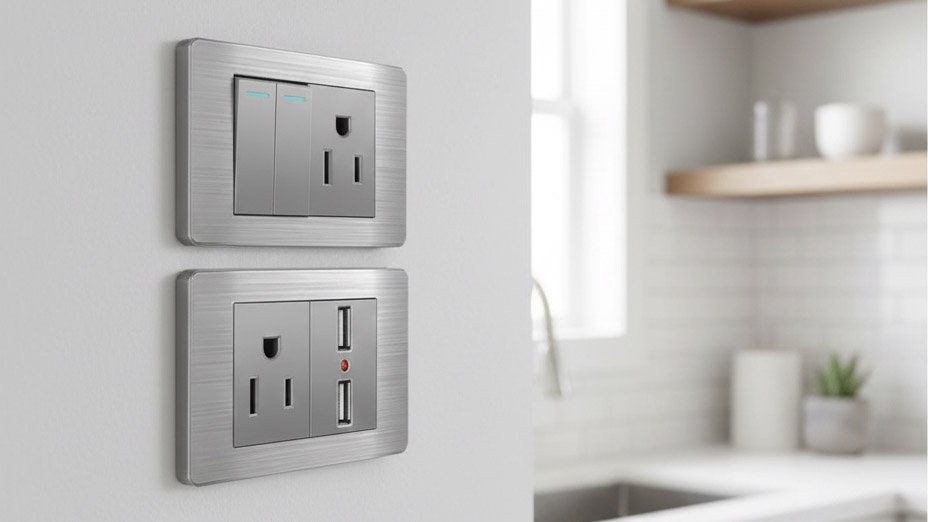
American Switch and Socket infrastructure forms the critical interface between electrical power grids and the daily appliances we rely upon. At EPCOM, we recognize that selecting the right electrical components is not merely about functionality; it is about ensuring safety, compliance, and long-term reliability for residential and commercial environments. Whether you are a contractor outfitting a new office complex or a homeowner upgrading a living space, understanding the nuances of the American Switch and Socket system is paramount. This comprehensive guide serves as your ultimate resource. We will explore technical specifications, installation best practices, and the superior quality that EPCOM brings to the market.
The electrical landscape in North America is distinct. Unlike European systems, the American Switch and Socket standard operates primarily on 120 volts at a frequency of 60 Hertz. Consequently, the physical design and material engineering of these devices must meet specific regulatory hurdles. Throughout this article, we will delve deep into these requirements. We will also discuss how auxiliary components, such as high-grade wiring and sturdy housing, play a vital role in the performance of your **wall-based electrical system**.
The Evolution of the American Switch and Socket
Historically, electrical interfaces were simple. However, the modern American Switch and Socket has evolved into a sophisticated device. In the early 20th century, functionality was the sole focus. Today, aesthetics and smart integration share the stage with raw performance. Manufacturers now utilize advanced thermoplastics, ensuring that every **unit** withstands high impact and resists heat accumulation.
Furthermore, the evolution addresses safety. Early designs lacked grounding pins. In contrast, the contemporary American Switch and Socket almost universally features a grounding connection. This evolution significantly reduces the risk of electrical shock. Therefore, upgrading older systems to modern EPCOM standards is a necessary safety step, not just a cosmetic renovation.
Core Components of a Safe American Switch and Socket System
An American Switch and Socket does not operate in a vacuum. It is the visible endpoint of a complex network. To ensure your switch operates correctly, the hidden infrastructure must be flawless. One critical element is the housing.
Connections must be secure and contained. This is where the electrical junction box proves essential. A high-quality junction box protects the wire connections behind the American Switch and Socket from dust, moisture, and accidental contact. Without this sturdy enclosure, the integrity of the entire circuit is compromised.
Additionally, the wire itself dictates performance. For feeders that might run through conduits to supply a bank of sockets, using durable cabling like XHHW wire is often recommended. This specific wire type offers superior resistance to heat and moisture compared to standard THHN options. When you pair an EPCOM American Switch and Socket with premium XHHW wiring, you create a system built for longevity.
Common American Switch and Socket Varieties
Diversity is a hallmark of this market. When browsing the EPCOM catalog, you will encounter various configurations.
- Single-Pole Switches: The most common controller for a single fixture.
- Three-Way Switches: These allow control of a light from two different locations, a staple in hallways.
- Duplex Receptacles: The standard two-plug outlet found in most US homes.
- GFCI Outlets: Ground Fault Circuit Interrupters are mandatory in wet areas like kitchens.
Choosing the correct type of American Switch and Socket depends heavily on the room’s function. For instance, installing a standard non-grounded socket in a bathroom violates the National Electrical Code (NEC). We always advise consulting local regulations before final selection.
NEMA Standards for American Switch and Socket Configurations
Uniformity is crucial for safety. The National Electrical Manufacturers Association (NEMA) sets the standards that define the geometry of the **American Switch and Socket**.
The most ubiquitous pattern is the NEMA 5-15. This configuration supports 15 Amps at 125 Volts. It features two flat parallel blades and a round grounding pin. Alternatively, the NEMA 5-20 caters to heavier loads, distinguished by a T-shaped neutral slot. EPCOM ensures that every **American Switch and Socket** we manufacture adheres strictly to these dimensional tolerances.
Below is a comparison of common configurations you might encounter:
| NEMA Configuration | Voltage / Amperage | Typical Application | Compatibility |
|---|---|---|---|
| NEMA 1-15 | 125V / 15A | Older homes (Ungrounded) | Lamps, small clocks |
| NEMA 5-15 | 125V / 15A | Standard Residential | Computers, TVs, Chargers |
| NEMA 5-20 | 125V / 20A | Kitchens, Commercial | Microwaves, High-load tools |
Professional Installation Tips for the American Switch and Socket
Installing an American Switch and Socket requires precision. While we always recommend hiring a licensed professional, understanding the process is beneficial.
First, verify that the power is off at the breaker panel. Never assume a circuit is dead. Use a non-contact voltage tester on the existing **outlet or switch** before touching any screws.
Second, inspect the wiring box. Is it crowded? If you are upgrading your system, ensure you have enough volume in the wall box. If the wiring leading to the building is overhead, the stability of the supply line is also crucial. Devices like the PA2000 dead end anchoring clamp are used on the exterior to securely hold the service drop cables that eventually feed power to your indoor American Switch and Socket. A loose exterior line can cause voltage fluctuations, damaging sensitive electronics plugged into your sockets.
Wiring Practices and Polarity for the American Switch and Socket
When connecting the wires, polarity matters. On a standard **American Switch and Socket**, the brass screw connects to the “hot” (black) wire. The silver screw connects to the “neutral” (white) wire. The green screw is for the ground (bare or green) wire.
Reversing these connections results in “reverse polarity.” While the appliance might still work, it creates a shock hazard. For example, if a lamp is plugged into a miswired **device**, the socket shell of the bulb holder could become live. EPCOM products are clearly labeled to help installers avoid these common mistakes.
Advanced Features and Smart Integration for the American Switch and Socket
Technology does not stand still. The humble **electrical interface** has received a digital upgrade. Smart switches now integrate with home automation systems like Zigbee, Z-Wave, and Wi-Fi.
These advanced devices allow homeowners to control lighting remotely. Imagine turning off every **American Switch and Socket** connected to a lamp in your house via a smartphone app. Furthermore, modern sockets often come with integrated USB charging ports. This eliminates the need for bulky adapters, offering a sleek look that maintains the classic **American Switch and Socket** aesthetic while providing modern utility.
Troubleshooting Common Electrical Issues
Even high-quality components can face issues over decades of use.
**Loose Plugs:** If a plug falls out of your **American Switch and Socket** easily, the internal contacts have worn out. This causes arcing and heat. Immediate replacement is required.
**Warm Faceplates:** A dimmer switch naturally generates some heat. However, a standard toggle switch or outlet should not feel hot. If your **electrical device** is warm to the touch, it suggests an overloaded circuit or a loose wire termination.
**Buzzing Sounds:** A buzzing **wall unit** indicates a serious problem, likely a loose connection arcing inside the box. Turn off the breaker immediately and inspect the unit.
Material Durability and Quality
EPCOM prioritizes materials. A cheap **American Switch and Socket** often uses brittle plastics that crack under screw torque. We utilize high-impact polycarbonate and nylon. These materials resist fading from UV light and maintain their structural integrity even in high-traffic commercial environments.
Moreover, the metal contacts inside an EPCOM **American Switch and Socket** are designed for high spring tension. This ensures a tight grip on plugs for years, maintaining a low-resistance connection that prevents overheating.
Commercial vs. Residential Specifications
Is there a difference? Absolutely. A residential-grade **American Switch and Socket** is designed for typical household usage frequencies. Conversely, commercial-grade units are built to withstand constant plugging and unplugging.
For offices, schools, and hospitals, EPCOM recommends specifying commercial-grade items. These often feature a metal yoke (strap) rather than plastic, providing rigid support against the wall. While the residential **American Switch and Socket** is sufficient for a bedroom, a hallway vacuum outlet in a hotel demands the robustness of a commercial specification.
Why EPCOM is the Leader in Electrical Solutions
Choosing EPCOM means choosing reliability. We rigorously test every **American Switch and Socket** to exceed UL (Underwriters Laboratories) safety standards. Our commitment to quality ensures that when you flip a switch or plug in a device, power is delivered safely and consistently.
From the heavy-duty XHHW wire that feeds the circuit, to the secure electrical junction box behind the wall, and finally to the **American Switch and Socket** itself, EPCOM provides the complete solution for electrical excellence.
In conclusion, the **American Switch and Socket** is a small device with a massive responsibility. It protects your property, powers your life, and keeps your family safe. Do not compromise on quality. Trust EPCOM for all your electrical connectivity needs.