High-Density MPO/MTP Module Cassette Solutions
The MPO/MTP Module Cassette is arguably the most fundamental component driving the high-density revolution in modern data centers. Furthermore, it is central to scaling current networks from 10G to 40G, 100G, and beyond. This powerful fiber management solution allows for the efficient and protected transition from multi-fiber MPO/MTP trunk cables to individual single or duplex fiber connectors like LC or SC. Consequently, network managers can achieve unprecedented density while ensuring streamlined cable management and simplified maintenance.
Therefore, understanding the mechanics, applications, and strategic advantages of the MPO/MTP Cassette is essential for any organization planning a future-proof, high-speed fiber infrastructure. EPCOM provides industry-leading MPO/MTP ODF solutions that utilize these cassettes to streamline data center deployments. We will delve into how these modules optimize space, minimize deployment time, and significantly reduce the potential for human error in critical environments.
1. Decoding the MPO/MTP Module Cassette Anatomy
Initially, it is critical to distinguish between the components that make up this system. The MPO (Multi-fiber Push On) is the original standard, while the MTP (Mechanical Transfer Push-on) is a registered trademark of US Conec, representing a high-performance version of the MPO connector. However, the term “MPO/MTP Module Cassette” is commonly used to describe the entire unit. Consequently, the cassette serves as the housing and conversion point.
The Role of the MPO/MTP Cassette in Fiber Networks
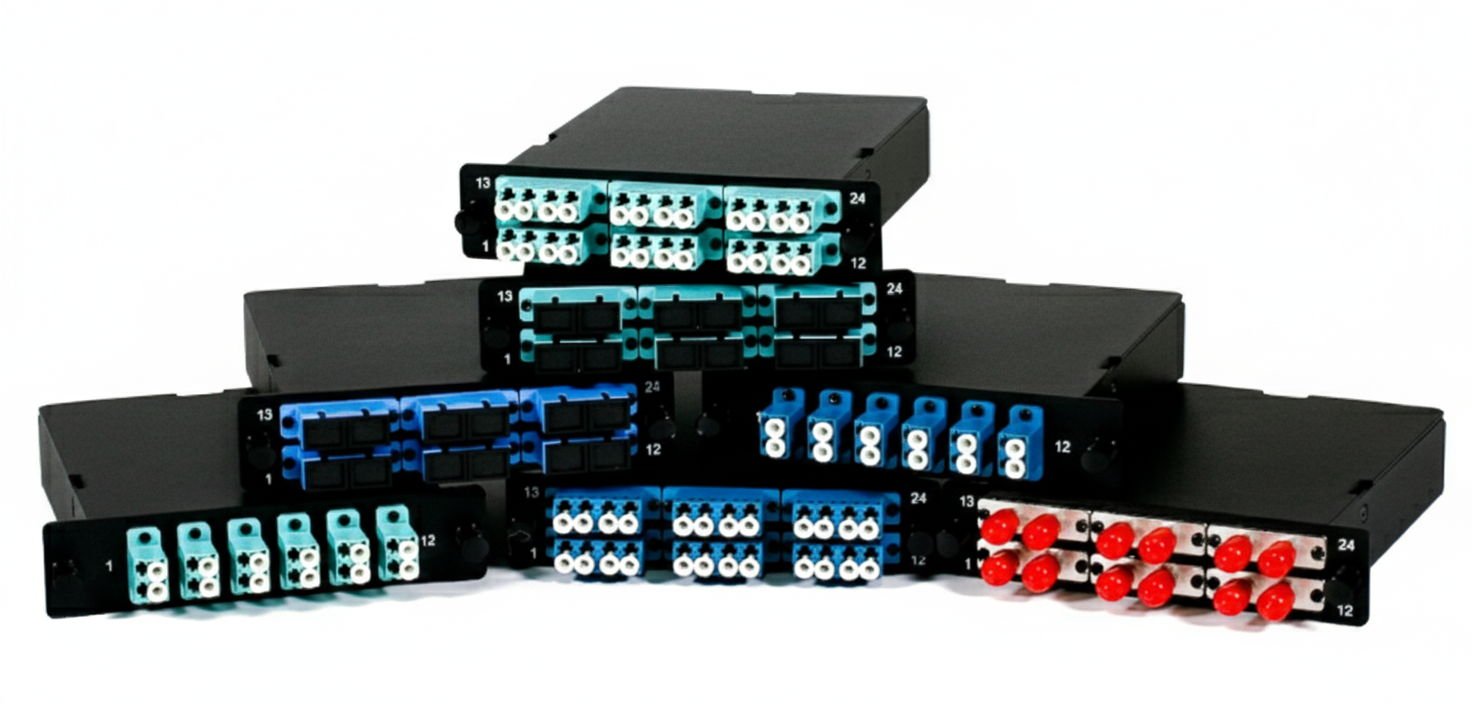
The primary role of the MPO/MTP Cassette is fiber fan-out. Specifically, it accepts a multi-fiber MPO/MTP connector at the rear and breaks out the fibers into discrete, single-fiber connectors (typically LC or SC) at the front panel. This transition is essential for interfacing high-density MPO trunk cables with standard network equipment, such as transceivers and media converters that utilize traditional duplex LC ports. As a result, this allows for effortless integration into existing infrastructure.
Core Benefits of Using the MPO/MTP Module Cassette
- Space Efficiency: Firstly, they consolidate up to 24 or 36 fibers into a compact module, maximizing rack space utilization.
- Deployment Speed: Next, pre-terminated factory-tested modules drastically cut down on installation time and labor costs.
- Scalability: Moreover, adding new links is as simple as inserting another module, making scaling seamless.
- Protection: Finally, the robust plastic or metal housing protects the sensitive fiber splices and connections inside, ensuring long-term reliability.
2. Technical Specifications of the MPO/MTP Module Cassette
To truly optimize network performance, one must understand the critical technical parameters governing these modules. Notably, two factors stand out: polarity and optical performance. Consequently, compliance with standards set by organizations like the Telecommunications Industry Association (TIA) is non-negotiable for high-speed reliability.
Polarity Management in MPO/MTP Cassettes
Polarity refers to ensuring that the transmit (Tx) signal from one end is routed to the receive (Rx) port at the other. With multi-fiber connectors, this management becomes complex. There are three primary methods—Method A, Method B, and Method C—each dictating how the fibers are arranged within the cassette and the accompanying MPO/MTP Patch Cord. For instance, Method B is the most common for 40G and 100G parallel transmission.
Insertion Loss and Optical Performance
Insertion loss is a critical metric. Specifically, every connection point, including the MPO/MTP Cassette’s internal splices and connectors, adds to the total loss budget of the link. Since high-speed applications like 40G and 100G have stringent loss requirements, EPCOM offers Ultra-Low Loss (ULL) cassettes. Therefore, selecting a ULL cassette is paramount for maximizing the reach and performance of your network, especially when paired with high-quality Fiber Patch Cord solutions.
3. Optimized Deployment Scenarios for MPO/MTP Module Cassette Systems
The efficiency gains from using an **MPO/MTP Module Cassette** are most evident in the Spine-Leaf architecture of modern data centers. Furthermore, these modules are indispensable in three key deployment scenarios, each demanding high density and flexibility. By adopting these methods, organizations can dramatically improve their cabling infrastructure.
Scenario A: Zone Cabling and Distribution Areas
Firstly, cassettes are ideal for creating a centralized distribution area (CDA) or equipment distribution area (EDA). In this setup, high-fiber count MPO trunks run between zones, and the **MPO/MTP Module Cassette** is used at the zone boundary to transition to individual equipment patch cords. This structure simplifies troubleshooting and future moves, adds, and changes (MACs).
Scenario B: Migration from Duplex to Parallel Optics
Secondly, these modules facilitate the smooth migration from traditional duplex LC links to parallel optics used in 40G (QSFP+) and 100G (QSFP28) applications. A cassette loaded with 12-fiber MPO connectors and 6 duplex LC ports enables a non-disruptive upgrade path, offering investment protection. Moreover, the modularity of the **MPO/MTP Cassette** ensures that the change is manageable and swift.
Scenario C: Inter-Rack and Intra-Rack Cabling
Finally, for dense rack environments, cassettes mounted in a 1U or 2U fiber enclosure provide an organized point of interconnection. This eliminates the spaghetti mess often associated with traditional patching. Since the cassette itself is pre-tested, the installation of **MPO/MTP Module Cassettes** drastically reduces the on-site labor required and increases the link performance guarantee.
4. Why the MPO/MTP Module Cassette Outperforms Conventional Fiber Management
When evaluating the total cost of ownership (TCO) and operational efficiency, the benefits of the cassette system become clear. Traditional fiber management, which relies on field-termination or fusion splicing, often lags behind in both speed and reliability. Conversely, the high-quality, pre-engineered approach of the **MPO/MTP Module Cassette** provides compelling advantages across the board.
Comparative Metrics: Cassette vs. Traditional Field Termination
| Metric | MPO/MTP Module Cassette | Traditional Field Termination (e.g., Splicing) |
|---|---|---|
| Installation Time per Fiber | Seconds (Plug-and-play) | Minutes (Time-consuming splicing/polishing) |
| Density (Fibers per U) | Extremely High (Up to 144+ per 1U) | Lower (Requires more space for slack management) |
| Insertion Loss | Ultra-Low Loss (Factory tested, excellent repeatability) | Variable (Dependent on technician skill and environment) |
| Skill Requirement | Low (Simple connection) | High (Specialized equipment and training required) |
| Troubleshooting | Simplified (Modular replacement) | Complex (Pinpointing fault location is difficult) |
Therefore, the modular design not only saves time during initial deployment but also minimizes downtime when network changes are required. The plug-and-play functionality of the **MPO Cassette** ensures consistent, predictable performance that field labor cannot always guarantee.
5. The Role of the MPO/MTP Module Cassette in Next-Generation Speeds
As the demand for bandwidth explodes, the need for higher-speed interconnects like 200G and 400G has become immediate. In this context, the cassette is evolving to meet new requirements, particularly those outlined by the IEEE Ethernet Standards. Consequently, the industry is seeing the rise of 16-fiber and 24-fiber MPO connectors, replacing the traditional 12-fiber standard for ultra-high-density systems.
Evolving Fiber Counts: From 12-Fiber to 24-Fiber MPO/MTP Cassette
Specifically, 400G transmission often relies on 16-pair or 24-fiber links. To accommodate this, EPCOM is developing **MPO/MTP Module Cassette** units that handle these increased fiber counts, often transitioning from one MPO-24 connector to 12 duplex LC connections. This innovation maintains the plug-and-play simplicity while quadrupling the fiber capacity in the same physical footprint. Ultimately, this ensures maximum Telecom Connectivity for future needs.
Managing Wavelength Division Multiplexing (WDM)
Furthermore, some advanced applications integrate wavelength division multiplexing (WDM) components directly into the cassette housing. These specialized modules, sometimes called WDM **MPO/MTP Cassettes**, allow for multiple light signals (wavelengths) to be carried over a single fiber, further optimizing fiber utilization. This approach drastically reduces the total number of physical fibers required, offering unprecedented efficiency.
Fiber Density Improvement: Cassette vs. Traditional (Fibers per 1U)
The **MPO/MTP Module Cassette** doubles the fiber density over traditional methods in a standard 1U rack space.
Therefore, investing in high-quality **MTP Module Cassette** solutions is not just about meeting today’s 10G and 40G needs, but strategically positioning the network to handle the 200G and 400G deployments expected in the near future without a complete infrastructure overhaul.
6. Essential Maintenance and Management for the MPO/MTP Cassette
The long-term performance of any fiber optic system depends heavily on meticulous maintenance. Specifically, because the MPO/MTP connector carries multiple fibers, a single speck of dust can significantly impact the performance of several channels simultaneously. Thus, cleaning and inspection are non-negotiable for the **MPO/MTP Module Cassette**.
Cleaning Procedures for MPO/MTP Cassettes
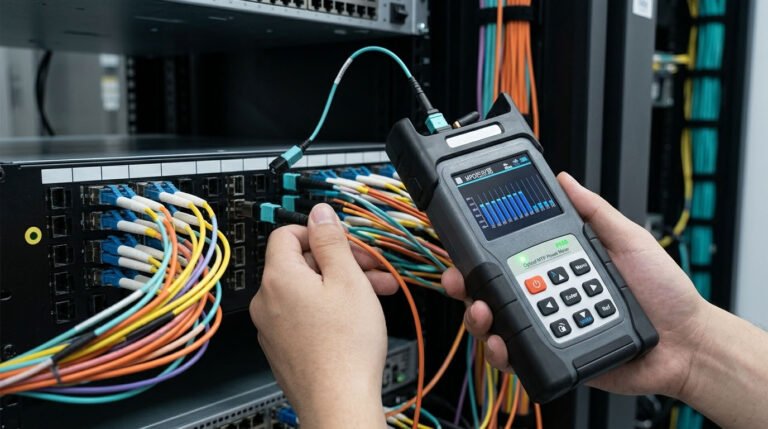
Initially, always inspect the end-face of the MPO/MTP connector using a specialized fiber microscope before connecting it to the cassette. If the end-face is dirty, use a dedicated MPO/MTP cleaning tool. Since the internal connections of the cassette are factory-sealed, maintenance primarily focuses on the external ports and the trunk cable end-faces. Consequently, using proper cleaning methods dramatically extends the life and performance of the **MPO/MTP Fiber Cassette**.
Optimizing Cable Management Around the MPO Cassette
Furthermore, proper cable routing is key to preventing accidental damage and signal degradation. Always maintain minimum bend radius requirements for all patch cords and trunk cables. EPCOM’s **MPO/MTP Cassette** enclosures are designed with integrated cable management features to minimize stress on the fiber, ensuring the integrity of your high-density link is preserved. Therefore, careful organization reduces troubleshooting time and enhances network stability.
7. Selecting the Right MPO/MTP Module Cassette for Your Needs
When procuring high-density fiber components, quality assurance is paramount. Consequently, look for vendors who provide detailed testing documentation, particularly concerning insertion loss. All EPCOM **MPO/MTP Module Cassette** products are factory-tested to ensure Ultra-Low Loss performance, which is vital for complex, high-bandwidth applications.
Finally, the transition to high-density networking requires reliable components and expertise. The **MPO/MTP Cassette** is a critical building block in this architecture, enabling maximum speed, density, and ease of management. Choose a supplier like EPCOM that guarantees both the quality and performance required to future-proof your network infrastructure for the next decade of bandwidth growth.