

Power Cable Cutter: Essential Electrician Tools
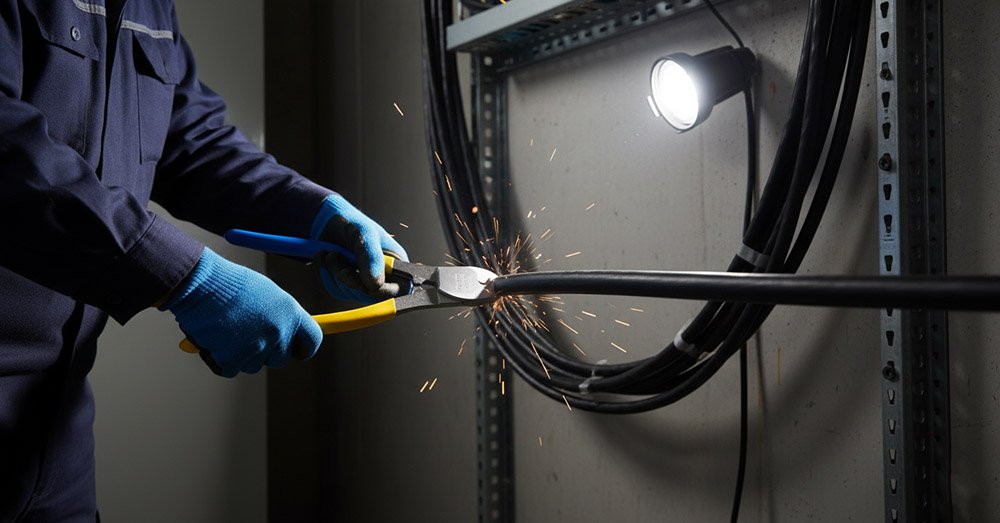
Power Cable Cutter efficiency defines the modern workflow of professional electricians and utility workers. In the high-stakes world of electrical infrastructure, the ability to slice through thick, insulated conductors with precision is not just a matter of convenience—it is a requirement for safety and project timelines. At EPCOM, we understand that every cut counts. Whether you are managing distribution lines or wiring a commercial complex, the tool in your hand determines the quality of the connection. This comprehensive article delves deep into the mechanics, applications, and selection of the ultimate cutting instruments.
The evolution of the power cable cutter has transformed manual labor into a precise science. Gone are the days when linemen had to exert excessive physical force to sever a connection. Today, advancements in metallurgy and hydraulic engineering have birthed tools that can handle large-diameter cables effortlessly. As we explore the nuances of these devices, we will also examine how they integrate with other essential equipment, such as the rechargeable wire stripper, to create a seamless operational flow.
What Defines a Professional Power Cable Cutter?
A power cable cutter is a specialized tool designed to shear through electrical cables with minimal deformation to the conductor geometry. Unlike standard saws or shears, these cutters are engineered to maintain the roundness of the cable profile, which is critical for subsequent termination steps. When a cable is crushed during cutting, it fits poorly into lugs or connectors, leading to high-resistance hotspots.
The term encompasses a range of mechanisms, from simple leverage-based hand tools to complex battery-operated hydraulic systems. The defining characteristic is the blade geometry. High-quality cutters from EPCOM utilize induction-hardened blades that slice rather than crush. This distinction is vital when working with materials like XHHW wire, where the insulation is tough and the copper or aluminum strands are densely packed.
Durability is another pillar of definition. A professional-grade power cable cutter must withstand the rigors of field use. It faces exposure to moisture, dirt, and temperature extremes. Therefore, the internal components are often sealed or coated with corrosion-resistant materials. The choice of steel for the jaws usually involves high-carbon alloys like chromium-molybdenum, which hold an edge significantly longer than standard carbon steel.
Types of Power Cable Cutter Mechanisms
Selecting the right tool begins with understanding the mechanical advantages offered by different types of cutters. The market offers three primary categories: manual leverage, ratchet action, and hydraulic assistance.
Manual Leverage Power Cable Cutter
The simplest form relies entirely on the user’s arm strength and the length of the handles. These are typically used for smaller gauge wires. While reliable and lightweight, they are limited by physics; cutting a 500 MCM cable with a manual leverage tool is physically exhausting and often impossible in tight spaces.
Ratchet Action Power Cable Cutter
The ratchet mechanism was a significant leap forward. By engaging a gear system, the operator can cut through a cable in small steps. Each squeeze of the handle advances the blade incrementally, locking it in place so the user can re-grip. This allows a single person to cut much thicker cables than would be possible with a simple pivot tool. It reduces fatigue but is slower than hydraulic options.
Hydraulic Power Cable Cutter
For heavy-duty industrial applications, hydraulic systems are the gold standard. A hydraulic power cable cutter uses fluid dynamics to multiply force exponentially. A small input force creates tons of cutting pressure. These can be hand-pumped or battery-powered. The battery-powered versions are particularly popular for their speed and ease of use, often sharing battery platforms with other tools like the electrical crimping tool.
Why Choose an EPCOM Power Cable Cutter?
EPCOM has dedicated years of research to perfecting the power cable cutter. Our tools are not merely rebranded generic items; they are engineered solutions for specific field problems. One major issue technicians face is blade chipping when cutting hard aluminum alloys. EPCOM addresses this with a proprietary heat-treatment process that balances hardness with toughness.
Furthermore, ergonomics play a massive role in our design philosophy. Repetitive Strain Injury (RSI) is a common ailment among electricians. By optimizing the weight distribution and handle grip angle, our power cable cutter minimizes wrist strain. We also incorporate safety release valves in our hydraulic models to prevent over-pressurization, ensuring the longevity of the tool and the safety of the operator.
*Average times based on field tests.
Working with Tough Materials: ABC Cable
Aerial Bundled Cable, or ABC cable, presents a unique challenge for cutting tools. This cable type consists of several insulated phase conductors twisted around a bare neutral messenger. The combined diameter and the tensile strength of the messenger wire require a power cable cutter with exceptional bite force.
Standard cutters often fail on ABC cables because the insulation is thick and tough (usually XLPE), and the messenger wire may be a hard aluminum alloy or even steel-reinforced. Using an underpowered cutter can result in the blades jamming halfway through the cut. An EPCOM power cable cutter is designed with the torque necessary to shear through the entire bundle cleanly in one go, or allows for the easy separation and individual cutting of the cores without damaging adjacent insulation.
When cutting ABC cable, it is also crucial to ensure the cut is square. An angled cut can make it difficult to insert the conductors into suspension clamps or insulation piercing connectors later on. The stability of the EPCOM cutter head ensures that the blade travels perpendicular to the cable axis, yielding a perfect cross-section every time.
The Synergy with the Electrical Crimping Tool
Cutting the cable is only the first step in the termination process. Once the power cable cutter has done its job, the conductor must be prepared for connection. This brings us to the importance of the electrical crimping tool. The quality of the crimp depends heavily on the quality of the initial cut.
If a cutter leaves jagged edges or flattens the copper strands into an oval shape, the crimping lug will not fit correctly. The operator might be tempted to trim the strands to make it fit, which dangerously reduces the current-carrying capacity of the connection. By using a high-precision power cable cutter, you ensure that the cable retains its circular integrity, allowing it to slide effortlessly into the crimp barrel. This synergy between cutting and crimping is what ensures a low-resistance, long-lasting electrical joint.
Comparing Power Cable Cutter Models
To help you select the best tool for your specific needs, we have compiled a comparison of common cutter specifications. Understanding these metrics is key to making an informed investment.
| Feature | Manual Ratchet Cutter | Battery Hydraulic Cutter | Remote Head Hydraulic |
|---|---|---|---|
| Primary Mechanism | Gear-driven mechanical advantage | Electric motor hydraulic pump | External hydraulic pump |
| Cutting Force | Low to Medium | High (6-12 Tons) | Very High (12-60 Tons) |
| Best For | Confined spaces, intermittent use | High volume distribution work | Heavy transmission cables |
| Portability | Excellent | Good | Low (Requires hose & pump) |
| Cost Efficiency | High | Medium | Low |
| Maintenance | Minimal (Oil pivot points) | Moderate (Battery, Seals) | High (Hoses, Fluid levels) |
Handling XHHW Wire with a Power Cable Cutter
XHHW wire (Cross-linked High Heat-resistant, Water-resistant) is a staple in industrial environments due to its robust insulation properties. However, this cross-linked polyethylene insulation is significantly harder than standard PVC. A dull or inferior power cable cutter will struggle to penetrate the insulation cleanly, often tearing it rather than cutting it.
This tearing can leave behind ragged insulation that must be cleaned up manually, wasting valuable time. EPCOM cutters feature blade geometries specifically optimized for hard insulations like those found on XHHW wire. The sharp, precision-ground edges initiate the cut cleanly through the insulation layer before engaging the metal conductor. This “clean entry” capability prevents the insulation from stretching and bunching up, ensuring a professional finish that is ready for stripping.
Safety Considerations for Power Cable Cutter Use
Safety is paramount when operating any cutting tool. A power cable cutter generates immense force, enough to amputate fingers instantly. Before operation, always inspect the tool for cracks in the housing or hydraulic fluid leaks. According to OSHA safety standards, workers must wear appropriate Personal Protective Equipment (PPE), including safety glasses to protect against flying metal debris.
Never assume a cable is de-energized. Unless you are using a specifically rated insulated cutter for live-line work, standard hydraulic cutters should only be used on dead cables. Cutting a live wire with a non-insulated tool can cause an arc flash explosion, damaging the tool and causing severe injury or death. Always verify zero voltage before applying the power cable cutter to the conductor.
Additionally, remain aware of the tool’s capacity. Attempting to cut a steel guy wire with a cutter designed only for copper and aluminum will shatter the blades. This brittle failure sends metal shrapnel flying at high velocity. Always match the tool’s rating to the material you are working with.
Battery Maintenance for Wireless Models
For battery-operated power cable cutter models, lithium-ion battery care is essential. Do not let batteries sit fully discharged for long periods. Modern EPCOM chargers include diagnostic features to monitor cell health. A healthy battery ensures the hydraulic pump reaches full pressure, providing a complete cut every time.
Advanced Techniques with Power Cable Cutter
Experienced linemen know that how you position the power cable cutter affects the outcome. For large cables, it is best to position the cable deep into the jaws, close to the pivot point. This maximizes the mechanical advantage and reduces stress on the jaw tips. If the cutter struggles near the end of the cut, stop and reposition rather than forcing it, which can bend the blades.
In cold weather, hydraulic fluid thickens, potentially slowing down the tool. It is advisable to store your hydraulic power cable cutter in a warm cab or box before use in freezing temperatures. Warm fluid flows better through the internal valves, ensuring the tool delivers its rated tonnage. Conversely, in extreme heat, check the tool frequently to ensure it is not overheating during continuous use.
Complementary Tools: The Wire Stripper
After the power cable cutter has severed the line, the next immediate task is usually stripping the insulation. This is where the rechargeable wire stripper becomes the cutter’s best friend. Using a knife to strip large diameter cables is slow and risky.
A powered stripper uses rotating blades to remove insulation quickly and safely, without nicking the conductor. Just as with the cutter, precision is key. If the cutter has left a deformed end, the stripper may not engage the cable correctly. This highlights the interconnected nature of electrical tools—the performance of your power cable cutter directly impacts the efficiency of every subsequent step in the installation process.
The Environmental Impact of Efficient Tools
It might seem minor, but using a high-efficiency power cable cutter contributes to sustainability. Tools that cut cleanly reduce waste by minimizing the amount of cable that needs to be re-cut due to errors. In large-scale projects, saving a few inches of copper on thousands of terminations adds up to significant material savings. Furthermore, EPCOM’s commitment to durable tool design means fewer tools end up in landfills compared to cheaper, disposable alternatives.
Pro Tip: Blade Sharpening
Even the best power cable cutter will eventually dull. Do not attempt to sharpen induction-hardened blades with a standard file. Use a diamond hone or send them to a professional sharpening service. Improper grinding can overheat the steel, ruining its temper and making the blade brittle.
Conclusion: Investing in Quality
The power cable cutter is more than just a pair of scissors on steroids; it is a critical instrument of the electrical trade. Whether you are dealing with flexible copper, rigid XHHW wire, or heavy-duty ABC cable, the quality of your cut sets the stage for the safety and reliability of the entire electrical system.
By choosing EPCOM, you are choosing tools that have been tested in the harshest environments. From the robust hydraulics to the ergonomic grips, every aspect of our power cable cutter is designed to make your job easier, safer, and faster. Remember to maintain your equipment, respect safety boundaries, and utilize complementary tools like the rechargeable wire stripper and electrical crimping tool for a comprehensive workflow solution.
Upgrade your toolkit today. Experience the difference that precision engineering makes. With an EPCOM power cable cutter in hand, no cable is too tough, and no deadline is out of reach.