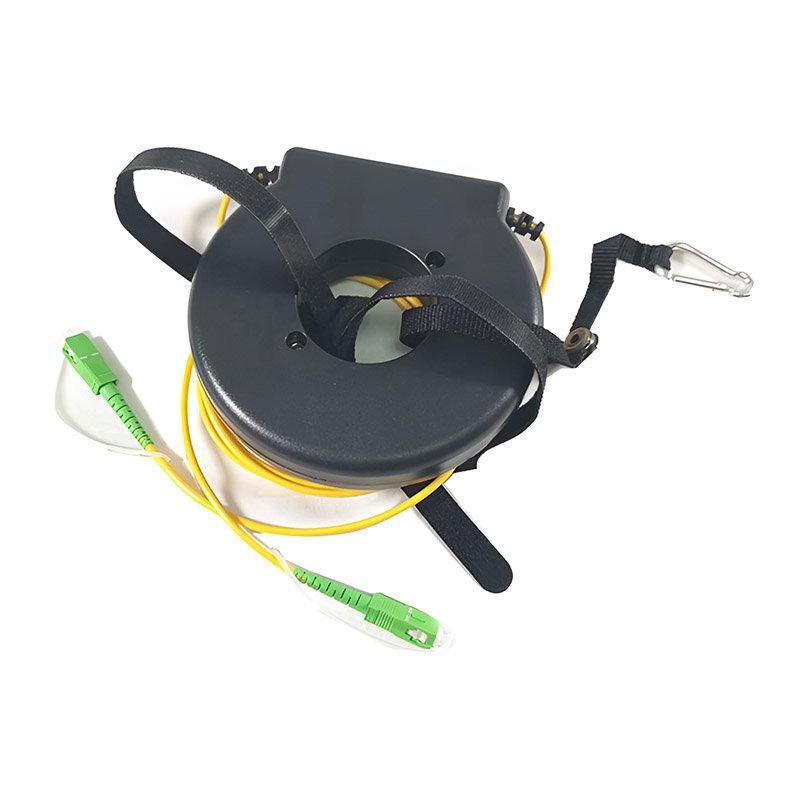
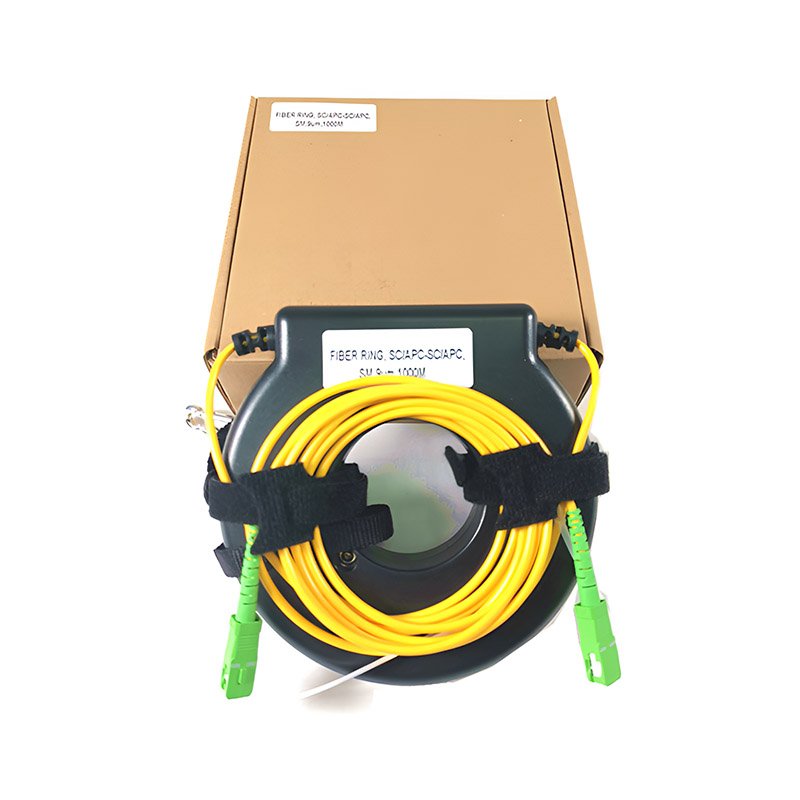
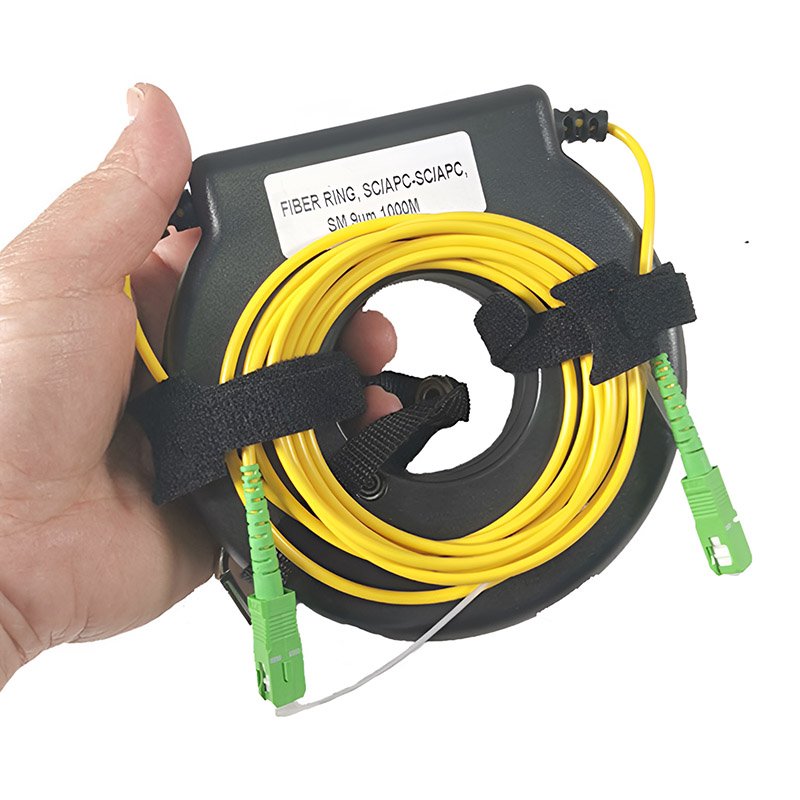
High-Performance OTDR Launch Cable Ring
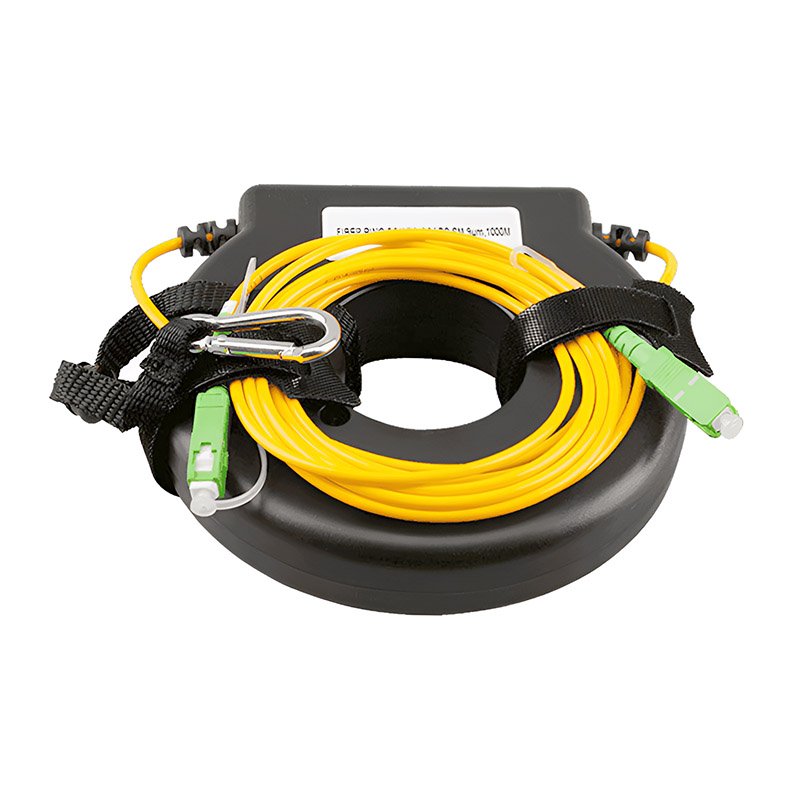
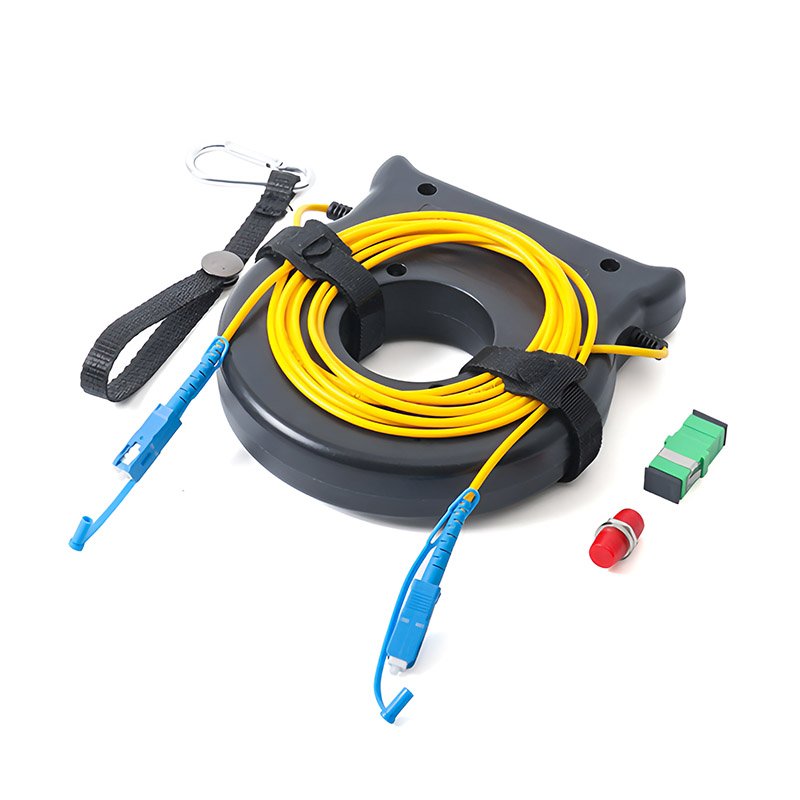
Launch Cable Rings, also known as fiber rings, are a type of fiber optic cable used in conjunction with an OTDR (Optical Time Domain Reflectometer) to measure the insertion loss and reflectance of fiber optic links. They are essential tools for testing and maintaining fiber optic networks.
Of course. Here is the HTML code for the five product features, using only bullet points (which are rendered as circles by default in standard HTML lists) and no asterisks or stars in the text:
- Eliminates the OTDR dead zone for accurate near-end connection measurement.
- Features rugged, compact housing (High-Impact ABS Plastic) for field durability and portability.
- Compatible with a wide range of Single-mode and Multi-mode fiber types.
- Offered in various standard lengths, including 100m to 2000m.
- Supports all major connector types (FC, SC, ST, LC) with UPC or APC polish.
Description
The OTDR Launch Cable Ring is an indispensable tool for fiber optic technicians, designed to deliver the highest level of accuracy during network testing and certification. At EPCOM, we understand that precise measurements are critical for verifying the integrity of fiber optic installations. This device, also known as a pulse suppressor or dead zone eliminator, is essential for any professional using an Optical Time Domain Reflectometer (OTDR). It allows for the accurate characterization of the first and last connectors in a fiber link, areas that are often obscured by the OTDR’s initial pulse, known as the event dead zone. By creating a sufficient distance between the OTDR and the link under test, our launch cable ensures that the entire fiber path, including the initial connection’s loss and reflectance, is visible and measurable.
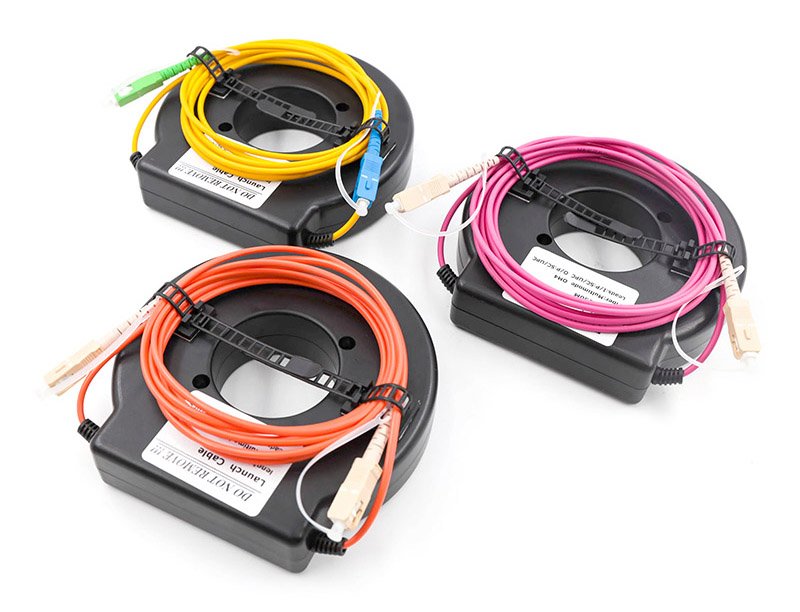
The Critical Role of an OTDR Launch Cable Ring
When an OTDR sends a light pulse into a fiber, a high-power reflection occurs at the initial connector. This reflection temporarily saturates the OTDR’s detector, creating what is known as an OTDR dead zone. Consequently, any events such as splices, bends, or other connectors within this zone become invisible to the test equipment. Using an OTDR launch cable mitigates this issue entirely. By inserting a specific length of fiber before the actual network cable, the dead zone is effectively contained within the launch cable itself. This simple yet brilliant solution ensures that the technician can accurately measure the true insertion loss and reflectance of the critical near-end connector, leading to a complete and reliable characterization of the fiber link’s performance from end to end.
Why Every Technician Needs an EPCOM OTDR Launch Cable Ring
Our product is engineered for durability, portability, and ease of use in various field conditions. Housed in a compact, rugged ring, the fiber is protected from damage while being easy to transport and deploy. Whether you are performing a new installation, certifying a network, or troubleshooting faults, the EPCOM launch cable is a fundamental component of a complete testing toolkit. It ensures compliance with industry fiber optic testing standards, which demand a comprehensive evaluation of the entire link. Without it, technicians risk overlooking potential issues at the start of the fiber run, leading to future network failures and costly return visits.
Key Features and Benefits
The EPCOM launch cable ring is designed with the field technician in mind. Its compact form factor allows it to be easily stored in an OTDR case or a technician’s tool bag. The ruggedized housing provides excellent protection against drops, impacts, and environmental factors, ensuring a long service life. Furthermore, we offer a wide variety of connector types and fiber lengths to match the specific requirements of any single-mode or multi-mode network. This versatility guarantees that you have the right tool for any job, from data centers and enterprise LANs to long-haul telecommunication networks. The primary benefit is the confidence that comes from knowing your test results are accurate and truly reflect the quality of your installation work.
Technical Specifications of the OTDR Launch Cable Ring
Below are the detailed specifications for our OTDR Launch Cable Ring. These parameters highlight the product’s high-quality construction and performance characteristics, which are essential for achieving reliable and repeatable test results.
| Parameter | Specification |
|---|---|
| Fiber Type | Single-mode (G.652.D, G.657.A1, G.657.A2), Multi-mode (OM1, OM2, OM3, OM4) |
| Cable Length | 100m, 300m, 500m, 1000m, 2000m (Custom lengths available) |
| Connector Types | FC, SC, ST, LC (UPC or APC polish) |
| Insertion Loss | ≤ 0.35dB/km at 1310nm, ≤ 0.22dB/km at 1550nm |
| Return Loss | UPC ≥ 50dB, APC ≥ 60dB |
| Operating Temperature | -40°C to +85°C |
| Housing Material | High-Impact ABS Plastic |
| Dimensions | Varies by length, designed for portability |
How to Use the OTDR Launch Cable Ring Effectively
Integrating the launch cable into your testing procedure is straightforward. First, connect one end of the OTDR Launch Cable Ring to the OTDR’s optical port. Then, connect the other end to the near-end of the fiber link you intend to test. If you also need to characterize the far-end connector, a second launch cable (often called a receive cable) can be attached to the end of the link. Once connected, you can proceed with your OTDR test as usual. The resulting trace will clearly show the performance of the entire cable, including the previously hidden near-end connection, allowing for a complete and professional network certification.
Complete Your Fiber Optic Tool Kit
Achieving a clean, reliable, and high-performance fiber optic network requires more than just one tool. At EPCOM, we provide a full suite of essential equipment to ensure every aspect of your installation is flawless. For maintaining pristine connector end-faces, our Fiber Optic Cassette Cleaner is a must-have, effectively removing contaminants that can degrade signal quality. To quickly identify breaks, sharp bends, or faulty connectors, the Portable VFL Inspection Tool provides immediate visual fault location. Finally, for creating perfect fiber ends ready for splicing or termination, nothing beats the precision of our high-quality Optical Fiber Cleaver. Combining these tools with the OTDR Launch Cable Ring creates a comprehensive kit that empowers technicians to build and maintain networks to the highest standards.