

Secure Triangle Suspension Clamp for Aerial Cables
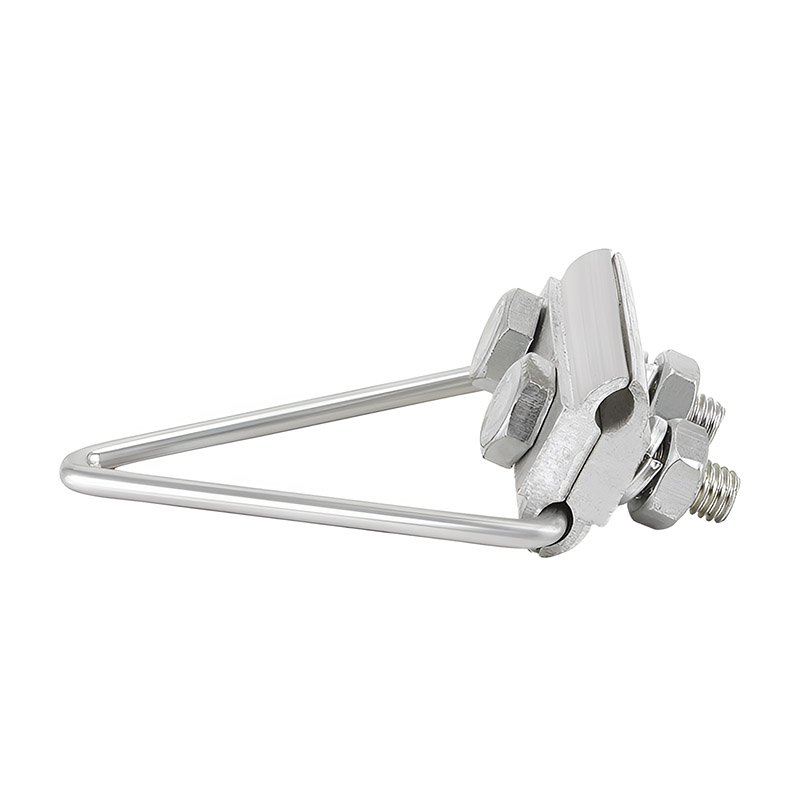
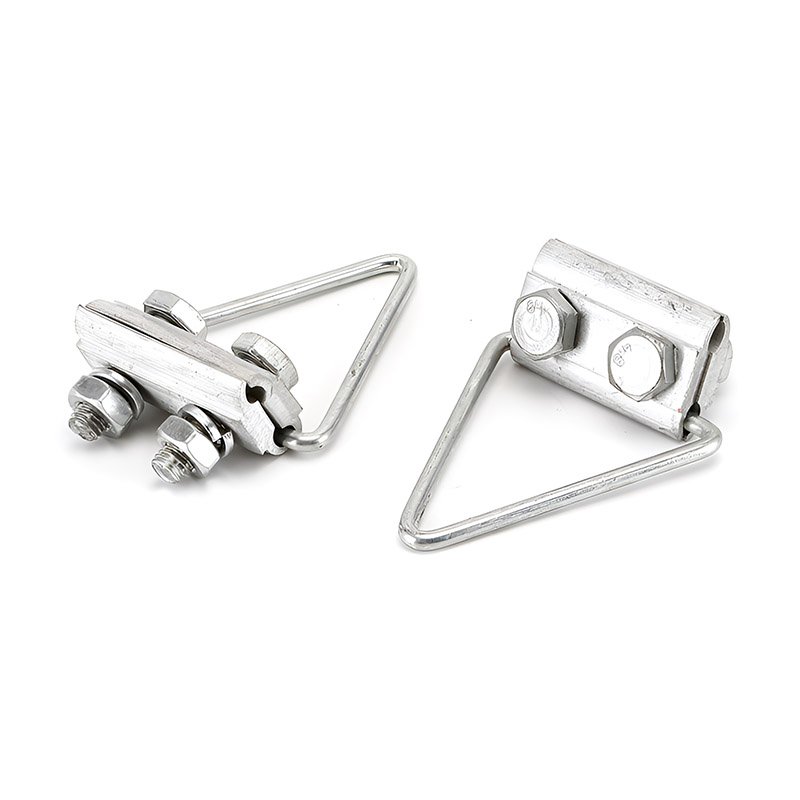
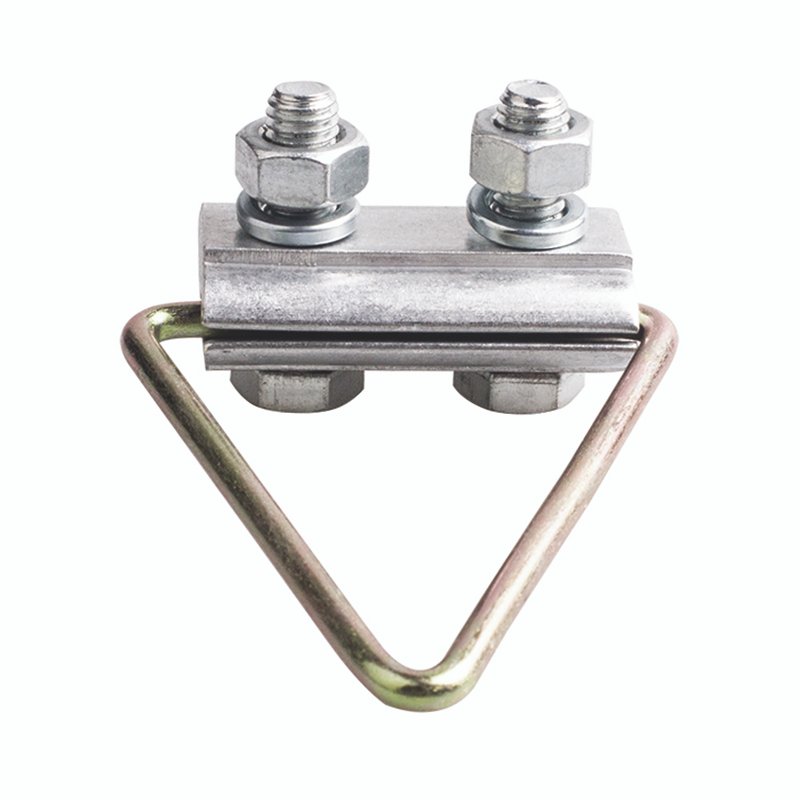
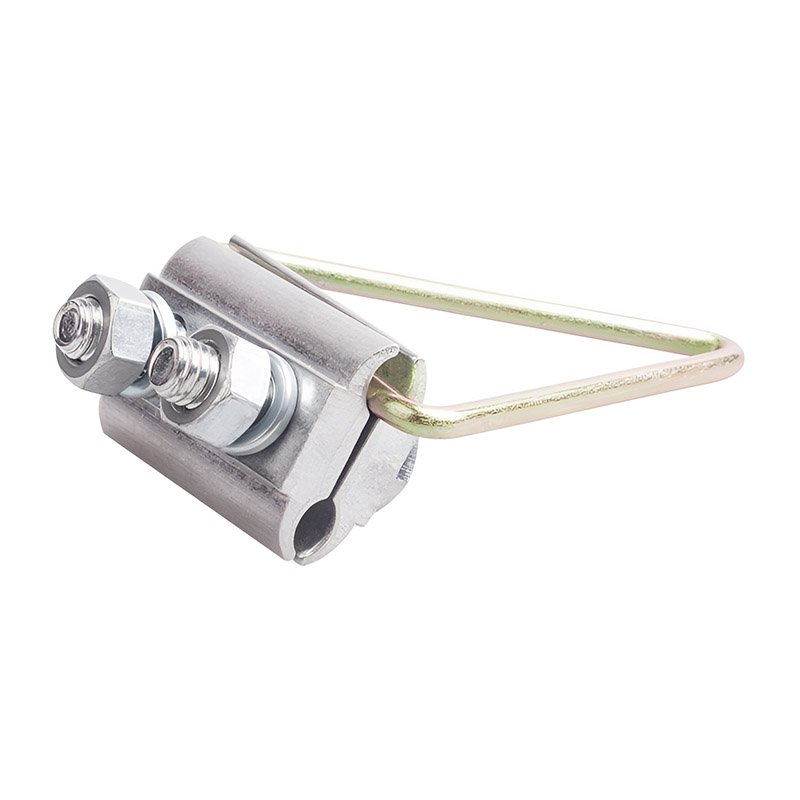
The triangle suspension clamp is a versatile and durable cable clamp that is designed to secure cables to messenger wires. It is made of high-strength hot-dip galvanized steel or aluminum alloy, which makes it resistant to rust and corrosion. The clamp has a single groove that can accommodate messenger wires with diameters ranging from 4mm to 8mm. The clamp is easy to install, and it can be used with a variety of cable types.
- Constructed from high-strength, corrosion-resistant aluminum alloy for durability.
- Features a soft rubber insert to cushion the cable, preventing direct contact with the metal clamp.
- Designed to absorb Aeolian vibrations and minimize static stress on the cable.
- Provides electrical insulation to prevent issues like corona discharge in high-voltage environments.
- Suitable for ADSS/OPGW cables on transmission towers and poles with line angles less than 25 degrees.
Description
The Triangle Suspension Clamp from EPCOM is an essential component for the secure and reliable installation of aerial fiber optic cables. Specifically designed for All-Dielectric Self-Supporting (ADSS) and Optical Ground Wire (OPGW) cables, this hardware fitting provides superior support and protection, ensuring the longevity and performance of your telecommunications network. Its innovative design is engineered to minimize static and dynamic stresses on the cable, making it a critical element for any overhead line project.

Core Features of the EPCOM Triangle Suspension Clamp
EPCOM’s commitment to quality and performance is evident in the design and material selection of our suspension clamps. These components are crafted to withstand harsh environmental conditions while protecting the delicate optical fibers within the cables.
Engineered for Durability and Reliability
The main body of the clamp is constructed from a high-strength, corrosion-resistant aluminum alloy. This material choice ensures durability against atmospheric corrosion and provides excellent mechanical performance. The triangular shape is not merely for aesthetics; it provides a stable and balanced distribution of load, preventing premature wear and tear on both the cable and the fitting. This robust construction guarantees long-term reliability in the field, reducing the need for frequent maintenance.
Advanced Cable Protection Mechanism
A key feature is the soft rubber insert that cushions the ADSS/OPGW cable. This insert is made from high-quality, weather-resistant rubber that prevents direct contact between the cable and the metal clamp body. This design is crucial for several reasons:
- Vibration Damping: It effectively absorbs Aeolian vibrations—wind-induced oscillations that can cause cable fatigue and eventual failure. For comprehensive vibration control, we recommend using our Spiral Vibration Damper in conjunction with the suspension clamp.
- Stress Reduction: The cushioned grip minimizes static stress at the support point and distributes the load evenly, preventing cable sheath damage from over-tightening.
- Electrical Insulation: By isolating the dielectric cable from the metal hardware, it helps prevent issues like corona discharge in high-voltage environments, adhering to key industry standards for safety and performance.
Applications of the Triangle Suspension Clamp
This versatile hardware is suitable for a wide range of applications in power transmission and communication network construction. Its primary function is to suspend ADSS/OPGW cables on transmission line towers or poles, particularly on straight runs or where the line angle is less than 25 degrees. The Triangle Suspension Clamp is indispensable for maintaining proper cable sag and ensuring the stability of the entire overhead line.
In complex installations, managing the cable’s path down the pole is also critical. To secure the cable effectively along its entire vertical route, consider using our specialized Down Lead Clamp for ADSS Cable, which ensures a neat and secure installation from the cross-arm to the junction box.
Technical Specifications of Our Triangle Suspension Clamp
At EPCOM, we provide detailed product specifications to help our clients make informed decisions. The following table outlines the key parameters of our Triangle Suspension Clamp. Please select the model that corresponds to your specific cable diameter and span length requirements.
| Applicable Cable Diameter (mm) | Ultimate Breaking Strength (kN) | Recommended Span Length (m) |
|---|---|---|
| 5-10 | ≥30 | ≤100 |
| 10.1-15 | ≥40 | ≤200 |
| 15.1-20 | ≥50 | ≤300 |
| 20.1-25 | ≥60 | ≤400 |
Installation and Compatibility
The EPCOM Triangle Suspension Clamp is designed for straightforward installation, reducing labor time and costs. It can be easily mounted on poles or towers using standard hardware. Its compatibility with various pole and tower designs makes it a versatile choice for new network builds and existing infrastructure upgrades.
While suspension clamps are ideal for intermediate support, the cable ends require a secure anchoring solution. For these termination points, EPCOM provides a range of high-performance dead-end fittings, such as our Preformed Tension Clamp, which is engineered to hold the full tension of the cable without causing damage.
Why Choose EPCOM’s Triangle Suspension Clamp?
Choosing the right hardware is paramount to building a resilient and efficient fiber optic network. At EPCOM, we understand the technical challenges involved in aerial cable deployment. Our Triangle Suspension Clamp offers a cost-effective, reliable, and easy-to-install solution that protects your investment. By ensuring the mechanical integrity of the cable, our products contribute to uninterrupted data and power transmission, aligning with global telecommunication protocols and standards like those set by the Telecommunications Industry Association (TIA).
Contact EPCOM today to learn more about our comprehensive range of fiber optic cable fittings. Our expert team is ready to assist you in selecting the perfect hardware solutions to meet the specific demands of your project.