ABS Box PLC Splitter Performance for Fiber Networks
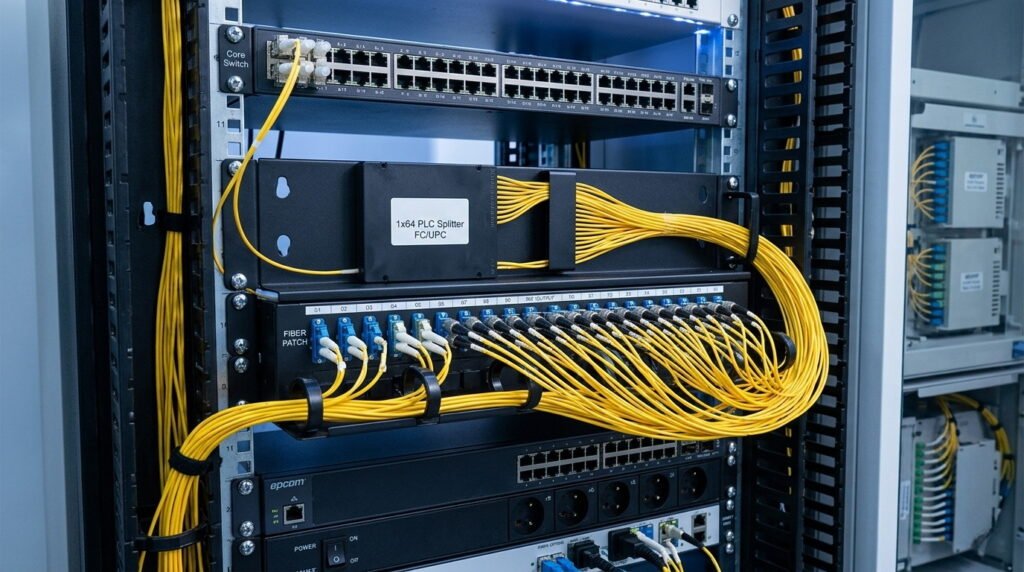
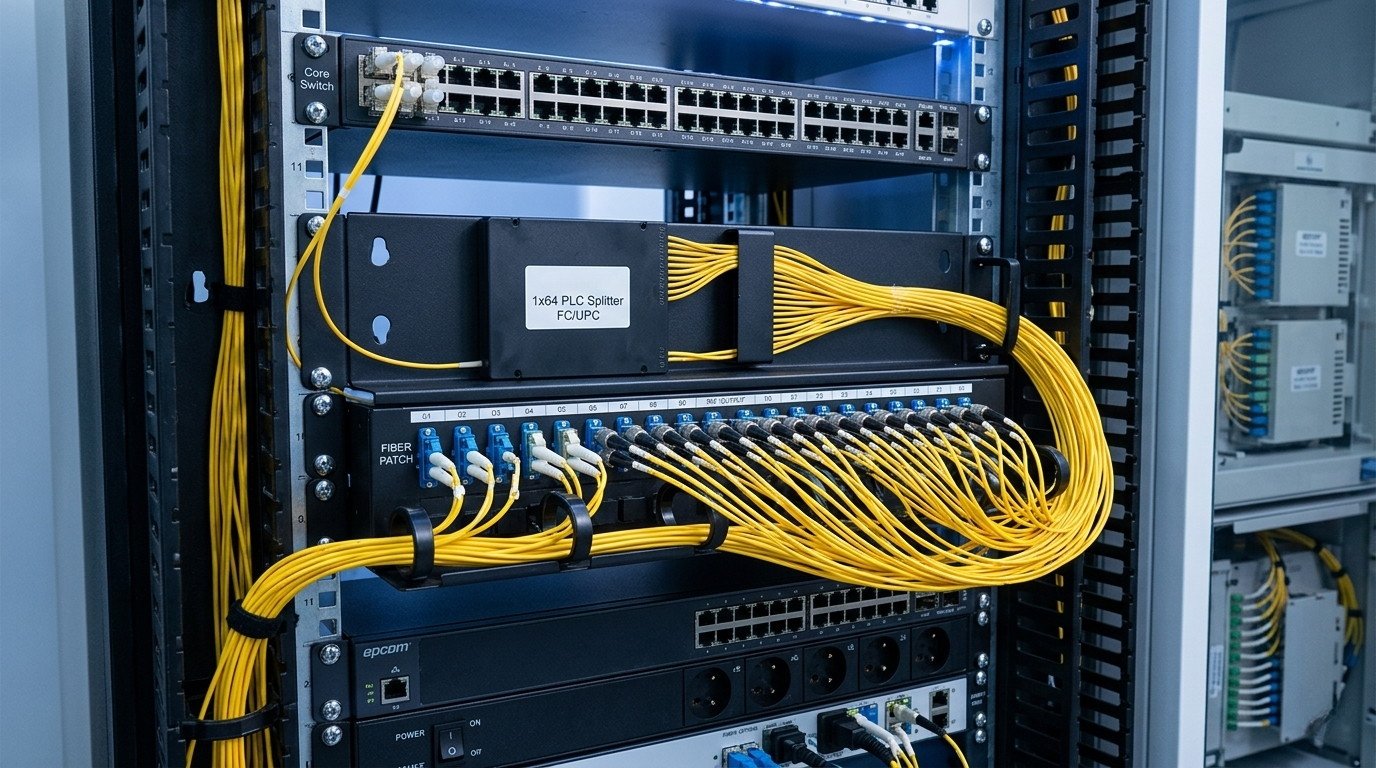
ABS Box PLC Splitter solutions represent the backbone of modern Passive Optical Networks (PON) by providing reliable signal distribution in a compact, durable package. Telecommunication engineers prioritize these components because they ensure uniform power splitting across multiple output ports. Consequently, EPCOM has refined the manufacturing process to deliver splitters that meet rigorous international standards. Therefore, understanding the technical nuances of these devices is essential for any large-scale fiber deployment. Moreover, the integration of these splitters into existing infrastructure requires high-quality accessories to maintain signal integrity over long distances.
Technical Advantages of ABS Box PLC Splitter Technology
The ABS Box PLC Splitter is engineered using planar lightwave circuit technology, which allows for a much smaller footprint compared to traditional FBT splitters. Furthermore, this technology supports wide operating wavelengths, ensuring compatibility with various transmission systems. Because the ABS housing provides robust physical protection, these units are ideal for diverse environments ranging from central offices to outdoor cabinets. EPCOM ensures that every unit undergoes strict testing for insertion loss and return loss. Additionally, the uniform splitting ratio provided by these devices minimizes the risk of signal degradation at the subscriber end. Thus, network stability is significantly improved when using professional-grade hardware.
In addition to physical durability, the ABS Box PLC Splitter offers exceptional thermal stability. This means the device can operate efficiently in extreme temperatures without affecting the optical performance. Many providers prefer this format due to its “plug-and-play” nature, which simplifies the installation process. Besides, the modular design allows for easy scalability as the subscriber base grows. By choosing EPCOM products, technicians can reduce maintenance costs and improve the overall lifecycle of the network. Furthermore, the use of high-quality silica glass in the PLC chip guarantees low polarization dependent loss (PDL), which is a critical factor for high-speed data transmission.
Integration with 24 Cores Termination Box for Fiber Optics
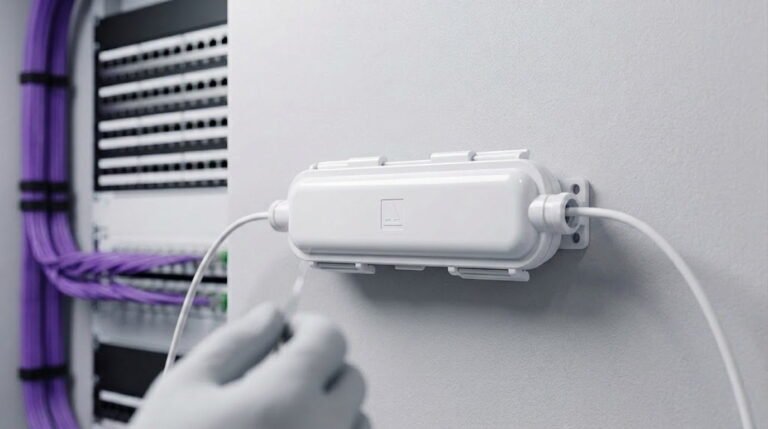
To maximize the efficiency of an ABS Box PLC Splitter, it must be housed within a secure enclosure like the 24 Cores Termination Box for Fiber Optics. This combination allows for organized cable management and protects delicate splices from environmental hazards. For instance, the termination box provides integrated trays that keep the splitter output fibers neatly arranged. Therefore, troubleshooting becomes much faster during routine inspections. EPCOM recommends using these specific enclosures to ensure that the bending radius of the fiber is never compromised. Moreover, the secure locking mechanism of the box prevents unauthorized access to the critical splitting nodes.
When deploying fiber to the home (FTTH), the synergy between the enclosure and the ABS Box PLC Splitter cannot be overstated. The enclosure acts as the first line of defense against dust and moisture, which are the primary enemies of optical signals. Furthermore, the 24-core capacity allows for future expansions without needing to replace the entire housing unit. By utilizing EPCOM’s integrated solutions, service providers can achieve a cleaner and more professional installation. Consequently, this leads to higher customer satisfaction due to reduced downtime. Also, the internal layout of the box is optimized for the dimensions of standard ABS modules, ensuring a snug and vibration-resistant fit.
Why the ABS Box PLC Splitter is Essential for G-PON
The global shift toward Gigabit Passive Optical Networks (G-PON) has increased the demand for the ABS Box PLC Splitter. According to the International Telecommunication Union (ITU), strict adherence to loss budgets is mandatory for G-PON compliance. Therefore, EPCOM manufactures splitters that offer predictable and stable performance across the 1260nm to 1650nm range. Because of this consistency, engineers can design networks with greater confidence. Furthermore, the ABS box design simplifies the mounting process on DIN rails or inside distribution cabinets. Thus, it remains the most popular choice for both urban and rural broadband rollouts.
Moreover, the internal components of an ABS Box PLC Splitter are precision-aligned using advanced V-groove technology. This ensures that the input signal is divided equally with minimal deviation between ports. EPCOM prides itself on using low-water-peak fiber for all internal pigtails. Consequently, this prevents the “water peak” attenuation that can occur in the 1383nm band. Additionally, the rugged ABS plastic is resistant to impact and UV radiation. So, even if the splitter is installed in a semi-exposed environment, it will continue to function without degradation for decades. EPCOM also provides custom configurations to meet specific branch ratios required by unique network architectures.
Connecting Components with SC Single Mode Adapter
A reliable connection point is vital for any splitter deployment, which is why the SC Single Mode Adapter is a critical accessory. These adapters allow the ABS Box PLC Splitter ports to interface seamlessly with incoming and outgoing patch cords. Because they utilize high-precision ceramic sleeves, the alignment between fiber cores is nearly perfect. Consequently, this reduces the total connector loss within the system. EPCOM provides adapters that are tested for durability over hundreds of mating cycles. Therefore, network reliability is maintained even when technicians frequently change port assignments. Furthermore, the compact design of these adapters allows for high-density packing in patch panels.
Using a substandard adapter can negate the benefits of a high-quality ABS Box PLC Splitter. For example, a loose-fitting sleeve can cause high reflectance, leading to bit errors in the data stream. By contrast, EPCOM’s SC adapters feature a secure snap-in mechanism that provides tactile feedback upon successful connection. Additionally, these adapters are color-coded to denote single-mode performance, usually in blue or green for APC variants. Thus, errors during installation are minimized. Moreover, the housing of the adapter is made from flame-retardant materials, meeting safety standards for indoor deployments. EPCOM ensures that every adapter is compatible with international IEC standards for optical interfaces.
| Parameter | 1:8 ABS Box PLC Splitter | 1:16 ABS Box PLC Splitter | 1:32 ABS Box PLC Splitter |
|---|---|---|---|
| Operating Wavelength (nm) | 1260 ~ 1650 | 1260 ~ 1650 | 1260 ~ 1650 |
| Max Insertion Loss (dB) | 10.5 | 13.7 | 16.9 |
| Loss Uniformity (dB) | 0.8 | 1.2 | 1.5 |
| Return Loss (dB) | ≥ 55 | ≥ 55 | ≥ 55 |
| Operating Temp (°C) | -40 ~ +85 | -40 ~ +85 | -40 ~ +85 |
Maintaining Signal Integrity with SC-ST Patch Cord
Completing the optical path requires a high-performance SC-ST Patch Cord to link the ABS Box PLC Splitter to active equipment. These patch cords are essential for bridging the gap between different connector types often found in legacy and modern systems. For instance, many older optical line terminals (OLT) utilize ST connectors, while modern splitters use SC interfaces. Therefore, this specific cord serves as a vital transition component. EPCOM manufactures these cords with premium LSZH jackets to ensure safety in enclosed spaces. Furthermore, the fiber used in these cords is bend-insensitive, allowing for tighter routing within cabinets. Consequently, installers have more flexibility during setup.
Each SC-ST Patch Cord from EPCOM is individually tested for end-face geometry and optical performance. This attention to detail ensures that the signal exiting the ABS Box PLC Splitter is not compromised before it reaches the receiver. Moreover, the connectors are polished to an Ultra Physical Contact (UPC) finish to maximize return loss. Therefore, back-reflections that could damage laser sources are significantly reduced. Because EPCOM uses standardized manufacturing processes, the reliability of these cords is world-class. Additionally, the strain relief boots on the connectors prevent the fiber from breaking due to accidental pulls. Thus, the longevity of the entire fiber link is enhanced when using these matched components.
Future Trends for ABS Box PLC Splitter Deployments
As the industry moves toward 10G-PON and beyond, the role of the ABS Box PLC Splitter is evolving. Future networks will require even lower latency and higher bandwidth, putting more pressure on passive components. However, the inherent design of PLC technology is well-suited for these advancements. EPCOM is already researching ways to further reduce the polarization-dependent loss in these modules. Consequently, we can expect even higher performance in the coming years. Furthermore, the environmental impact of manufacturing is being addressed through more sustainable ABS plastics. Therefore, the next generation of splitters will be both greener and more efficient.
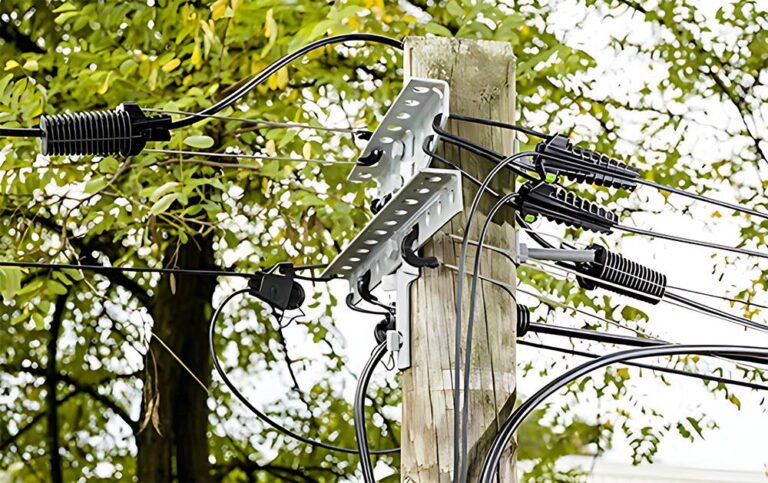
Moreover, the integration of smart sensors into the ABS Box PLC Splitter housing is a possibility for real-time monitoring. This would allow network operators to detect fiber breaks or signal drops instantly without manual testing. EPCOM stays at the forefront of these innovations to provide customers with the latest technology. Additionally, the rise of 5G small cells is creating new use cases for these splitters in fronthaul and backhaul applications. Because they are compact and rugged, they can be deployed on poles or in underground vaults. Thus, the versatility of the ABS format ensures its relevance for the next decade of telecommunications infrastructure.
In conclusion, the ABS Box PLC Splitter remains a cornerstone of the fiber optic industry due to its reliability and cost-effectiveness. By pairing these splitters with EPCOM’s termination boxes, adapters, and patch cords, service providers can build robust networks. Furthermore, following established standards like those from the IEEE ensures interoperability across different vendors. Therefore, investing in high-quality passive components is the most effective way to guarantee long-term network performance. EPCOM is committed to delivering these excellence-driven solutions to partners worldwide. Consequently, we invite you to explore our full range of optical connectivity products to enhance your next project.
Understanding the physics behind the ABS Box PLC Splitter reveals why it is superior to older technologies. The light signal enters the PLC chip and is split through a series of waveguides etched into a silica substrate. This process is highly repeatable, unlike the manual twisting involved in FBT splitters. Consequently, the mass production of these devices leads to lower costs for the end-user. EPCOM leverages this scalability to provide competitive pricing without sacrificing quality. Furthermore, the small size of the ABS box allows it to be integrated into very tight spaces, such as wall-mounted sockets or small pedestals. Moreover, the transition from copper to fiber continues to accelerate, making these components more critical than ever before.
Because the ABS Box PLC Splitter is a passive device, it requires no power to operate, which is a major advantage for green energy initiatives. EPCOM advocates for the use of passive components whenever possible to reduce the carbon footprint of data centers. Additionally, the lack of electronic components means there is no risk of electromagnetic interference (EMI). Therefore, these splitters can be installed safely alongside power lines in multi-utility tunnels. Also, the chemical resistance of the ABS material protects the internal components from corrosive gases in industrial environments. Thus, the applications for these devices extend far beyond traditional residential internet service. EPCOM continues to support these diverse industries with tailored optical solutions.
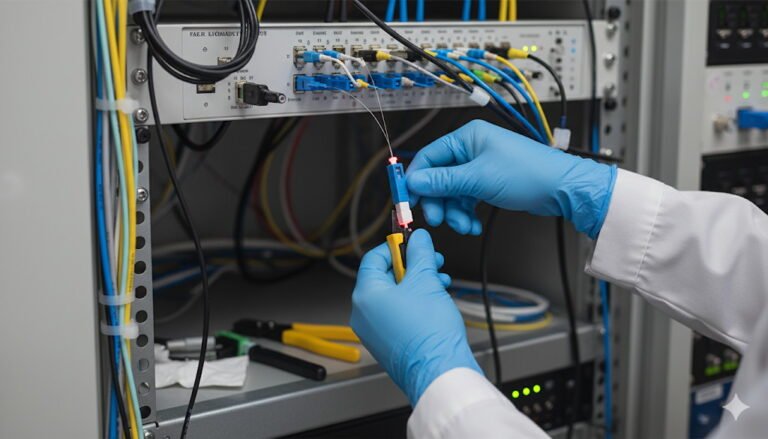
Finally, the importance of proper cleaning and inspection of an ABS Box PLC Splitter cannot be overstressed. Technicians should always use lint-free wipes and isopropyl alcohol before making any connections. EPCOM provides a variety of cleaning tools specifically designed for SC and ST interfaces. Furthermore, using a fiber microscope to check for scratches or dirt can prevent costly service calls. Consequently, a “clean first” policy is the hallmark of a professional installation team. By maintaining high standards for both hardware and installation practices, the fiber optic community can ensure a seamless digital future. EPCOM remains a dedicated partner in this journey, providing the reliable hardware needed to connect the world.