AGS Suspension Clamp: Ultimate Performance and Specs
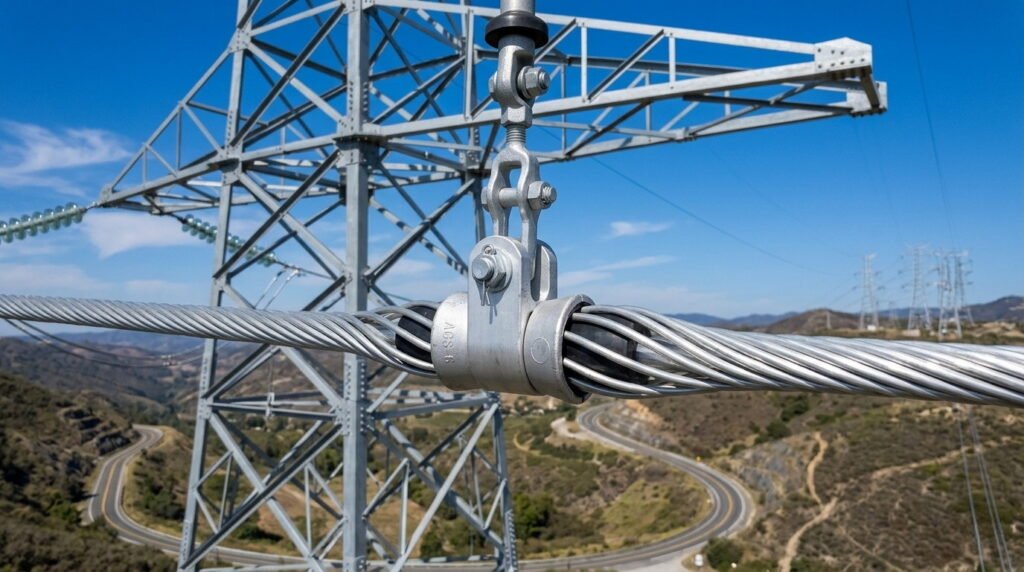
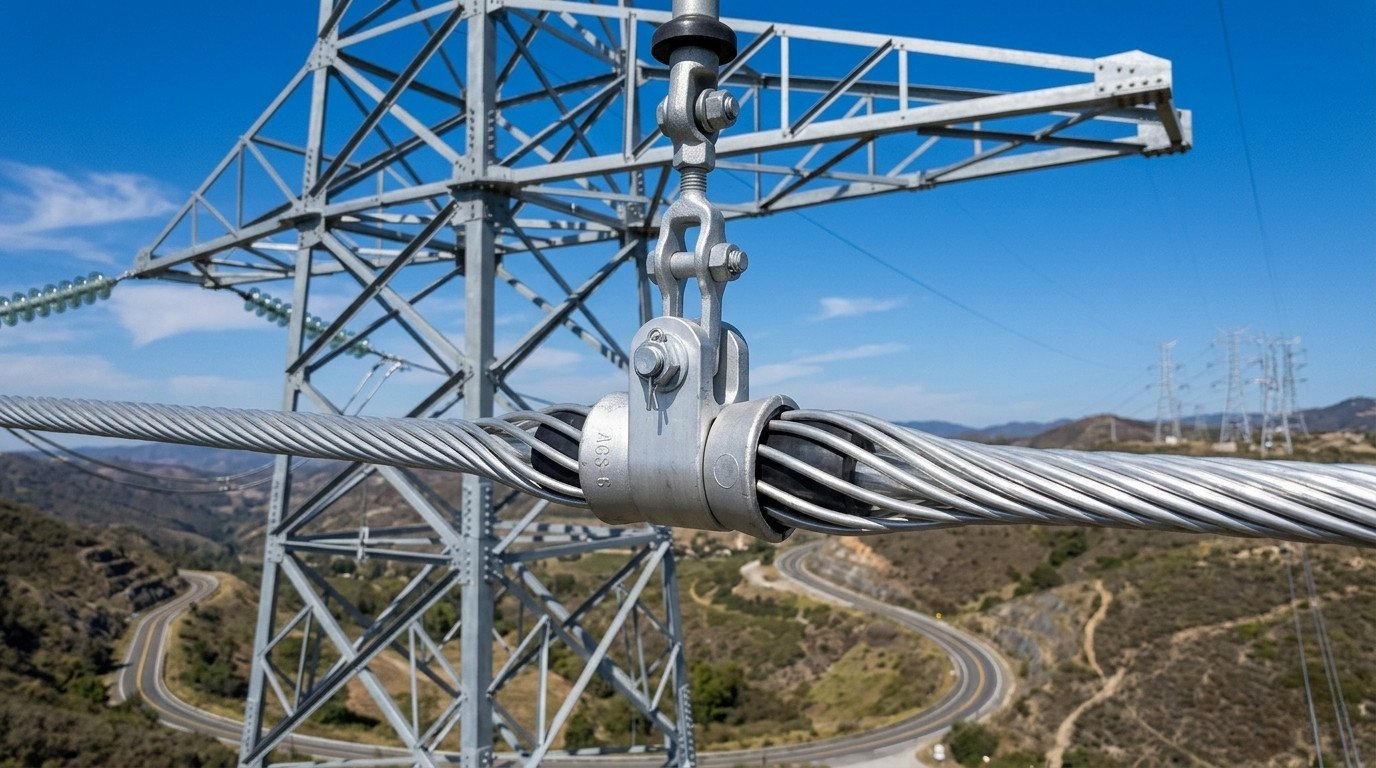
AGS Suspension Clamp systems serve as the cornerstone of modern overhead transmission line stability and long-term reliability. EPCOM provides high-performance hardware designed to mitigate the destructive effects of Aeolian vibration on conductors. Our engineering focus ensures that every installation maintains optimal tension distribution without compromising cable integrity. Consequently, utility providers worldwide rely on these specialized components for high-voltage networks. Furthermore, the Armor Grip Suspension design significantly reduces static and dynamic stress at the support point. This protection is vital for sensitive transmission media like OPGW and ADSS cables.
Transmission line longevity depends heavily on the quality of support hardware. When selecting an AGS Suspension Clamp, engineers must consider the mechanical properties of the specific conductor. EPCOM manufactures these clamps using high-strength aluminum alloys and premium-grade neoprene inserts. Therefore, the interface between the metal and the cable remains cushioned against mechanical fatigue. Moreover, the integration of these components allows for smoother energy transmission across vast distances. In addition to basic support, these assemblies offer unparalleled protection against longitudinal slipping during extreme weather events.
The Mechanical Advantage of AGS Suspension Clamp Units
The primary function of an Armor Grip Suspension unit is to spread the clamping force over a larger area. Unlike traditional rigid clamps, the AGS design uses preformed rods to create a protective layer. As a result, the concentrated stress at the suspension point is effectively dissipated. This mechanism is essential for maintaining the structural health of the cable core. EPCOM specializes in tailoring these solutions for various span lengths and environmental conditions. Additionally, the aerodynamic profile of the clamp helps in reducing wind-induced noise. Thus, it is a preferred choice for residential or environmentally sensitive areas.
Another critical factor is the reduction of magnetic losses in AC transmission lines. Because the clamp body is constructed from non-magnetic materials, power efficiency is notably improved. Furthermore, the ease of installation makes these units highly cost-effective for large-scale infrastructure projects. Workers can secure the assembly with standard tools, reducing labor hours significantly. Nevertheless, precision during the initial setup remains paramount for ensuring the AGS Suspension Clamp performs as intended over its 30-year lifespan. EPCOM provides comprehensive technical support to ensure every project meets local utility standards.
Complementary Solutions for AGS Suspension Clamp Projects
For a complete and secure transmission line setup, the suspension assembly must be paired with specific protective hardware. One of the most essential components is the preformed armor rods. These rods provide the primary cushioning layer that the clamp attaches to. By wrapping around the conductor, they increase the local bending stiffness. Consequently, the conductor is less likely to suffer from micro-cracks due to repetitive swaying. EPCOM ensures that our armor rods are perfectly matched to the diameter of your AGS Suspension Clamp for a seamless fit.
Moreover, vibration management is a multi-layered challenge. While the clamp handles the support point, the mid-span requires its own protection. This is where the spiral vibration damper becomes indispensable. These dampers are specifically engineered for smaller diameter cables like ADSS. They work by converting kinetic energy into heat through internal friction. Therefore, installing them alongside your suspension hardware creates a robust defense against resonance. In fact, many IEEE standards emphasize the importance of combined damping strategies for high-frequency vibration mitigation.
Optimizing the AGS Suspension Clamp for Fiber Optics
When dealing with OPGW or ADSS cables, the mechanical requirements become even more stringent. Since these cables carry critical data, any physical deformation can lead to signal loss. The AGS Suspension Clamp is uniquely suited for this application due to its gentle gripping action. Unlike bolted clamps, the pressure is radial and uniform. Additionally, for the transition from suspension to ground-level equipment, you must use a down lead clamp for OPGW cable. This ensures the fiber remains fixed against the tower leg, preventing abrasion. EPCOM designs these lead clamps to withstand the same harsh environments as the main suspension units.
Technical Specification Overview
Understanding the technical parameters is vital for procurement officers and engineers alike. Below is a detailed comparison of standard configurations provided by EPCOM. Please note that custom sizes are available upon request to meet specific IEC international standards.
| Parameter | Standard AGS Unit | High-Tension Variant |
|---|---|---|
| Material Body | Aluminum Alloy | Reinforced Alloy |
| Insert Material | Neoprene Rubber | EPDM Synthetic |
| Slip Strength | 15-20% RTS | Up to 25% RTS |
| Angle Tolerance | Up to 30 Degrees | Up to 45 Degrees |
Performance Comparison: AGS Suspension Clamp vs. Traditional Clamps
The graph below illustrates the stress distribution along a conductor. You will notice that the AGS Suspension Clamp significantly reduces the peak stress at the exact point of support. This reduction is primarily due to the “bridge” effect created by the armor rods. In contrast, rigid bolted clamps create a sharp stress spike, which is the leading cause of conductor breakage in the field. EPCOM testing has shown that our AGS assemblies extend cable life by over 40% compared to traditional methods.
Understanding Aeolian Vibration Mitigation
Aeolian vibration occurs when laminar wind passes over a conductor, creating vortices. These vortices cause the cable to vibrate at high frequencies but low amplitudes. Over time, this constant motion leads to fatigue. However, the AGS Suspension Clamp provides a damping interface that absorbs these micro-shocks. Because the neoprene insert is resilient, it acts as a shock absorber. Furthermore, when combined with armor rods, the effective diameter of the conductor at the clamp is increased. This change in geometry helps break up the wind patterns that cause vibration in the first place.
EPCOM has conducted extensive wind tunnel testing to verify these effects. We found that the Armor Grip system reduces strain by nearly 50% during peak vibration periods. Consequently, maintenance intervals can be safely extended. This reliability is particularly crucial for offshore wind farms or mountainous transmission routes. In these locations, access for repairs is difficult and expensive. Therefore, investing in high-quality suspension hardware is a strategic decision for grid stability.
Environmental Durability of the AGS Suspension Clamp
Corrosion is a silent enemy of overhead power lines. Salt spray, industrial pollutants, and humidity can all degrade metal components. To combat this, EPCOM uses specialized coatings and high-purity aluminum. The hardware associated with the AGS Suspension Clamp undergoes rigorous salt-spray testing. Moreover, the rubber inserts are UV-stabilized to prevent cracking under intense sunlight. This attention to detail ensures that the clamp maintains its grip even after decades of exposure to the elements. Thus, the total cost of ownership is minimized through durability.
In addition to chemical resistance, thermal stability is essential. Transmission lines can heat up significantly during peak load periods. The materials used in our AGS systems are rated for continuous operation at high temperatures. They do not lose their elastic properties or become brittle. Therefore, the clamping force remains constant regardless of the electrical load. This thermal resilience is another reason why EPCOM is a trusted partner for major utility contractors globally.
Installation Best Practices for AGS Suspension Clamp Units
Proper installation is just as important as the quality of the hardware itself. Before starting, the lineman must ensure the conductor is clean and free of debris. Next, the preformed armor rods are applied centered on the suspension mark. It is vital to ensure the rods are wrapped tightly without gaps. Afterward, the AGS Suspension Clamp housing is placed over the rods and secured with the designated bolts. EPCOM recommends using a torque wrench to reach the specified tightness without over-stressing the aluminum body.
Finally, the integration of secondary damping must be checked. If the span requires a spiral vibration damper, it should be installed at the calculated distance from the clamp. This distance is usually determined by the frequency range of the expected wind conditions. Furthermore, for fiber optic lines, the down lead clamp for OPGW cable must be tightened just enough to hold the cable without crushing the internal fibers. Following these steps ensures a reliable and efficient power grid for years to come.
Summary of Long-Term Benefits
Choosing the right suspension system is a balance of performance, cost, and reliability. The AGS Suspension Clamp offers the best compromise by providing superior protection at a competitive price point. EPCOM remains committed to advancing this technology through continuous research and development. By focusing on material science and aerodynamic design, we help our clients build the next generation of power infrastructure. Whether you are upgrading an existing line or building a new one, our team is ready to provide the expertise you need.
In conclusion, the Armor Grip Suspension technology is more than just a bracket; it is a sophisticated engineering solution. It addresses the fundamental challenges of transmission line mechanics. From reducing fatigue to improving efficiency, its impact is undeniable. As global energy demand grows, the importance of such reliable components will only increase. EPCOM is proud to be at the forefront of this industry, delivering quality that lasts.