Fiber Optic Splice Box with Sleeves: Pro Setup Tips
Fiber Optic Splice Box with Sleeves is the ultimate solution for securing delicate glass fiber connections in modern telecommunications networks. In today’s digital era, reliable data transmission remains paramount. Therefore, network operators must protect every delicate fusion splice from external environmental hazards. When you deploy fiber cables, the splicing points always represent the most vulnerable links in the entire optical path. Consequently, engineering teams rely on high-quality enclosures to maintain signal integrity over decades of operation. This detailed analysis explores how these protective enclosures operate, why they are essential, and how to select the best components for your infrastructure.
Understanding the Core Role of a Fiber Optic Splice Box with Sleeves
A high-performance Fiber Optic Splice Box with Sleeves does more than simply house cables. In fact, it provides a highly controlled, stable environment for fragile glass fibers. When technician teams perform fusion splicing, they strip away the protective outer coatings of the fiber. This process leaves the pure silica cladding exposed to the air. Even minor dust particles or microscopic moisture droplets can degrade the light signal over time. Therefore, the combination of a robust outer housing and internal protective sleeves is critical for long-term network survivability. EPCOM manufactures these systems to meet the highest international standards of durability and performance.
Furthermore, mechanical stress is a constant threat to optical networks. Thermal expansion, physical vibrations, and manual handling can all induce microbends in the fiber. Microbends cause light to leak out of the core, which leads to immediate packet loss and slow network speeds. By utilizing a robust Fiber Optic Splice Box with Sleeves, you effectively isolate the delicate splicing point from these disruptive mechanical forces. Additionally, the interior structural design organizes the slack fiber in neat loops. This layout ensures that the bend radius never drops below the critical threshold, which preserves optical performance.
Essential Technical Features of Fiber Optic Splice Box with Sleeves
Modern telecommunication networks demand hardware that can withstand extreme environmental fluctuations. For this reason, a high-quality Fiber Optic Splice Box with Sleeves is manufactured from impact-resistant, UV-stabilized polycarbonate materials. This robust construction ensures the housing will not crack or degrade when exposed to harsh sunlight, freezing winters, or heavy rain. Inside the box, specialized trays organize individual fiber splices systematically. Each tray features dedicated slots to hold the protective sleeves securely in place. Consequently, fibers remain perfectly stationary even during routine maintenance activities.
In addition to physical durability, seal integrity is a crucial feature of any dependable enclosure. In a premium Fiber Optic Splice Box with Sleeves, high-grade rubber gaskets and silicone seals prevent water ingress and dust accumulation. This is particularly important for outdoor aerial installations or underground handholes where flooding is a common hazard. To achieve precise splices before placing them in the box, engineers must use premium tools. For instance, the high precision fusion splicer from EPCOM ensures perfect alignment and minimal insertion loss during the critical joining phase.
How Thermal Sleeves Enhance Mechanical Strength
The protective sleeve is a multi-layered component designed to reinforce the fragile fusion joint. Typically, a sleeve consists of a clear outer heat-shrinkable tube, a low-temperature hot-melt adhesive inner liner, and a stainless steel strength member. When heat is applied, the outer tube shrinks and the inner adhesive melts around the fiber. Meanwhile, the rigid steel rod prevents any bending or flexing of the newly fused joint. This clever design provides reliable mechanical support inside the Fiber Optic Splice Box with Sleeves without adding excessive weight or bulk to the splice tray.
Moreover, the transparency of the outer sleeve material is incredibly important. Within the Fiber Optic Splice Box with Sleeves, it allows technicians to visually inspect the finished splice for any bubbles, micro-cracks, or alignment errors before sealing the box. If a splice is imperfect, it must be cut and redone immediately to avoid long-term network failure. Using a high-quality tool like the 3-hole fiber stripping plier ensures clean cladding removal, which directly improves the final strength and performance of the sleeved joint.
Installation Procedures for Fiber Optic Splice Box with Sleeves
Installing a protective enclosure requires meticulous attention to detail and strict adherence to industry standards. Before working with the Fiber Optic Splice Box with Sleeves, technicians must carefully prepare the incoming fiber optic cables. This involves stripping the outer polyethylene jacket to expose the inner buffer tubes. It is vital to clean the gel filling from the fibers thoroughly using isopropyl alcohol. Any residue left on the fibers can prevent the protective adhesive inside the sleeves from bonding correctly during the heat-shrink process. Therefore, clean preparation is the absolute foundation of a reliable installation.
Once the fibers are clean, the technician slides a protective sleeve onto one of the fiber ends before splicing. Next, the fibers are stripped, cleaved, and placed into the fusion splicer. After the fusion cycle is complete, the technician carefully slides the sleeve over the exposed joint. The assembly is then placed into the splicer’s integrated heating oven. After cooling, the finished splice is routed into the tray of the Fiber Optic Splice Box with Sleeves. This entire sequence must be repeated for every single fiber in the cable, requiring patience, skill, and precision tools.
Attenuation Loss vs. External Force with and without Protective Sleeves
Sleeve Placement and Heat Shrinking Techniques
When shrinking the sleeve, temperature control is absolutely vital. If the oven temperature is too low, the inner adhesive layer will not melt completely. Consequently, moisture can slowly seep into the joint over several months if it is not protected by a sealed Fiber Optic Splice Box with Sleeves. Conversely, if the temperature is too high, the optical fiber cladding can become damaged, or the sleeve itself can deform. Modern fusion splicers include automated heating profiles optimized for standard sleeve lengths. These profiles ensure uniform heat distribution, which results in a perfect moisture-proof barrier every time.
Furthermore, technicians must allow the sleeve to cool completely before moving the fiber. If you manipulate a hot sleeve, you risk introducing micro-bends as the adhesive is still soft. Most splice trays include a cooling rack situated right next to the oven. Leaving the completed assembly there for thirty seconds ensures structural stability before securing it inside the Fiber Optic Splice Box with Sleeves. Once cooled, the splice can be safely routed into its designated channel inside the tray. Using reliable pigtails, such as the SC fiber optic pigtail, guarantees excellent optical performance at the termination panels.
Advanced Fiber Optic Splice Box with Sleeves Layout Strategies
When planning a large-scale fiber deployment, network architects must focus on spatial optimization. A poorly organized Fiber Optic Splice Box with Sleeves leads to congested fiber routing and high signal attenuation. Therefore, advanced layouts utilize modular splice trays that stack vertically. This modularity allows technicians to access individual fiber trays without disturbing the surrounding layers. In addition, it facilitates easy upgrades as the network grows over time. EPCOM offers a wide variety of modular designs to suit any installation complexity.
To optimize performance, you must also implement strict color-coding schemes inside the enclosure. Standardized color coding makes it incredibly simple to identify individual fiber pairs during troubleshooting or expansion projects. For example, matching the buffer tube colors with corresponding trays prevents cross-connection errors. Furthermore, routing fiber slack in a figure-eight configuration inside the tray minimizes localized stress. This strategic layout ensures that the bend radius remains uniform throughout the entire enclosure.
Managing Fiber Slack Within Compact Enclosures
Managing the excess fiber length is one of the most challenging aspects of Fiber Optic Splice Box with Sleeves installation. Technicians must strip a significant length of fiber to allow comfortable handling at the splicer. However, all this excess glass must be neatly stored inside the splice tray afterwards. If the loops are too tight, bend loss will increase significantly. Consequently, engineers must follow the manufacturer guidelines regarding minimum bend radius. Typically, a minimum radius of 30mm is recommended to prevent light leakage in single-mode fibers.
Additionally, specialized retaining clips are integrated into the edges of the trays. These clips hold the fiber loops down, preventing them from popping up and getting pinched when the enclosure lid is closed. If a fiber is pinched, it will likely fracture or cause severe signal degradation. Therefore, always verify that every fiber loop lies flat within the Fiber Optic Splice Box with Sleeves before closing it. If you require specialized protective housing options, you can explore the extensive EPCOM telecom fiber protection boxes to find the ideal match for your architecture.
Choosing the Best Fiber Optic Splice Box with Sleeves for Outdoor Use
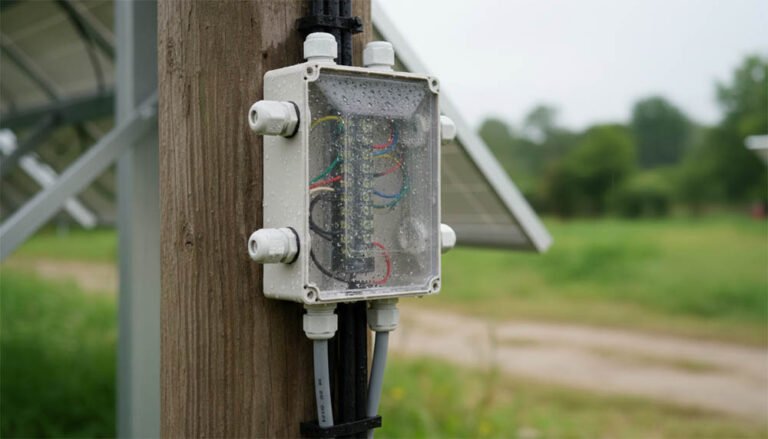
Outdoor environments present a unique set of challenges for optical networking equipment. Extreme sunlight exposure can break down cheap plastics, making them extremely brittle over time. Therefore, any outdoor Fiber Optic Splice Box with Sleeves must feature superior UV protection built directly into the composite material. Additionally, temperature fluctuations can cause the air inside the box to expand and contract. This breathing effect can draw in moisture from the surrounding atmosphere if the seals are inadequate. Consequently, selecting an IP-rated enclosure is critical for outdoor success.
An IP68 rating is the gold standard for outdoor fiber enclosures. It guarantees complete protection against dust ingress and can withstand continuous immersion in water under pressure. EPCOM designs its outdoor product line to meet these rigorous specifications, providing peace of mind for mission-critical installations. Furthermore, outdoor boxes often feature robust locking mechanisms. These locks prevent unauthorized access and vandalism, which is essential for protecting valuable public infrastructure assets.
| Parameter | Indoor Splice Box Specifications | Outdoor Splice Box Specifications |
|---|---|---|
| IP Protection Rating | IP20 – IP45 (Basic Dust Protection) | IP65 – IP68 (Waterproof & Hermetic) |
| Material Composition | ABS Plastic (Flame Retardant) | PC/ASA Alloy (UV Stabilized) |
| Temperature Range | -10°C to +50°C | -40°C to +85°C |
| Cable Entry Method | Grommets or Knockouts | Mechanical Glands or Heat Shrink |
| Mounting Configurations | Wall Mount / 19-inch Rack | Pole / Aerial / Direct Buried |
Securing Cable Entries with Glands and Seals
The point where cables enter the Fiber Optic Splice Box with Sleeves is always a potential weak spot. Therefore, outdoor designs use mechanical compression glands or heat-shrinkable seals to secure the cable sheath. Compression glands compress a rubber bushing around the cable as you tighten the plastic nut. This compression creates an airtight seal that prevents water from traveling along the cable into the box. EPCOM systems incorporate high-performance cable entry glands to maximize environmental protection.
In contrast, heat-shrink entry ports use a heat-sensitive adhesive-lined tube to seal the cable entry. This method is highly permanent and offers exceptional resistance to pulling forces. Regardless of the sealing method used, you must ensure the cable is anchored securely to the internal strength member clamp. This clamp transfers any external pulling force to the metal frame of the box, preventing tension from reaching the fragile splice trays.
Industrial Applications of Fiber Optic Splice Box with Sleeves
Fiber optic splice boxes are utilized across a vast range of industries worldwide. In public telecommunication networks, the Fiber Optic Splice Box with Sleeves serves as the backbone for Fiber-to-the-Home (FTTH) and Fiber-to-the-Building (FTTB) installations. Without these protective enclosures, maintaining a consistent broadband connection to millions of subscribers would be impossible. To understand the underlying engineering requirements for these networks, you can consult the official standard publications of the International Telecommunication Union (ITU-T).
In addition to telecommunications, industrial environments like power plants, oil refineries, and manufacturing facilities rely on optical fiber for control systems. These environments are often filled with electrical noise and chemical vapors. Because optical fiber is immune to electromagnetic interference, it is the ideal choice for data communication in hazardous areas. However, the splice enclosures used in these industrial settings must feature specialized chemical-resistant housings and flame-retardant properties to ensure continuous, safe operation.
Deploying Splice Boxes in Smart City Infrastructures
Smart cities are rapidly expanding their optical networks to connect traffic cameras, environmental sensors, and public Wi-Fi hotspots. These field devices are often located in busy urban environments, mounted on street poles or tucked away in underground vaults. Consequently, the Fiber Optic Splice Box with Sleeves deployed in these locations must be compact and extremely robust. They must handle high traffic density while remaining easy for technicians to service in tight spaces. EPCOM products are designed with these specific smart city challenges in mind.
Furthermore, security is a major concern in municipal deployments. Because these enclosures are easily accessible to the public, they are designed with anti-vandalism features. This includes tamper-proof screws, reinforced metal housings, and remote monitoring sensors. If an enclosure is opened unexpectedly, the system can instantly alert the network operations center. This proactive security approach minimizes down-time and prevents costly physical damage to the optical infrastructure.
Advanced Troubleshooting for Fiber Optic Splice Box with Sleeves
Even with the best planning and installation practices, network issues can still arise over time. When troubleshooting a fiber link, technicians use an Optical Time-Domain Reflectometer (OTDR). This advanced instrument sends a light pulse down the fiber and analyzes the reflected signals. By analyzing the trace data, technicians can locate the exact position of any high-loss events, such as a damaged splice or a micro-bend inside the splice box. Consequently, repairs can be executed quickly and efficiently.
If the OTDR indicates a fault inside the Fiber Optic Splice Box with Sleeves, technicians must systematically inspect the physical box. First, they check the outer casing for any signs of physical damage or water ingress. Next, they open the box and inspect the routing of the fibers in the trays. Often, a fiber loop may have slipped out of its retaining clip, causing a tight bend. For comprehensive technical research on managing optical fiber bend losses and micro-bends, you can refer to the valuable publications on IEEE Xplore.
Solving High Attenuation Issues in Legacy Enclosures
In older fiber deployments, high signal attenuation is often caused by degraded materials. Over decades of service, low-quality protective sleeves can become brittle or the adhesive can dry out, allowing moisture to reach the joint. When this happens, the glass fiber begins to degrade, resulting in a gradual decrease in signal quality. To solve this issue, technicians must cut out the old, failing splices and re-splice the fibers using modern, high-performance sleeves.
Additionally, older installations of Fiber Optic Splice Box with Sleeves may lack the advanced bend-radius protection found in modern designs. In these cases, upgrading to a modern EPCOM enclosure can significantly improve network reliability. These modern systems feature superior tray designs that prevent localized stress, ensuring optimal light transmission. For further scientific data on glass aging and fiber durability under environmental stress, you can study the extensive research material available through the Corning Optical Communications archive.
Future Trends in Fiber Optic Splice Box with Sleeves Technology
As the demand for bandwidth continues to soar, optical networks are evolving rapidly. This evolution is driving several exciting trends in Fiber Optic Splice Box with Sleeves design. One of the most significant trends is the push for higher density. Modern high-count cables can contain thousands of individual fibers in a single sheath. Consequently, splice enclosures must accommodate these massive fiber counts without expanding their physical footprint. This requires incredibly precise internal organization and highly optimized tray designs.
Another major trend is the integration of smart monitoring technology. Future splice boxes will feature built-in humidity, temperature, and water-ingress sensors. These sensors will continuously transmit real-time data back to network management systems. If moisture is detected inside an enclosure, maintenance teams can be dispatched immediately before any signal degradation occurs. EPCOM is at the forefront of this technology, developing next-generation intelligent enclosures for the networks of tomorrow.
Integrating Smart Diagnostics for Predictive Maintenance
Predictive maintenance is the future of telecommunication network management. By monitoring the environmental conditions inside the splice box, operators can identify potential failure points before they impact service. For example, a sudden rise in internal humidity suggests a failing gasket seal. By replacing the gasket proactively, you prevent water from reaching the fibers and avoid an expensive emergency outage. This data-driven approach drastically reduces operating costs and improves overall customer satisfaction.
Furthermore, these smart systems can communicate wirelessly using low-power wide-area networks (LPWAN). This allows underground or pole-mounted enclosures to report their status without requiring physical inspection. Technicians only need to visit the site when an alert is triggered, which optimizes labor efficiency. In addition, the collected environmental data helps manufacturers design even more resilient systems in the future, creating a continuous loop of product improvement.
Best Practices for Maintaining Fiber Optic Splice Box with Sleeves
Implementing a comprehensive maintenance routine is essential for maximizing the lifespan of your optical network. First, you should conduct regular visual inspections of every Fiber Optic Splice Box with Sleeves in your network. Look for signs of physical wear, loose mounting brackets, or external damage from environmental factors. If an enclosure is located in an area with high pest activity, ensure that pest guards are installed around the cable entries. These simple checks can prevent major network disruptions before they occur.
Second, when opening an enclosure for maintenance or expansion, cleanliness must remain your top priority. Always clean the exterior of the box thoroughly before opening it to prevent dirt from falling inside. Use lint-free wipes and high-purity isopropyl alcohol to clean any tools or trays. Additionally, never leave an open splice box unattended. Dust particles can settle on the fibers in minutes, leading to future signal loss. By following these strict cleanliness protocols, you protect your investment and ensure long-term network performance with EPCOM.
Creating an Accurate Network Documentation System
Accurate documentation is the foundation of efficient network maintenance. You must record the exact location of every Fiber Optic Splice Box with Sleeves, including its GPS coordinates and physical installation environment. Within each enclosure, document the precise mapping of every fiber splice, including the tray number, slot number, and connected device. This detailed map allows troubleshooting teams to locate and resolve faults rapidly, minimizing service down-time during outages.
Moreover, keeping a digital record of OTDR baseline traces is highly recommended. When you first install an enclosure, perform an OTDR scan and save the trace file. If a fault occurs in the future, you can compare the new scan with the baseline to pinpoint the exact location of any degradation. This comparison makes it simple to determine if the issue is a damaged physical joint inside the box or a broken cable in the field. Consequently, repair teams can arrive at the site with the exact tools and replacement components required to restore service quickly.