Strapping Tightener Solutions for Infrastructure
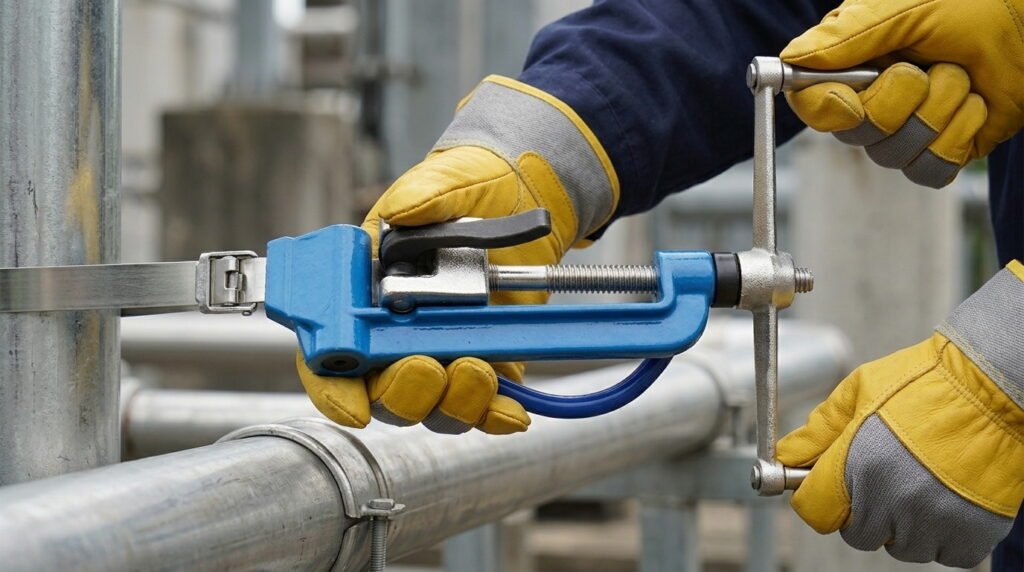
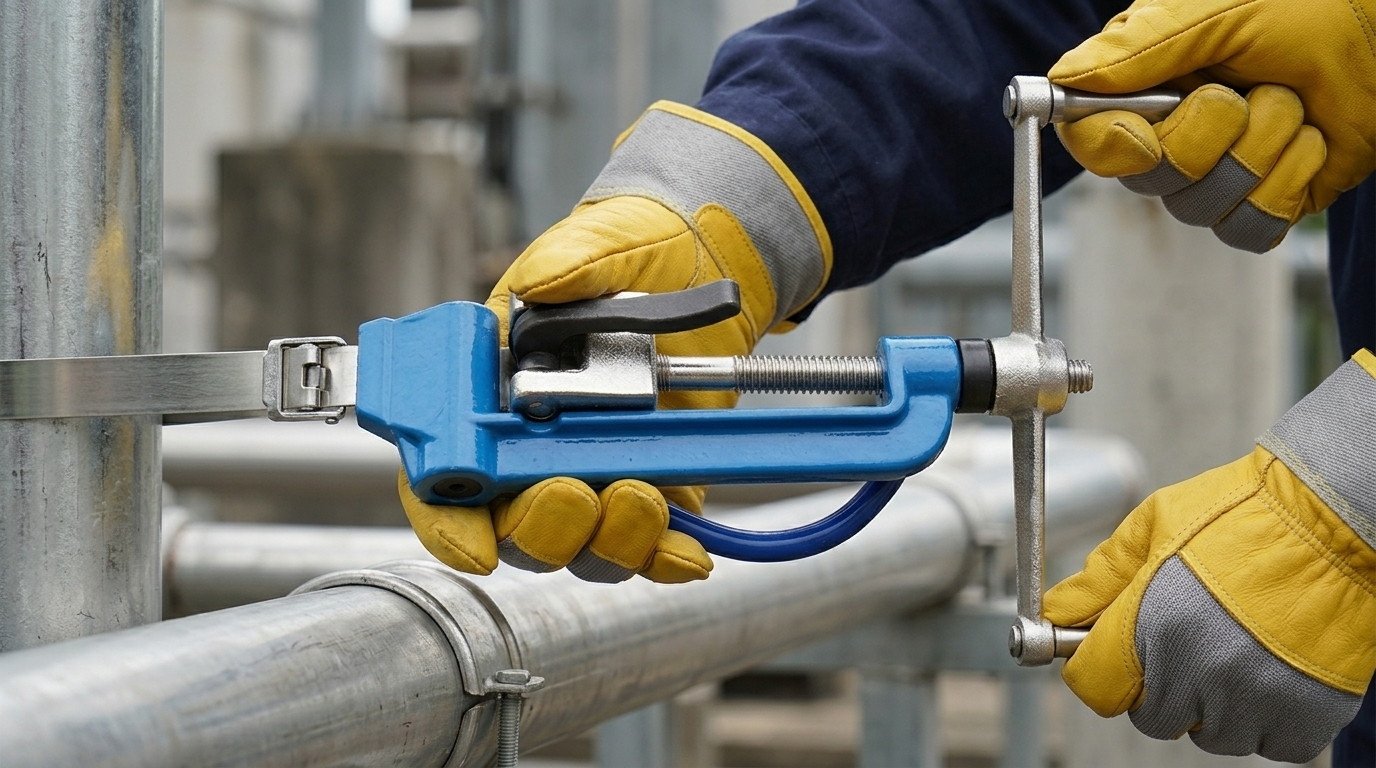
Strapping Tightener tools represent the cornerstone of modern industrial fastening systems, ensuring that heavy-duty components remain securely attached in harsh environments. At EPCOM, we specialize in providing high-performance tensioning equipment that meets the rigorous demands of global infrastructure projects. Consequently, understanding the mechanics of a strapping tightener is essential for engineers and technicians who work with stainless steel cable ties and strapping bands. Furthermore, the efficiency of your installation depends largely on the precision of the tools you select. Therefore, this comprehensive analysis explores the vast landscape of tensioning technology, focusing on how these devices integrate with other essential hardware.
Industrial applications often require extreme durability. For instance, marine environments and telecommunication towers face constant vibration and corrosive salt spray. In such scenarios, a standard plastic tie simply will not suffice. Instead, professionals turn to the stainless steel strap as the primary material for securing hardware to poles or pipes. However, the strap itself is only half of the equation. To achieve the required tension, a robust strapping tightener must be employed to pull the band to its limit before it is locked in place.
Moreover, the versatility of these tools is quite remarkable. We see them used in oil and gas pipelines, electrical distribution networks, and even in municipal signage projects. Because the structural integrity of these installations is non-negotiable, EPCOM ensures that every piece of equipment undergoes strict quality control. In addition, the evolution of the manual strapping tightener has led to more ergonomic designs. This reduces operator fatigue while simultaneously increasing the speed of the fastening process. Transitioning to better tools is not just an upgrade; it is a necessity for safety.
The Evolution of Tensioning Tools in Heavy Industry
Historically, securing heavy loads involved primitive clamping methods. However, the introduction of the modern strapping tightener revolutionized the field by providing controlled mechanical advantage. Today, the standard strapping techniques utilized by industry leaders rely on sophisticated gear mechanisms. These mechanisms allow a single worker to apply hundreds of pounds of force with minimal effort. EPCOM has been at the forefront of this technological shift, refining the durability of the internal components to withstand decades of use.
Furthermore, the design of a strapping tightener must account for the specific material characteristics of the bands it handles. Stainless steel, for example, has a high tensile strength but requires a tool that can grip the smooth surface without slipping. In contrast, softer materials might be damaged by aggressive gripping teeth. Thus, engineers at EPCOM have developed specialized surfaces within the strapping tightener to ensure a consistent hold. This precision ensures that every strap is tightened to the exact specification required for the project.
Specifically, when we look at the screw type strapping tightener, we observe a mechanism that offers unmatched control. By utilizing a threaded rod, the user can incrementally increase tension. This level of granularity is vital when securing sensitive fiber optic equipment where over-tightening could damage the internal glass cores. Consequently, the screw-type variant remains a favorite for telecom installers worldwide. It perfectly balances power with finesse, a trait that EPCOM highly values in its product lineup.
Integrating the Strapping Tightener with Key Components
A tool is only as effective as the system it supports. To create a permanent and reliable fastening, the strapping tightener works in tandem with a stainless steel buckle. The buckle serves as the anchor point, holding the tension once the tool is removed. Without a high-quality buckle, the energy stored in the tightened strap would be lost, leading to catastrophic failure of the installation. Therefore, EPCOM recommends using matched components to guarantee system compatibility.
| Component Name | Primary Function | Compatibility Level |
|---|---|---|
| Strapping Tightener | Applying Tension and Cutting | High (Universal) |
| Stainless Steel Strap | Structural Binding Material | Material Specific |
| Stainless Steel Buckle | Locking and Securing Tension | Size Matched |
In addition to manual tools, some projects require even higher speed. This is where the stainless steel cable tie tensioner comes into play. While a heavy-duty strapping tightener handles wide bands, the tensioner tool is optimized for narrower ties. These ties are often used for cable management within cabinets or along utility poles. Although smaller, they still require the same level of tensioning precision to ensure long-term stability. EPCOM provides both categories of tools to cover the full spectrum of installation needs.
Critical Safety Standards for Every Strapping Tightener
Safety is the most important consideration when working with high-tension systems. A failing strap can release a dangerous amount of kinetic energy. Because of this risk, every strapping tightener manufactured by EPCOM includes safety features designed to protect the operator. For example, the built-in cutters are shielded to prevent accidental contact. Also, the handles are insulated in some models to provide a degree of protection against electrical hazards during utility work. These small details make a significant difference in the field.
Moreover, adhering to ISO international standards for fastening tools ensures that the equipment performs reliably under stress. We recommend that all users perform regular maintenance on their strapping tightener. This includes cleaning the gripping jaws and lubricating the pivot points. When a tool is well-maintained, it provides a smoother tensioning action. In contrast, a neglected tool can lead to uneven tensioning or even strap breakage. EPCOM supports its clients with detailed maintenance guides for all tensioning hardware.
Figure 1: Comparison of different strapping tightener mechanisms based on output force and precision.
Step-by-Step Operation of a Strapping Tightener
Operating a strapping tightener correctly is a skill that requires both patience and practice. First, you must prepare the strap by wrapping it around the target object. Then, insert the loose end through the buckle. Once the strap is in position, you place the tool’s gripping head onto the band. By engaging the handle, you start the tensioning cycle. At EPCOM, we design our tools to have a “no-slip” entry point, which makes it much easier to start the process even while wearing heavy work gloves.
Next, continue to apply force until the strap is tight enough to prevent any movement. For most applications, the “pluck test” is used—if the strap rings like a guitar string, it is likely sufficient. However, for critical infrastructure, we recommend using a strapping tightener with an integrated tension gauge. This allows for data-driven installations. Finally, once the tension is achieved, use the tool’s cutting lever to trim the excess band. The result is a clean, professional finish that will last for decades. EPCOM tools are specifically engineered to provide this clean cut every single time.
Why Choose EPCOM for Your Fastening Needs?
Choosing the right supplier is just as important as choosing the right tool. EPCOM has built a reputation on reliability and innovation. We understand that a strapping tightener is an investment in your project’s longevity. Therefore, we use only high-carbon steel for our tool heads. This ensures that the cutting edge remains sharp even after thousands of cycles. Additionally, our global distribution network means that replacement parts and support are always within reach. We don’t just sell tools; we provide solutions.
Furthermore, we listen to feedback from technicians in the field. This feedback loop allows us to make incremental improvements to the strapping tightener handle design. For instance, recent updates have focused on better weight distribution. By balancing the tool’s center of gravity, we have made it easier to use in overhead positions. Such practical improvements are why EPCOM remains a preferred brand for major utility companies and contractors. Our commitment to excellence is reflected in every product we ship.
Future Trends in Strapping Tightener Technology
The industry is currently shifting toward more automated solutions. While the manual strapping tightener will always have a place due to its simplicity, battery-powered models are gaining popularity. These tools allow for one-handed operation, which is a major advantage when working on ladders or in confined spaces. EPCOM is currently researching new ways to integrate smart sensors into our next generation of tools. These sensors will eventually be able to log the exact tension applied to every strap, creating a digital record of the installation.
Another area of growth is in material science. As new alloys are developed for strapping bands, the strapping tightener must evolve to handle them. For example, some high-nickel alloys are extremely hard. Standard tools might wear out quickly when used with these materials. Consequently, EPCOM is experimenting with ceramic-coated jaws for our heavy-duty strapping tightener range. This will ensure that our tools stay relevant as industry requirements change. We are dedicated to staying ahead of the curve so that our customers can always work with the best possible equipment.
In conclusion, the strapping tightener is a vital instrument for any professional involved in heavy-duty fastening. From its integration with a stainless steel strap to its reliance on a high-quality stainless steel buckle, every part of the system must work in harmony. EPCOM is proud to provide the tools and hardware that keep our world connected and secure. Whether you need a standard manual tool or a specialized stainless steel cable tie tensioner, you can trust EPCOM to deliver performance that exceeds expectations. We invite you to explore our full range of products and see how we can support your next project with precision and power.
Finally, always remember that the quality of your strapping tightener directly impacts the safety of your work. By choosing EPCOM, you are choosing a partner that prioritizes durability and user safety above all else. We look forward to being part of your success for many years to come. Thank you for choosing EPCOM as your trusted provider of infrastructure solutions. Together, we can build a stronger and more reliable future, one strap at a time.