SC Optical Loopback: Reliable Testing with EPCOM
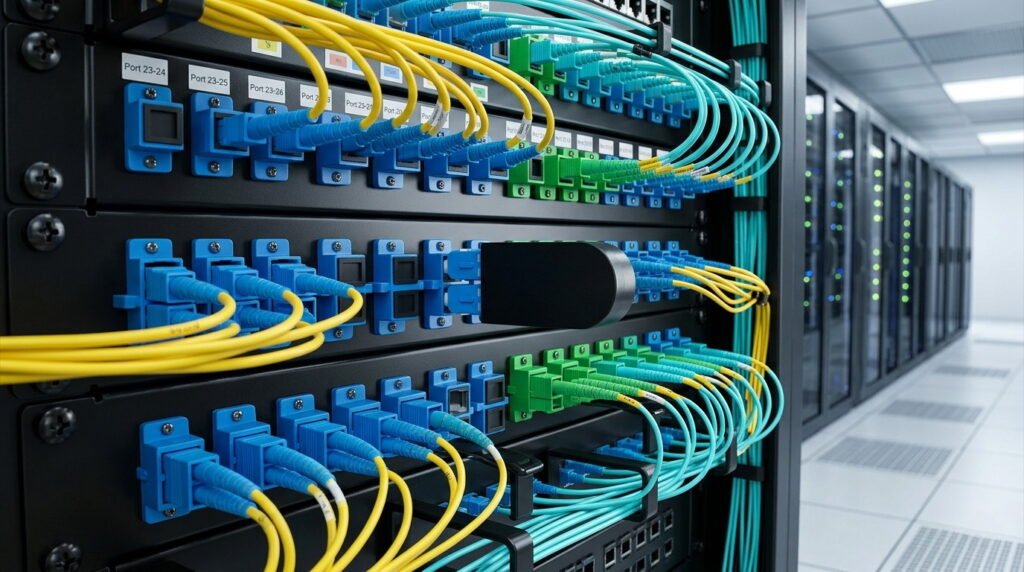
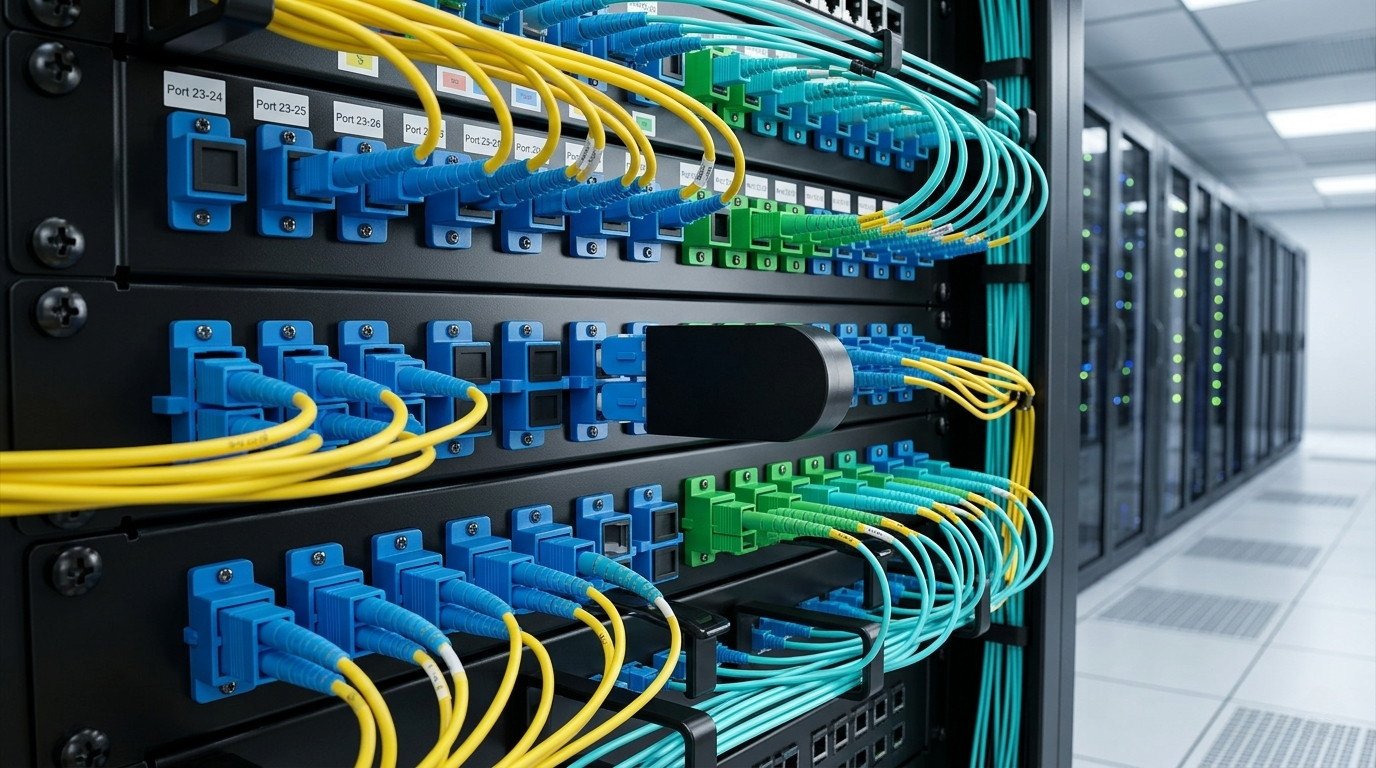
SC Optical Loopback components serve as the backbone for modern network testing and diagnostic procedures. EPCOM provides these essential tools to ensure that your fiber optic infrastructure maintains peak performance levels. Furthermore, technicians rely on these devices to verify the integrity of transceivers and network segments. Consequently, understanding the technical nuances of these loopbacks is vital for any telecommunications professional. We focus on delivering high-quality solutions that simplify the complex task of link troubleshooting.
In the realm of high-speed data transmission, accuracy remains the most critical factor. Therefore, using a reliable loopback adapter allows for immediate detection of hardware faults. Beyond basic testing, these tools facilitate advanced system debugging in laboratory environments. Moreover, the integration of such components into standard maintenance routines significantly reduces downtime. EPCOM is committed to supporting these needs through innovative engineering and robust design principles. Each device undergoes rigorous testing to meet international standards for signal return loss and insertion accuracy.
The Strategic Role of Loopback Testing in Networks
Network engineers often encounter scenarios where a physical link must be validated without an active remote partner. Hence, the implementation of a loopback device becomes indispensable. By reflecting the light back into the receiver, it creates a closed circuit for localized analysis. Thus, the hardware can effectively “talk to itself” to confirm its own operational status. This method proves particularly effective when deploying IEEE 802.3 Ethernet standards across enterprise campuses. EPCOM ensures that every SC interface is manufactured with precision-aligned ceramic ferrules.
Transitioning from manual checks to automated diagnostics requires stable testing points. Accordingly, the loopback provides a consistent reference signal. For instance, if a switch port fails to initialize, the first step involves checking the transceiver with a loopback. If the port comes up locally, the issue likely resides in the external cabling. On the contrary, if the failure persists, the transceiver itself might be faulty. Such systematic approaches are supported by the wide range of testing accessories available at EPCOM.
Key Specifications of SC Optical Loopback Devices
When selecting your testing equipment, pay close attention to the fiber type, such as OS2 or OM3. Specifically, single-mode versions are designed for long-reach applications, while multi-mode variants suit short-range data centers. EPCOM offers both options to cover various networking environments. In addition to fiber type, the polishing grade—whether UPC or APC—plays a massive role in performance. Specifically, APC (Angled Physical Contact) interfaces minimize back-reflections, which is crucial for sensitive laser equipment.
Furthermore, the durability of the housing determines the longevity of the tool in field conditions. Since technicians frequently plug and unplug these devices, the tension-resistant design is a must-have feature. EPCOM utilizes high-impact plastic and premium springs to maintain constant pressure. Additionally, these loopbacks are compact enough to fit into high-density patch panels without interfering with adjacent ports. This spatial efficiency is a hallmark of modern fiber management strategies.
Integrating SC Optical Loopback with Essential Hardware
To achieve a comprehensive testing setup, one must consider the entire signal path. Often, you will need a SC single mode adapter to bridge the gap between different patch cords. This adapter ensures that the alignment remains perfect even during repetitive testing cycles. EPCOM designs these adapters to provide low insertion loss, which is fundamental for maintaining power budgets. Without a stable connection, the results from your loopback test might be skewed by external variables.
Moreover, cleaning is not an optional step; it is a necessity for data integrity. We highly recommend using the mini fiber cleaner 2.5mm for SC/ST/FC before every insertion. Even a microscopic dust particle can cause permanent damage to the ferrule surface. By keeping the interface clean, you extend the life of both the tester and the equipment under test. EPCOM advocates for a “clean-first” policy in all fiber optic installations. Indeed, most “failed” tests are actually the result of contaminated connectors rather than actual hardware faults.
Managing Power with SC Optical Loopback Scenarios
Sometimes, the raw power from a high-output transceiver can saturate the receiver during a short loopback test. In such cases, integrating a SC optical attenuator is the professional solution. This component reduces the signal strength to a safe level, mimicking the loss experienced over long-distance fiber runs. EPCOM provides fixed and variable attenuators to match specific decibel requirements. Consequently, you can simulate realistic link conditions without leaving the server room.
In addition to attenuation, cable management tools like the screw type strapping tightener help in organizing the physical layout of the test environment. While it might seem unrelated to signal quality, proper cable tension and organization prevent accidental bends or breaks. EPCOM understands that a professional workspace leads to more accurate and efficient maintenance. Therefore, our portfolio includes everything from the microscopic fiber interface to the heavy-duty installation tools.
Efficiency Metrics for SC Optical Loopback Utilization
Analyzing the performance of your testing routine can yield significant operational savings. Below is a detailed comparison of common testing configurations. This data highlights why certain accessories are vital for professional results. EPCOM aims to provide transparent data to help you make informed purchasing decisions.
| Test Configuration | Typical Loss (dB) | Reliability Rate | Primary Accessory |
|---|---|---|---|
| Standard Loopback | < 0.3 | 95% | Dust Caps |
| Loopback + Attenuator | 5.0 – 20.0 | 99% | Fixed Attenuator |
| Bridge Testing | < 0.5 | 92% | SC Adapter |
As indicated in the table, adding an attenuator often increases the reliability of the test by preventing receiver saturation. Furthermore, EPCOM ensures that all components are compatible with TIA/EIA-568 standards. By following these industry guidelines, you ensure that your network diagnostics remain valid and globally recognized. Transitioning between different testing modes is seamless when you have a standardized kit at your disposal.
Future Trends in Fiber Testing and Diagnostic Tools
The telecommunications industry is moving toward higher densities and faster speeds. Consequently, the role of the SC interface is evolving to accommodate new patch panel designs. EPCOM is currently developing miniaturized versions of the loopback to fit into extremely tight spaces. However, the fundamental physics of the loopback remain constant. The light must be precisely coupled from the transmit port to the receive port with minimal interference.
Annual Growth of Fiber Testing Market (Projected)
Figure 1: Visualizing the increasing demand for precision testing components like the SC Optical Loopback.
The chart above illustrates the projected rise in demand for high-end diagnostic tools. As more businesses migrate to 400G and 800G networks, the necessity for localized testing points will only increase. EPCOM is staying ahead of this curve by investing in new materials and polishing techniques. Furthermore, we are exploring hybrid loopbacks that can switch between different attenuation levels automatically. This innovation will further simplify the workflow for on-site technicians.
Maximizing Accuracy with SC Optical Loopback Best Practices
To get the most out of your testing, always perform a reference power reading. First, measure the output of your transceiver with a power meter. Then, insert the loopback and measure the received power at the other end. The difference should be minimal unless you are intentionally using an attenuator. EPCOM provides calibrated loopbacks that offer predictable loss profiles for these precise measurements. Moreover, document every test result to build a historical database of your network’s health.
Another tip involves the use of protective caps. Whenever the SC interface is not in use, keep it covered. Dust is the silent killer of optical networks. Since EPCOM includes high-quality caps with every device, there is no excuse for leaving ports exposed. Finally, ensure that your technicians are trained on the specific bend radius limits of the fiber used inside the loopback. Excessive bending can induce macro-losses that lead to false negative results in your diagnostics.
Conclusion: Why Choose EPCOM for Your SC Optical Loopback Needs?
Quality and reliability define the mission of EPCOM in the global marketplace. We don’t just sell components; we provide solutions that empower network engineers to solve problems faster. By choosing our SC Optical Loopback, you are investing in a tool that will provide years of accurate service. Whether you are building a new data center or maintaining a legacy telecom network, our products offer the stability you require. We invite you to explore our full catalog of fiber optic accessories and see the EPCOM difference for yourself.
In summary, the path to a resilient network begins with proper testing. With the right combination of loopbacks, adapters, and cleaning tools, you can eliminate variables and focus on performance. EPCOM stands ready to be your partner in this journey. Feel free to contact our technical team for custom configurations or bulk project requirements. Together, we can ensure that every photon reaches its destination without compromise. Thank you for trusting EPCOM as your source for professional fiber optic infrastructure solutions.
Continuing our exploration of the SC Optical Loopback, we must delve into the chemistry of fiber glass and its impact on light reflection. EPCOM uses only high-purity silica to minimize impurities that cause signal scattering. During the testing phase, the behavior of light at the 1310nm and 1550nm wavelengths is meticulously analyzed. Each loopback is calibrated for these specific windows to ensure broad compatibility. Furthermore, the mechanical assembly is designed to withstand extreme temperature fluctuations without affecting optical alignment. This is particularly important for outdoor enclosures where gear might face freezing winters or sweltering summers.
Transitioning into the operational aspects, the ease of identification is another factor that EPCOM addresses. Our loopbacks are color-coded according to industry standards: blue for single-mode, beige for multi-mode, and green for APC. This simple visual cue prevents costly mistakes during field operations. Imagine a technician accidentally using a multi-mode loopback on a single-mode carrier link; the resulting loss would be massive. By using our clearly marked equipment, you reduce human error and speed up the troubleshooting process significantly. We also provide laser-etched serial numbers on the housing for easy tracking within your inventory management system.
Furthermore, the evolution of the SC connector itself has played a major role in the design of the SC Optical Loopback. Developed by NTT, the Subscriber Connector (SC) became famous for its push-pull mechanism. This eliminated the need for twisting, which can often induce stress on the fiber core. EPCOM has refined this mechanism to ensure that the latching force remains consistent over thousands of cycles. A secure “click” confirms that the loopback is fully seated, providing peace of mind to the technician. This mechanical reliability is why EPCOM remains a preferred supplier for large-scale telecom operators worldwide.
In terms of regulatory compliance, EPCOM ensures that every SC Optical Loopback is RoHS and REACH compliant. We are committed to environmental sustainability by reducing hazardous substances in our manufacturing chain. Moreover, our packaging is designed to be minimal yet protective, reducing waste while ensuring that the delicate fiber interfaces arrive in perfect condition. When you buy from EPCOM, you are supporting a brand that values both technical excellence and ecological responsibility. This holistic approach is what sets us apart in a crowded marketplace.
Looking at the broader ecosystem, the interaction between a loopback and an Optical Time-Domain Reflectometer (OTDR) is worth noting. While a loopback is a simple device, it can be used in conjunction with a launch box to test the very first connector of a long fiber run. By looping the signal back at the remote end, an OTDR can see the entire link in both directions from a single port. EPCOM provides the necessary launch fibers and adapters to make this advanced testing possible. Understanding these synergies allows a network manager to squeeze more value out of their existing toolset. Efficiency is not just about having the best tools; it is about knowing how to use them together.